19 April 1775
Lexington and Concord
On the night of 18 April 1775 Gage sends about seven hundred men across the Charles to seize the militia stores at Concord. Riders warn the towns ahead of them, and church bells and alarm guns call out the militia. At dawn the column finds 77 militiamen drawn up on Lexington green. Someone fires, and eight of the militia are killed.
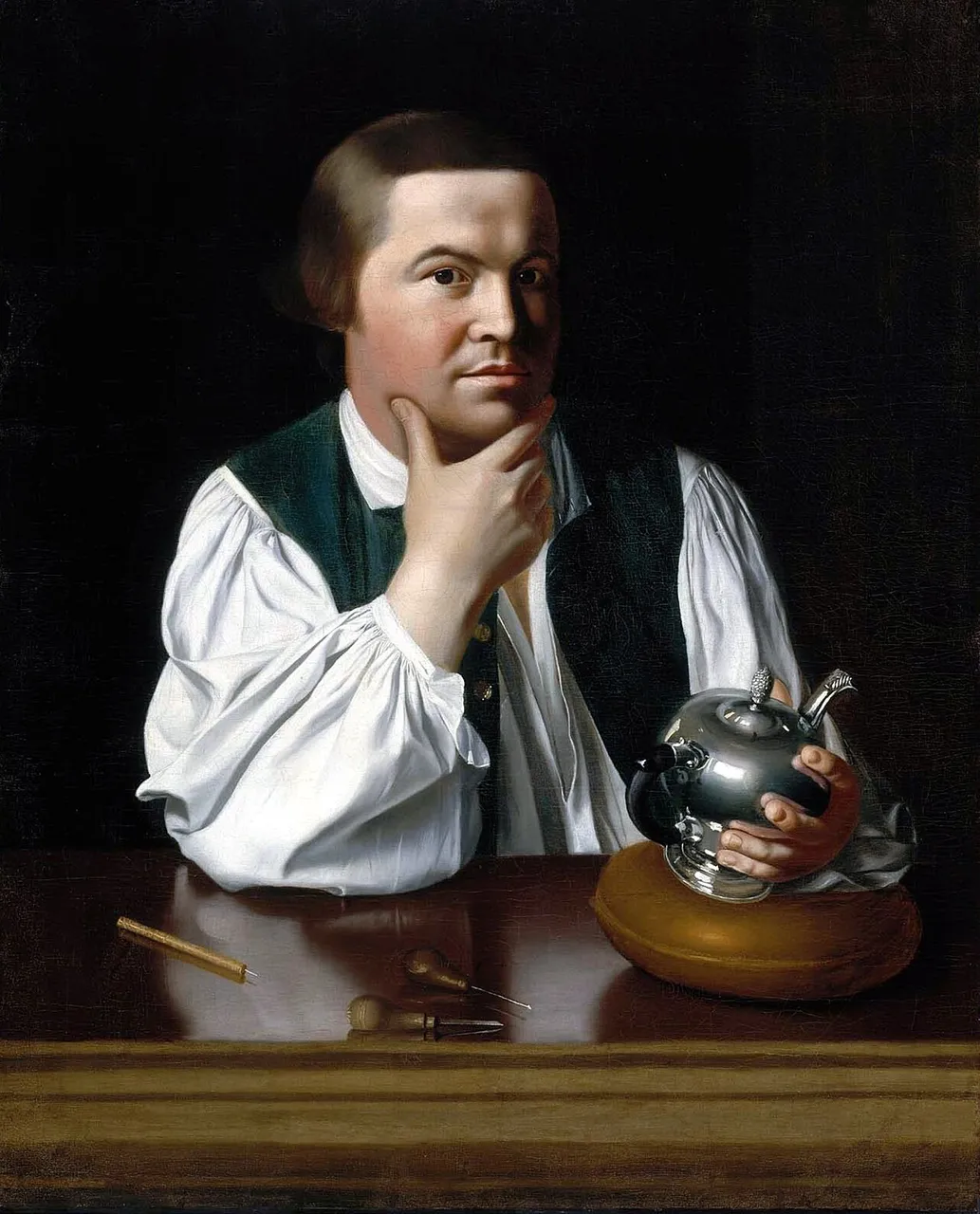 Paul Revere, one of the riders who warned the militia, portrait by John Singleton Copley, 1768Wikimedia Commons, John Singleton Copley, Public domain (J S Copley - Paul Revere (cropped).jpg)
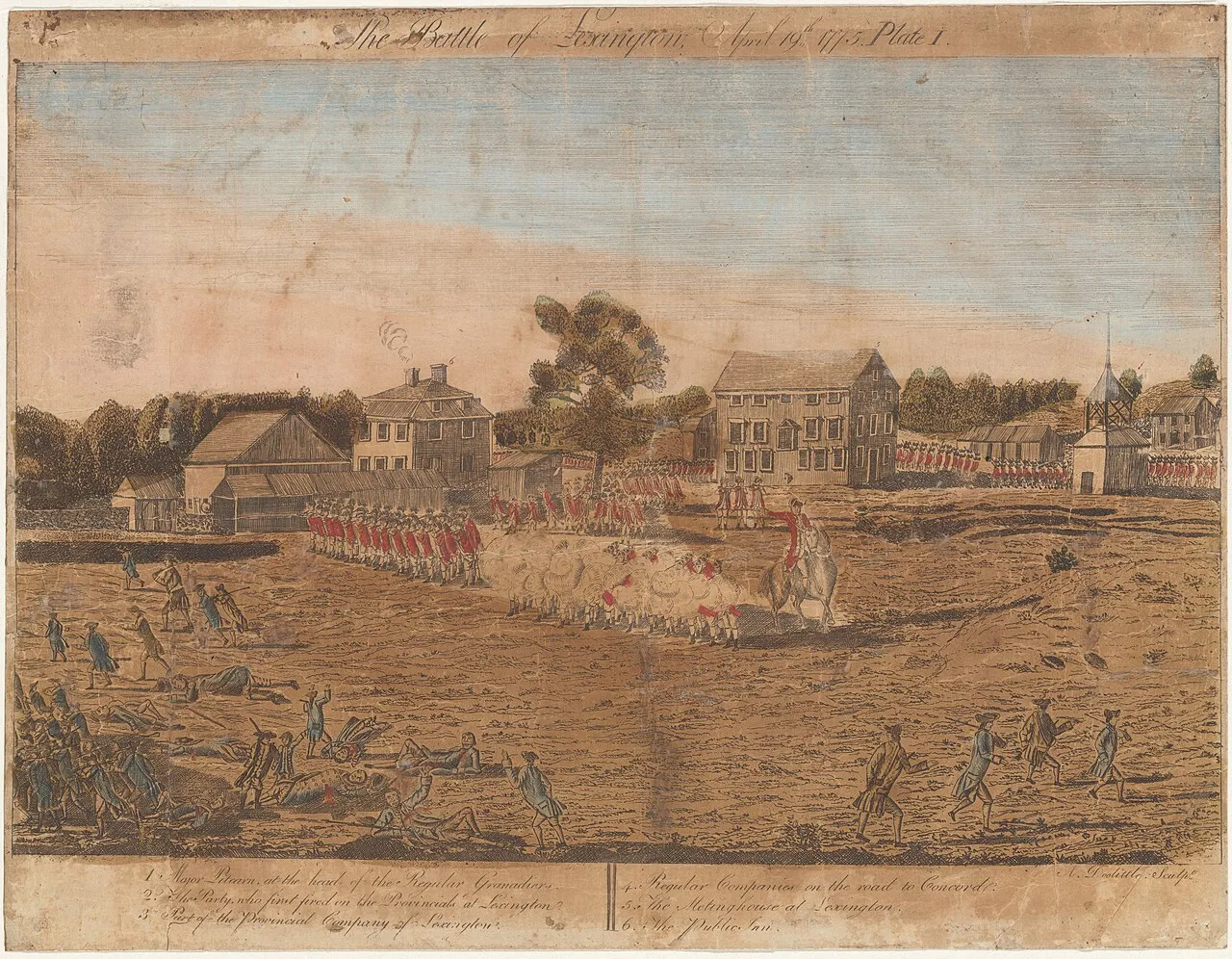 The Battle of Lexington, 19 April 1775, engraving by Amos Doolittle after Ralph Earl, 1775Wikimedia Commons, Ralph Earl and Amos Doolittle, Public domain (Battle of Lexington, by Ralph Earl and Amos Doolittle, 1775, from the New York Public Library - 510d47d9-7e71-a3d9-e040-e00a18064a99.jpg)
At Concord the troops find little, and at the North Bridge they are driven back. The march back becomes a running fight, with militia firing from walls and houses and thousands more converging on the road. Reinforced by Lord Percy’s brigade at Lexington, the column reaches Charlestown by evening with 300 casualties. The next morning about 15,000 militia hold a line around Boston from Chelsea to Roxbury, and the siege of Boston begins.
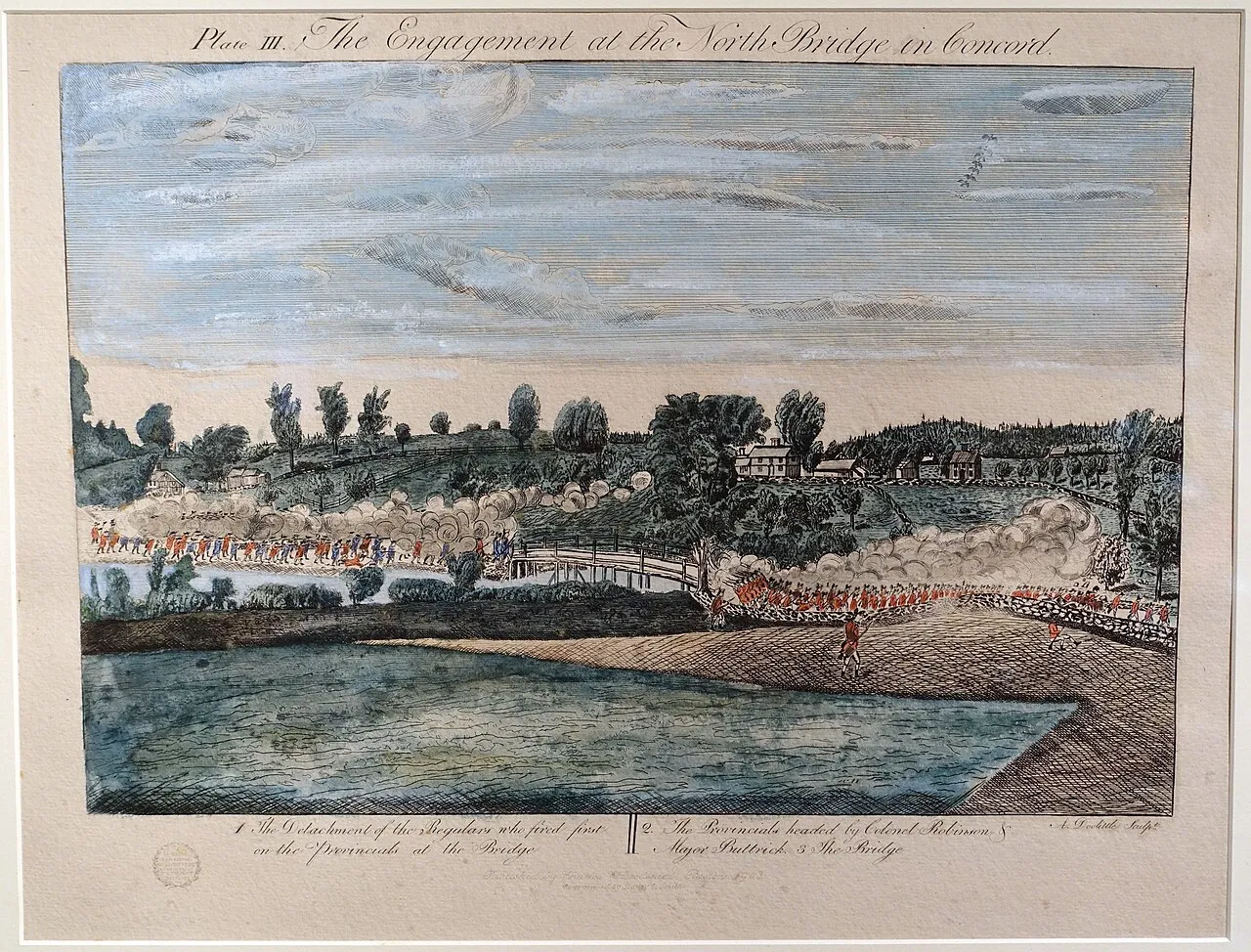 The engagement at the North Bridge in Concord, plate III of Amos Doolittle's engravings of December 1775, in a 1903 reprintWikimedia Commons, Daderot, Public domain (Plate III, The Engagement at Concord, Amos Doolittle engravings of the Battle of Lexington and Concord, December 1775, reprint by Charles E. Goodspeed, Boston, 1903 - Concord Museum - Concord, MA - DSC05586.JPG)
Sources
- Robert Middlekauff, The Glorious Cause (2005).
- David McCullough, 1776 (2005).
- David Hackett Fischer, Paul Revere’s Ride (1994).
Prev: The First Continental CongressNext: Lexington: the green at dawn