1794 to 1800
Frontier treaties, Tennessee and the new capital
North of the Ohio, a confederacy of native nations defeats American armies in 1790 and 1791. On 20 August 1794 Anthony Wayne’s army defeats it at Fallen Timbers, and by the Treaty of Greenville of 3 August 1795 the nations cede most of present-day Ohio.
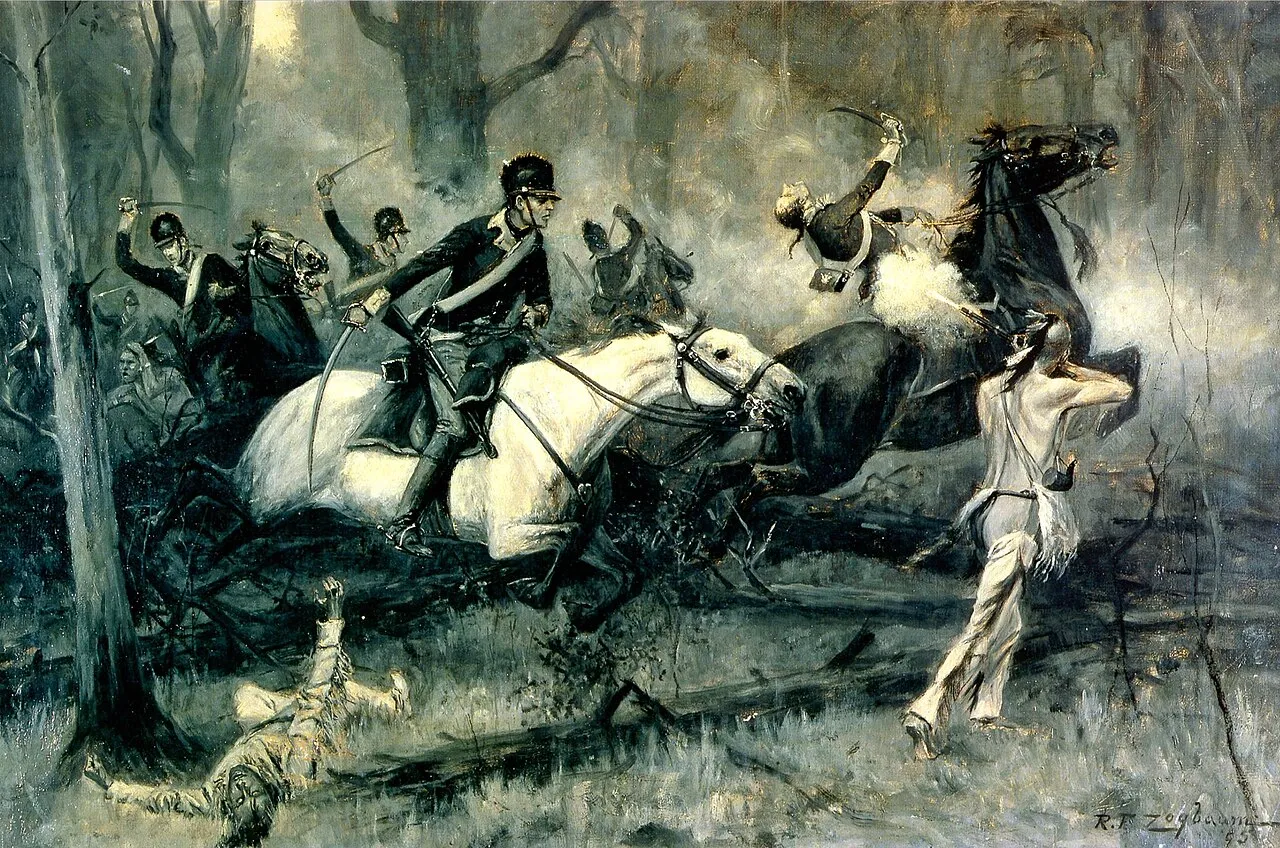 The Battle of Fallen Timbers, 20 August 1794, illustration by R. F. Zogbaum, 1895Wikimedia Commons, R. F. Zogbaum, Public domain (Fallen timbers.jpg)
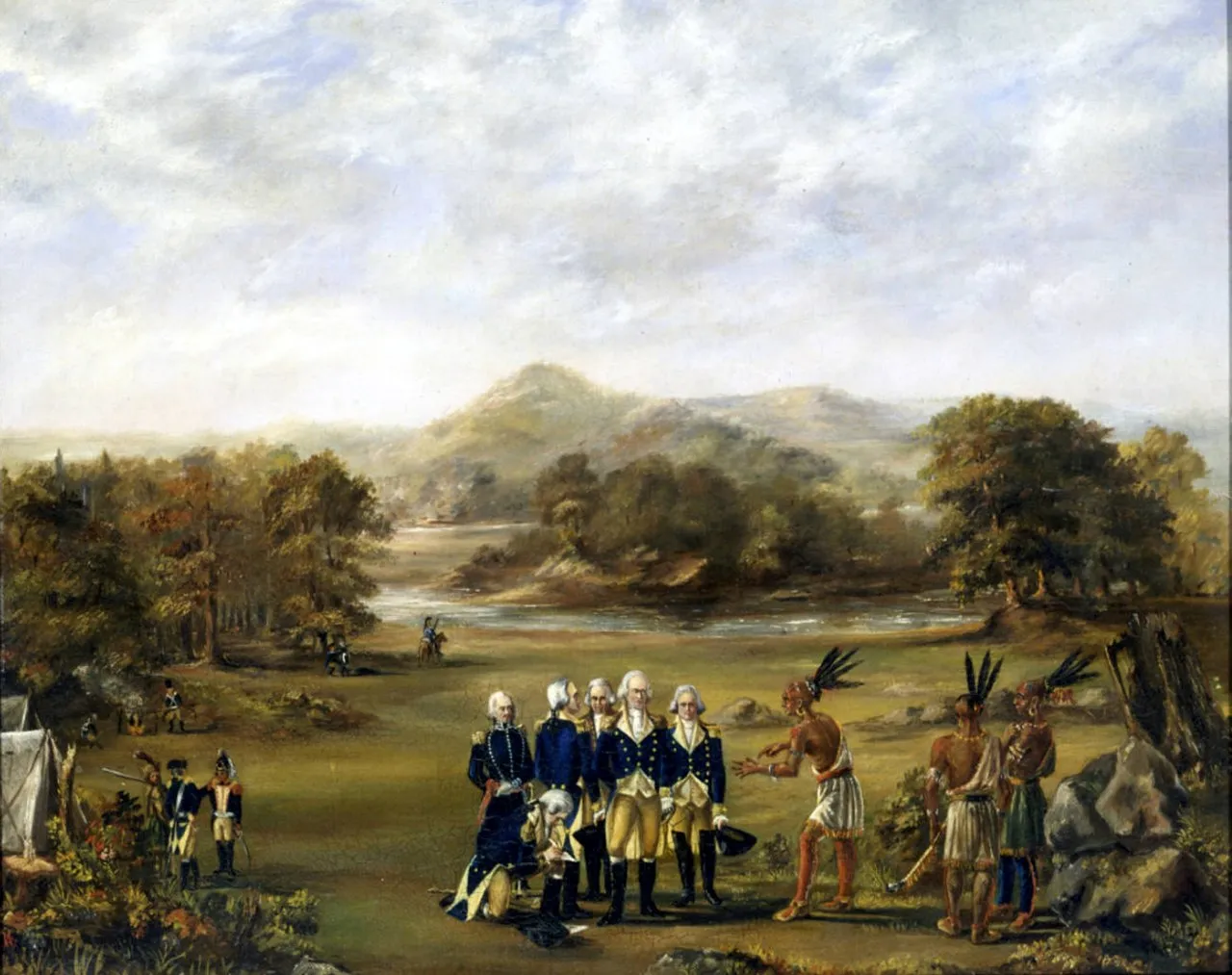 The negotiations for the Treaty of Greenville, 1795, painting by an unidentified artistWikimedia Commons, Unidentified painter, Public domain (Treaty of Greenville.jpg)
Jay’s Treaty with Britain, ratified in 1795, leads the British to hand over their forts on American soil in 1796, among them Detroit, Niagara and Oswego. Pinckney’s Treaty with Spain, signed on 27 October 1795, fixes the Florida border at the 31st parallel and opens the Mississippi to American trade.
 Thomas Pinckney, who negotiated the treaty with Spain, portrait by John Trumbull, 1791Wikimedia Commons, John Trumbull, Public domain (John Trumbull - Thomas Pinckney - NPG.2007.211 - National Portrait Gallery.jpg)
Tennessee becomes the sixteenth state on 1 June 1796, the first made from a federal territory. In November 1800 the government moves to the new city of Washington.
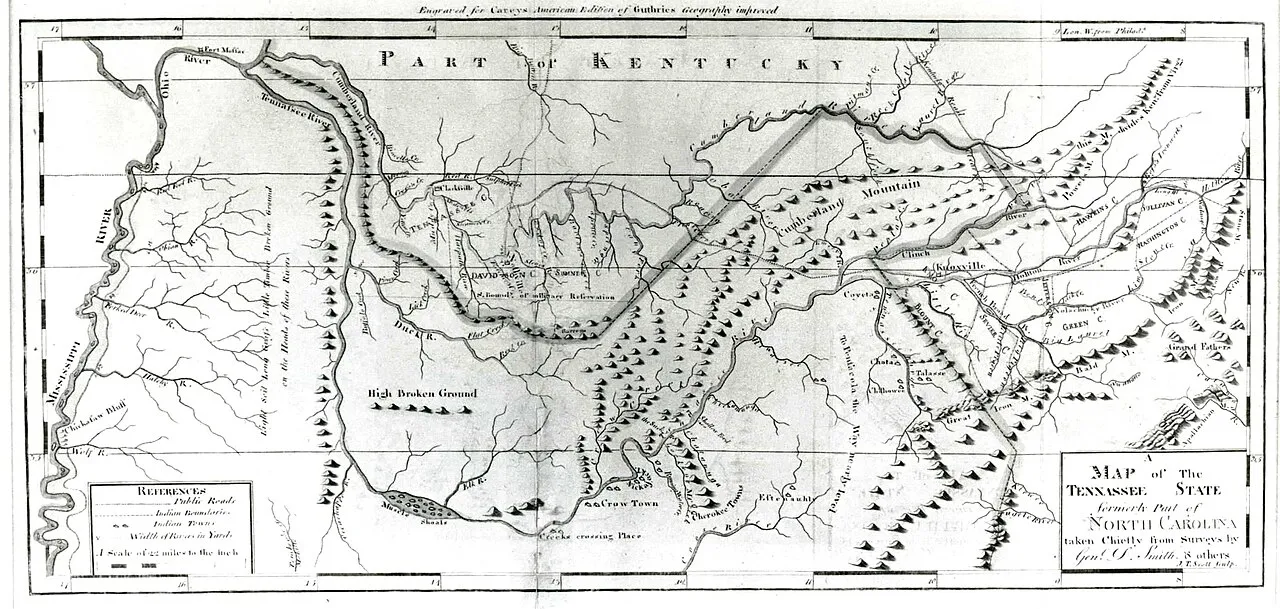 Daniel Smith's map of the State of Tennessee, 1796Wikimedia Commons, Daniel Smith (1748–1818), Public domain (Map-of-tennassee-government-1796.jpg)
Sources
- Gordon S. Wood, Empire of Liberty (2009).
Prev: Vermont, the Bill of Rights and KentuckyNext: Fallen Timbers: the ambush