7 June to 4 July 1776
The Declaration of Independence
By spring the colonies are electing new governments and instructing their delegates. On 7 June Richard Henry Lee of Virginia moves “that these United Colonies are, and of right ought to be, free and independent States”. Congress appoints a committee of five to draft a declaration. Thomas Jefferson writes it, and Adams and Franklin revise it.
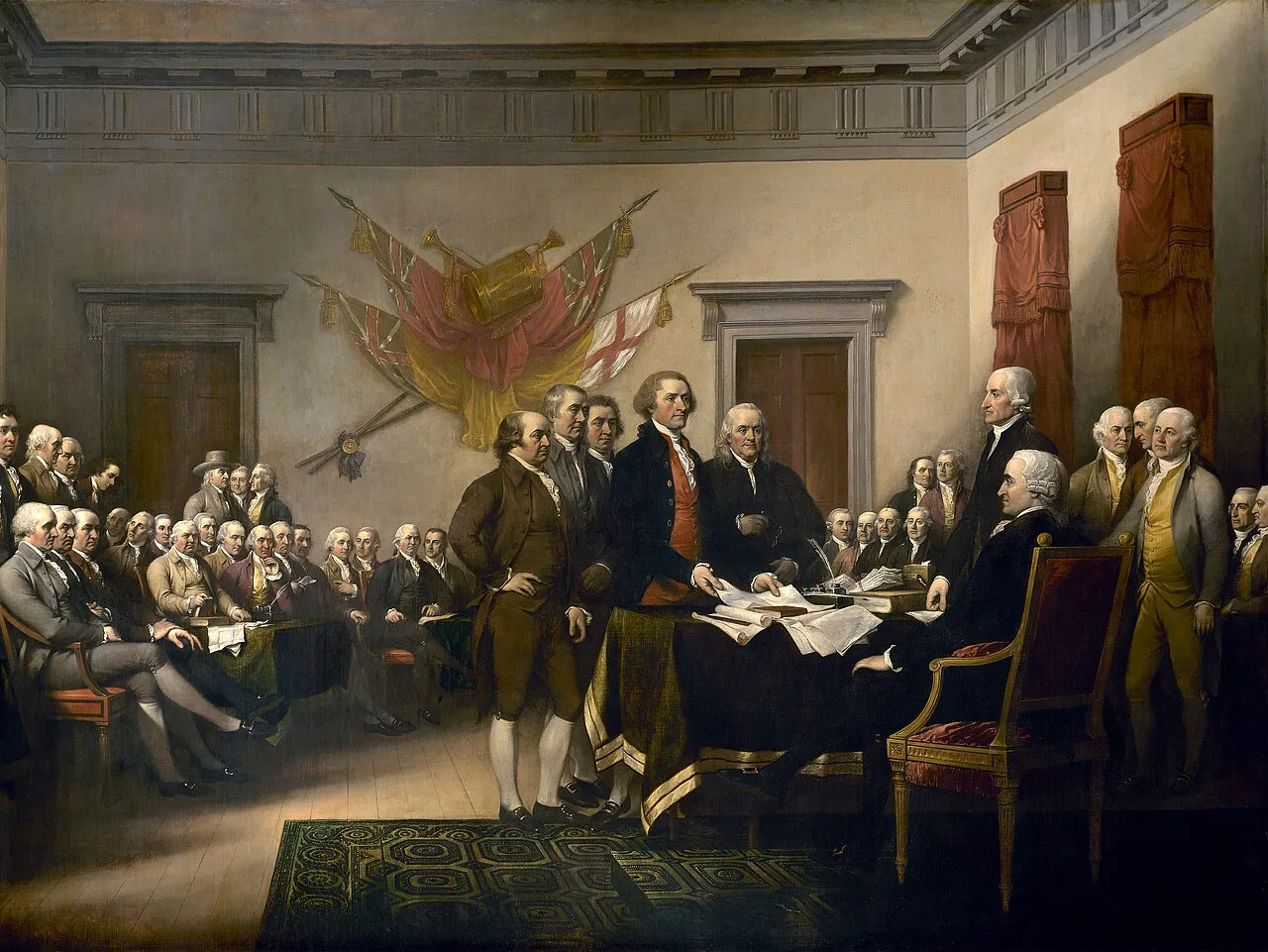 Declaration of Independence, painting by John Trumbull, 1818. The committee of five presents its draft to CongressWikimedia Commons, John Trumbull, Public domain (Declaration of Independence (1819), by John Trumbull (cropped).jpg)
On 28 June the fort of palmetto logs on Sullivan’s Island, at the entrance to Charleston harbour, beats off a British fleet.
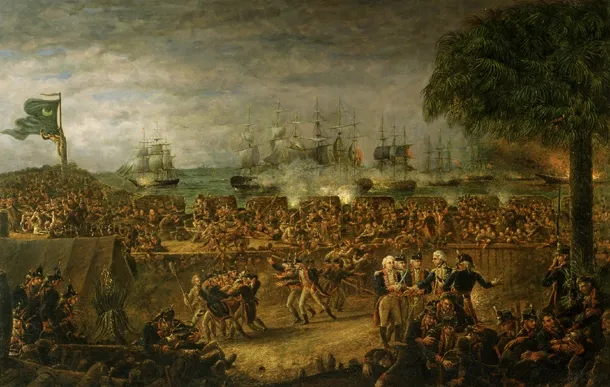 The Battle of Fort Moultrie on Sullivan's Island, 28 June 1776, painting by John Blake White, 1826Wikimedia Commons, John Blake White (1781 - 1859), Public domain (Battle of fort moultrie.JPG)
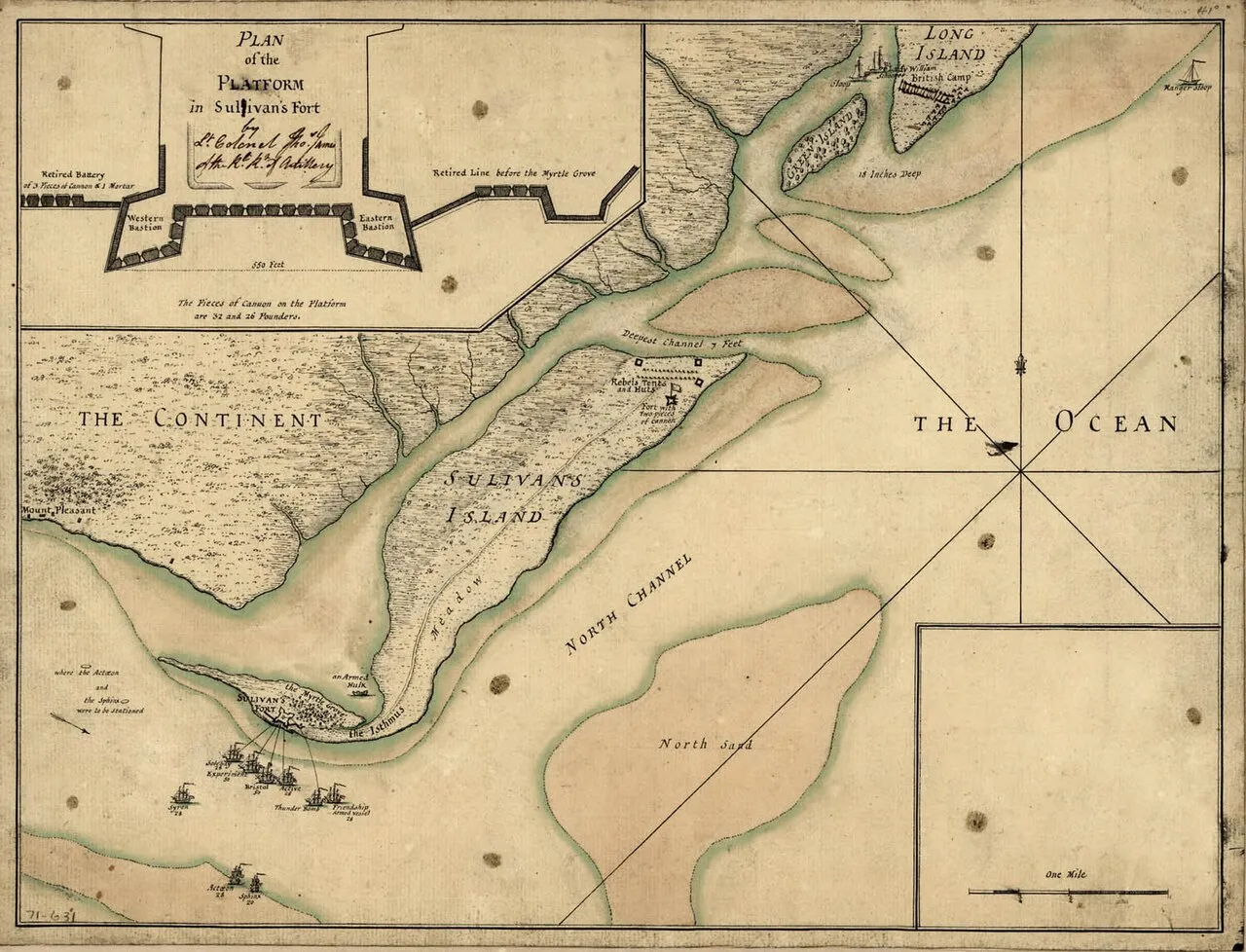 Plan of the attack on Fort Sullivan by a British squadron on 28 June 1776, drawn by Thomas James of the Royal Artillery, engraved by William FadenWikimedia Commons, Thomas James and William Faden, Public domain (Fort-Sullivan.jpg)
Lee’s resolution passes on 2 July with twelve colonies in favour and New York abstaining. On 4 July Congress adopts the amended text. It lists the king’s offences, from the dissolved assemblies to the Quebec Act and the hired German troops, and declares the political connection with Great Britain dissolved.
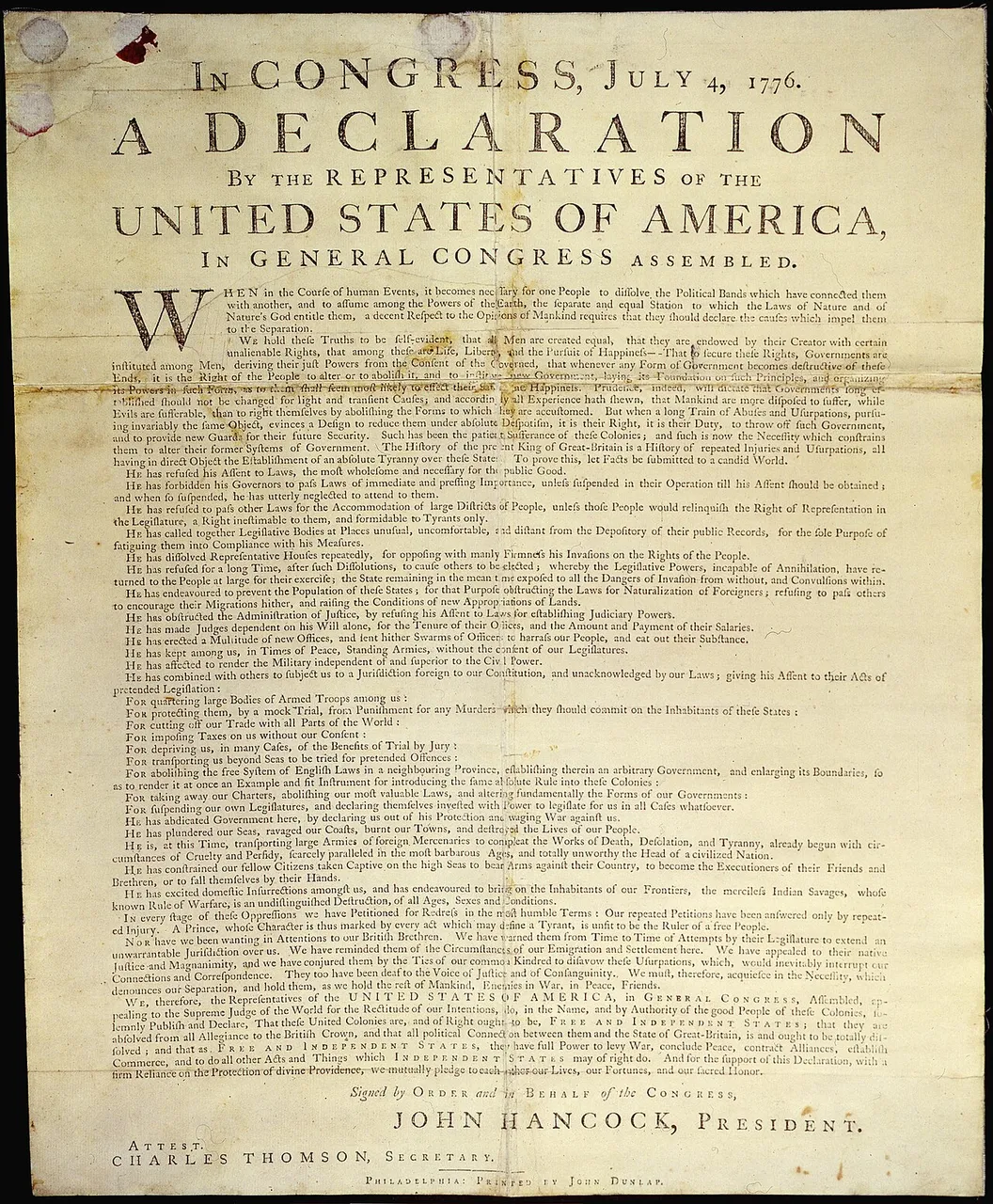 The Declaration as first printed by John Dunlap in Philadelphia, July 1776Wikimedia Commons, Unknown author, Public domain (Dunlap Broadside (Declaration of Independence) - NARA - 301682.jpg)
Sources
- Robert Middlekauff, The Glorious Cause (2005).
- David McCullough, 1776 (2005).
- Pauline Maier, American Scripture (1997).
Prev: Valcour Island: the escapeNext: Sullivan’s Island: the fleet against the fort