January to March 1781
Cowpens, Guilford Court House, and the Articles in force
Nathanael Greene takes over the southern army in December and splits it. Daniel Morgan’s wing meets Tarleton at Cowpens on 17 January 1781 and destroys most of his force with a double envelopment. Cornwallis burns his baggage and chases Greene north to the Dan River, but Greene is across by 14 February.
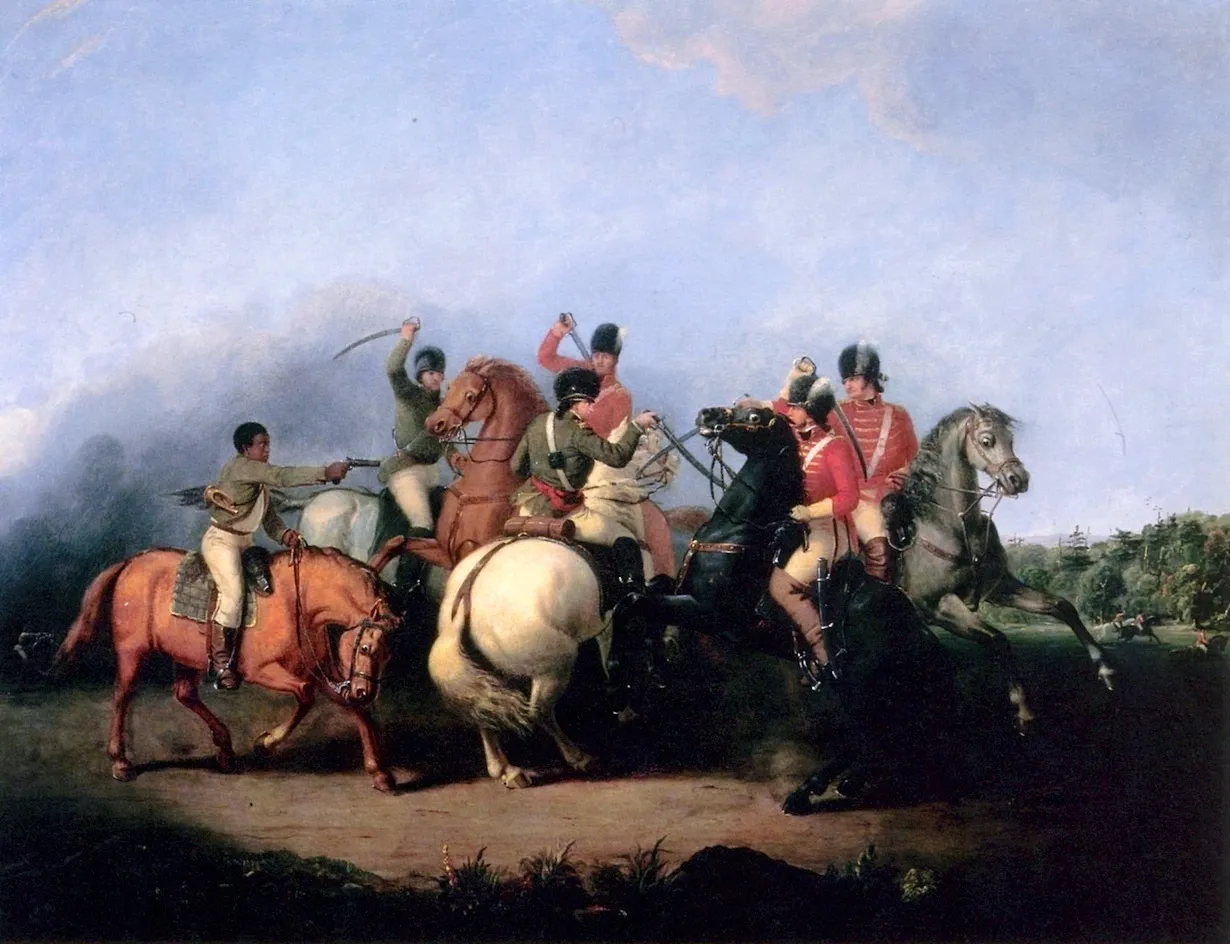 The Battle of Cowpens, 17 January 1781, painting by William Ranney, 1845Wikimedia Commons, William Ranney, Public domain (Cowpens.jpg)
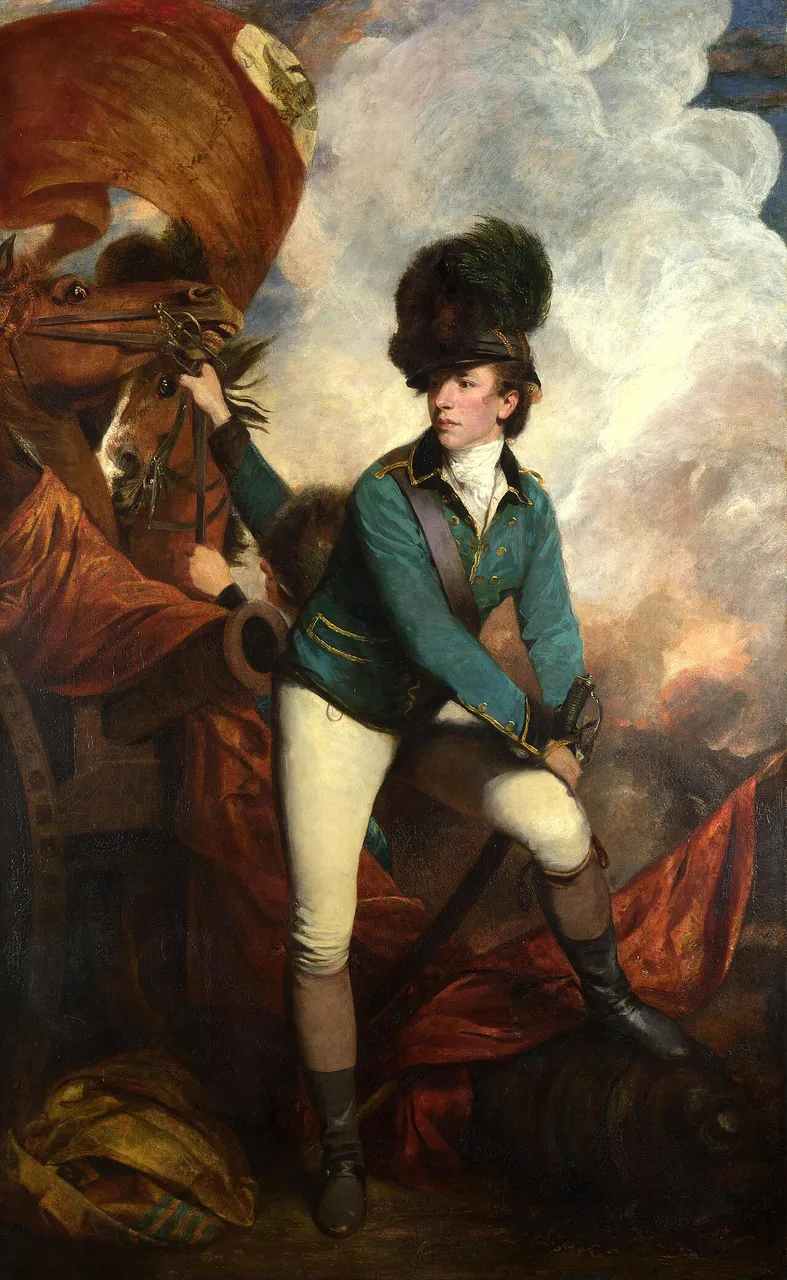 Banastre Tarleton, portrait by Joshua Reynolds, 1782Wikimedia Commons, Joshua Reynolds, Public domain (Banastre-Tarleton-by-Joshua-Reynolds.jpg)
Greene turns and offers battle at Guilford Court House on 15 March. Cornwallis holds the field but loses a quarter of his army, and marches to the coast at Wilmington to refit. In April he takes the war into Virginia. Greene turns south and attacks the British posts in South Carolina, and by the end of the year the British there hold little beyond Charleston and Savannah.
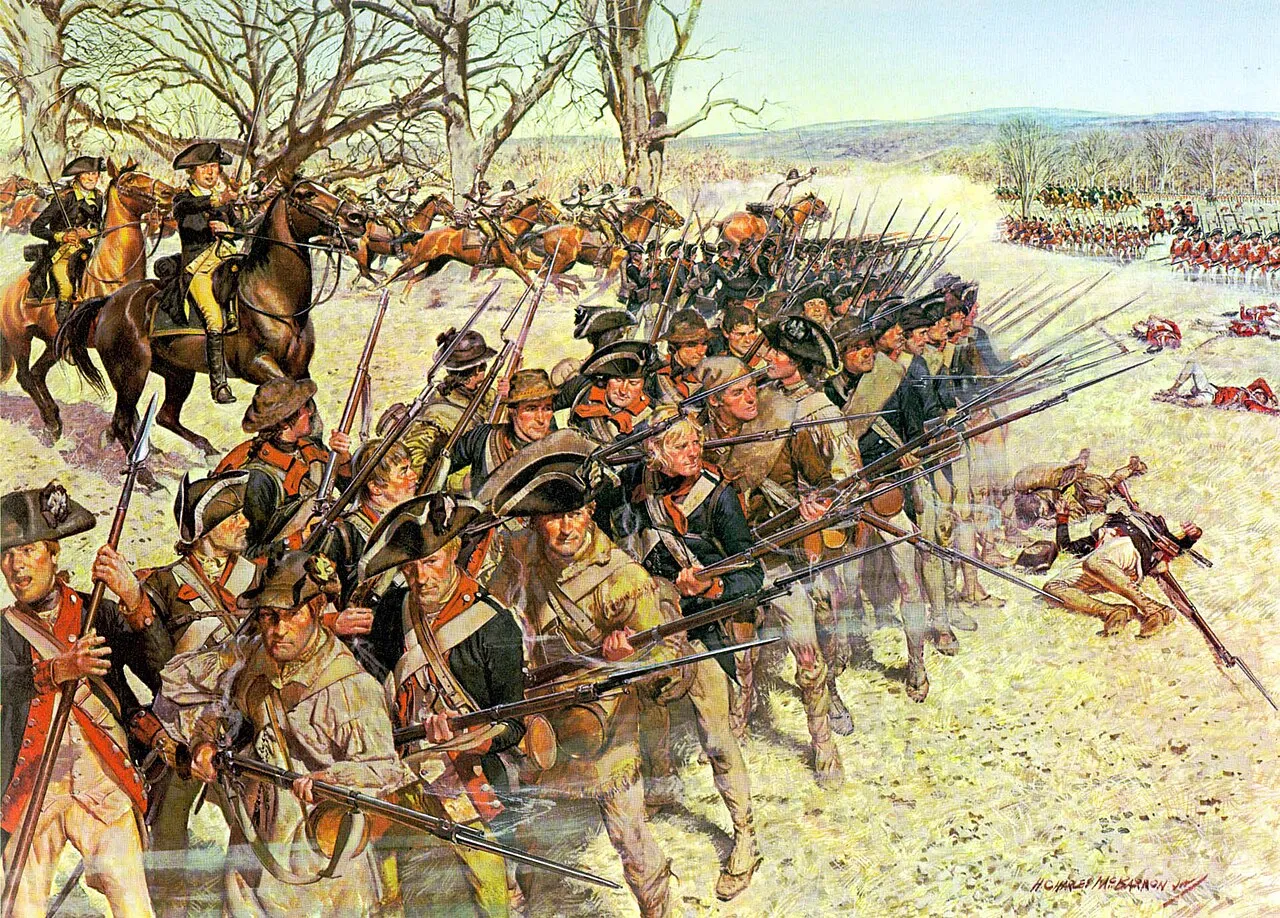 The Battle of Guilford Court House, 15 March 1781, painting by H. Charles McBarron Jr. for the United States ArmyWikimedia Commons, H. Charles McBarron Jr., Public domain (Battle of Guilford Courthouse 15 March 1781.jpg)
On 1 March, with Maryland the last to sign, the Articles of Confederation come into force. The United States has a written constitution: a congress of states with one vote each, with no executive, no national courts and no power to tax.
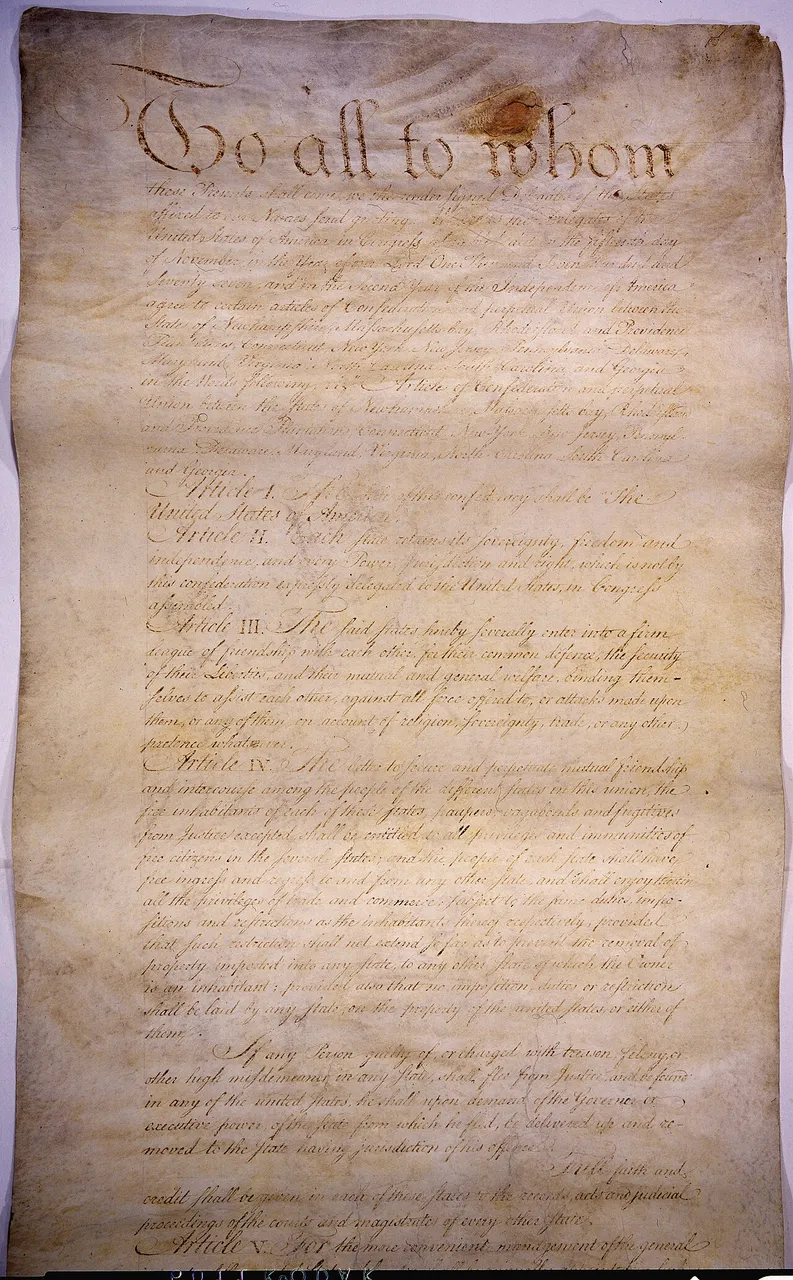 First page of the Articles of Confederation as sent to the states in November 1777Wikimedia Commons, United States government, Public domain (Articles page1.jpg)
Sources
- Robert Middlekauff, The Glorious Cause (2005).
- John Ferling, Almost a Miracle (2007).
- Lawrence E. Babits, A Devil of a Whipping (1998).
Prev: Charleston: the surrenderNext: Cowpens: Morgan’s three lines