March to June 1774
The Coercive Acts and the Quebec Act
Parliament punishes Massachusetts. The Boston Port Act closes the harbour from 1 June 1774 until the tea is paid for. The Massachusetts Government Act of 20 May replaces the elected council with one appointed by the crown and limits town meetings to one a year unless the governor calls more. Royal officials may be tried in Britain or another colony when the governor judges that a fair trial is impossible in Massachusetts.
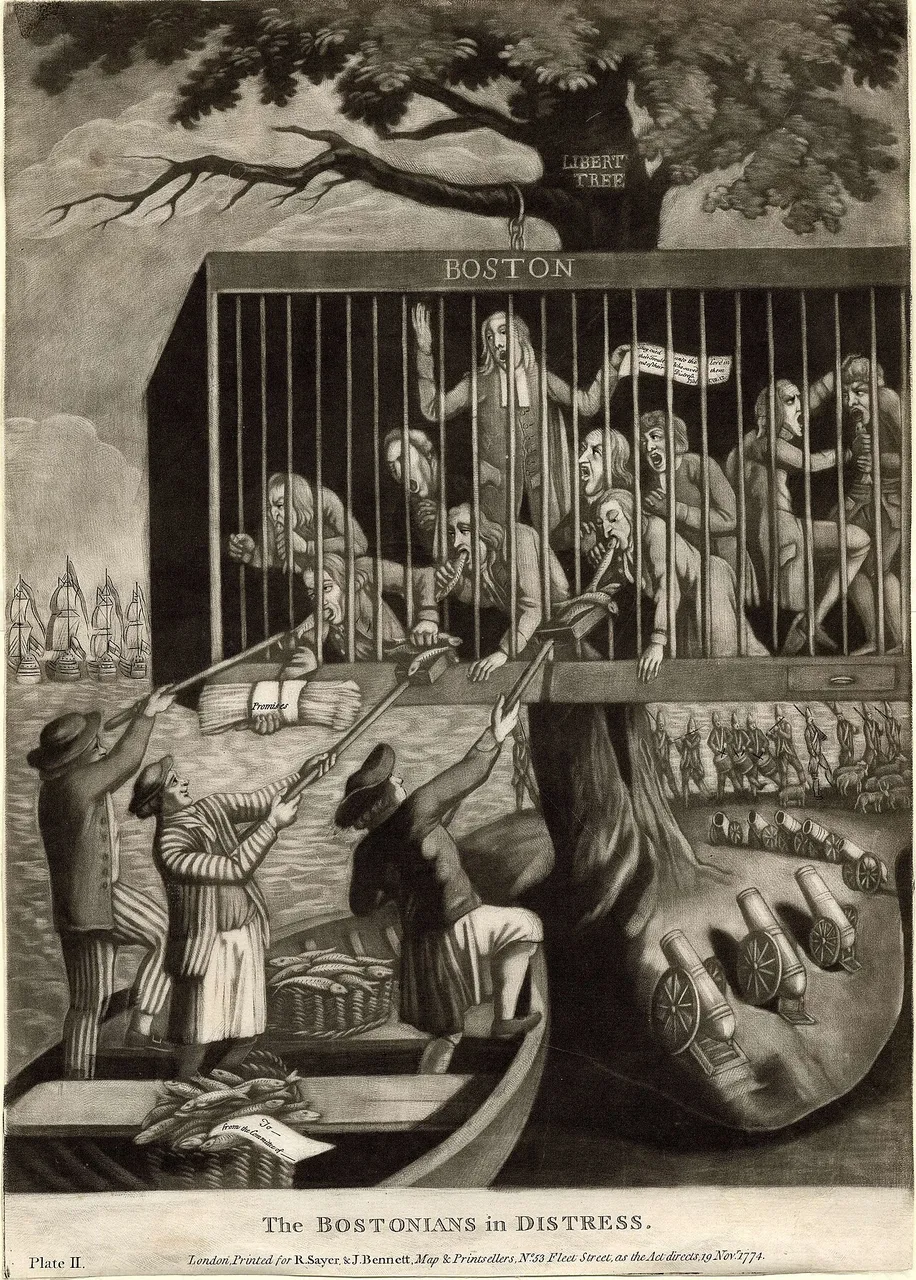 The Bostonians in Distress, British mezzotint on the closing of the port, 1774Wikimedia Commons, Unknown artist, Public domain (The Bostonians in Distress mezzotint 1774.jpg)
General Gage arrives as governor in May, and by 1775 about 3,000 British troops are in Boston. A new Quartering Act allows soldiers to be housed in unoccupied buildings. The colonies call these laws the Intolerable Acts, and colonies as far away as South Carolina send Boston supplies.
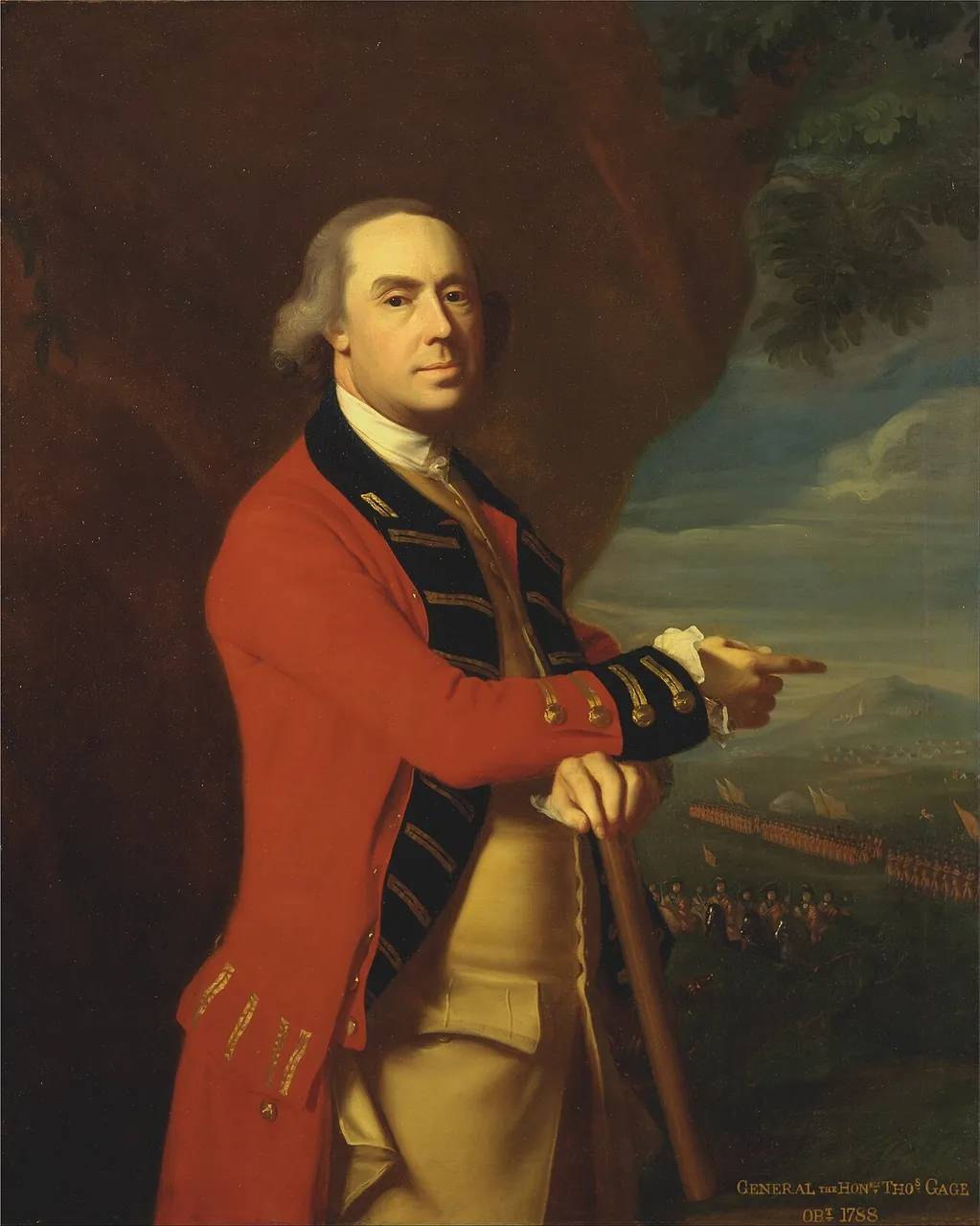 General Thomas Gage, governor of Massachusetts from 1774, portrait by John Singleton Copley, about 1768Wikimedia Commons, John Singleton Copley, Public domain (John Singleton Copley - General Thomas Gage - Google Art Project.jpg)
In June the Quebec Act extends the province of Quebec south and west over the Ohio country to the Mississippi, taking in part of the Indian reserve of 1763. It keeps French civil law, gives the province no elected assembly and tolerates the Catholic church. Virginians and Pennsylvanians with claims beyond the mountains, and Protestant New Englanders, see it as part of the same policy.
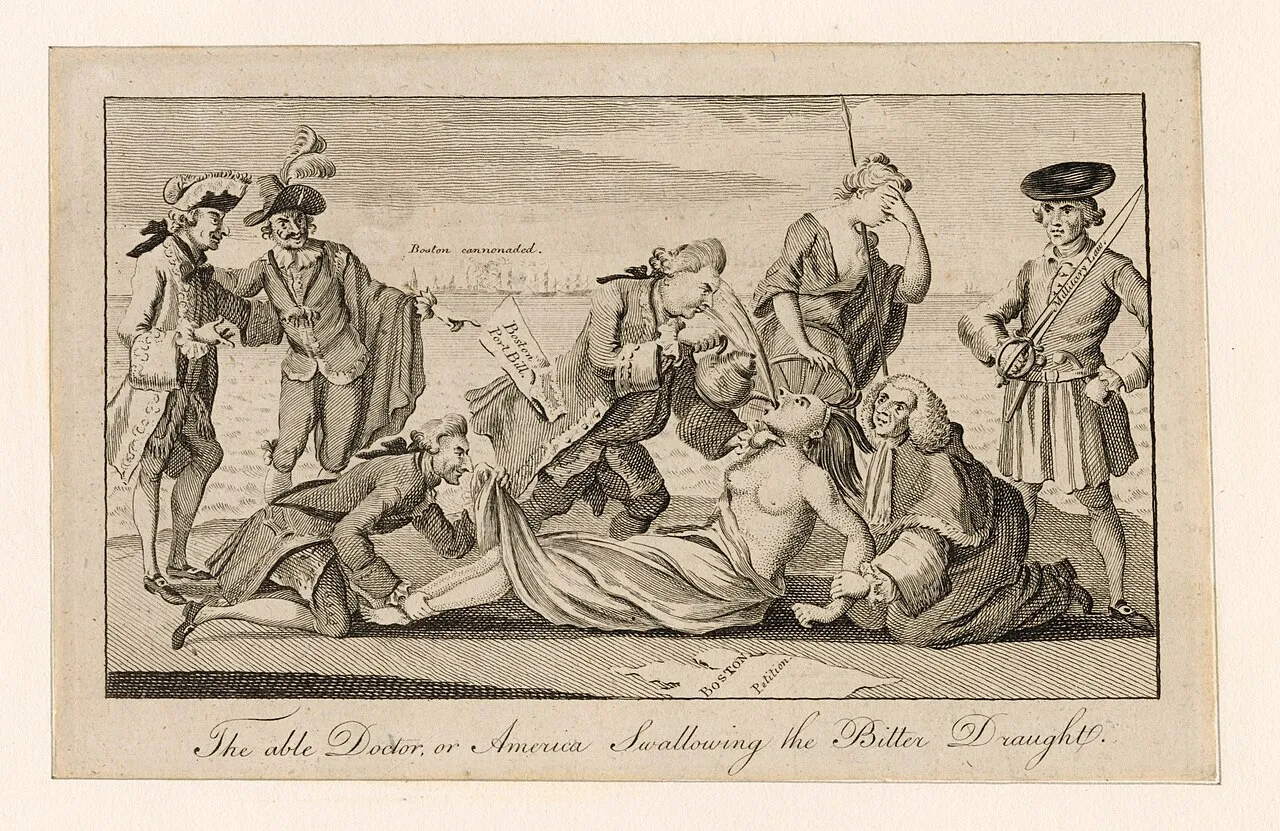 The Able Doctor, or America Swallowing the Bitter Draught, cartoon on the Coercive Acts from The London Magazine, 1774Wikimedia Commons, Scan by NYPL, Public domain (The able doctor, or America swallowing the bitter draught (NYPL Hades-248165-425086).jpg)
Sources
- Robert Middlekauff, The Glorious Cause (2005).
- Gordon S. Wood, The American Revolution: A History (2002).
Prev: The Boston Tea PartyNext: The First Continental Congress