1 April to 7 May 1780
Charleston: the harbour and the neck
Clinton opens his siege on 1 April, 800 yards (730 m) from the American lines across the neck, where Marion Square is today. Commodore Abraham Whipple judges the harbour bar impossible to defend and sinks his ships across the mouth of the Cooper River. On 8 April Admiral Mariot Arbuthnot brings 14 vessels past the guns of Fort Moultrie into the harbour, and the same day 750 Virginia Continentals under William Woodford reach the city.
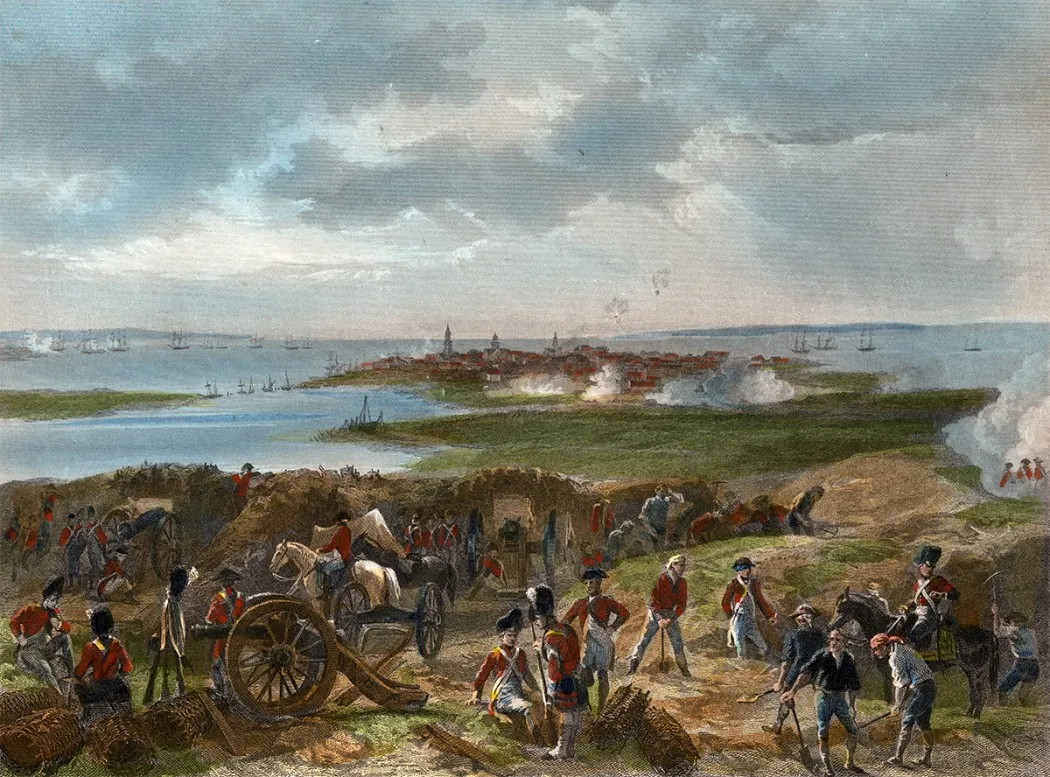 British siege guns before Charleston in 1780, the city across the water behind them, engraving after Alonzo Chappel, 1862Wikimedia Commons, Alonzo Chappel, Public domain (Sullivans-island-1050x777.jpg)
Governor John Rutledge leaves the city on 13 April, and Lord Rawdon brings 2,500 more British troops on 18 April. On 21 April Lincoln offers to surrender with the honours of war, and Clinton refuses. The British dig closer, and by 6 May their works reach the canal in front of the American lines and drain it. Fort Moultrie surrenders without a fight on 7 May.
Sources
- Carl P. Borick, A Gallant Defense: The Siege of Charleston, 1780 (2003).
- John Buchanan, The Road to Guilford Courthouse (1997).
Prev: Charleston: Clinton closes inNext: Charleston: the surrender