May to October 1780
Charleston, Camden and Kings Mountain
Clinton besieges Charleston by land and sea and takes it on 12 May 1780 with Benjamin Lincoln’s whole army, more than five thousand men. It is the largest American surrender of the war. Clinton returns to New York and leaves Cornwallis to hold the Carolinas.
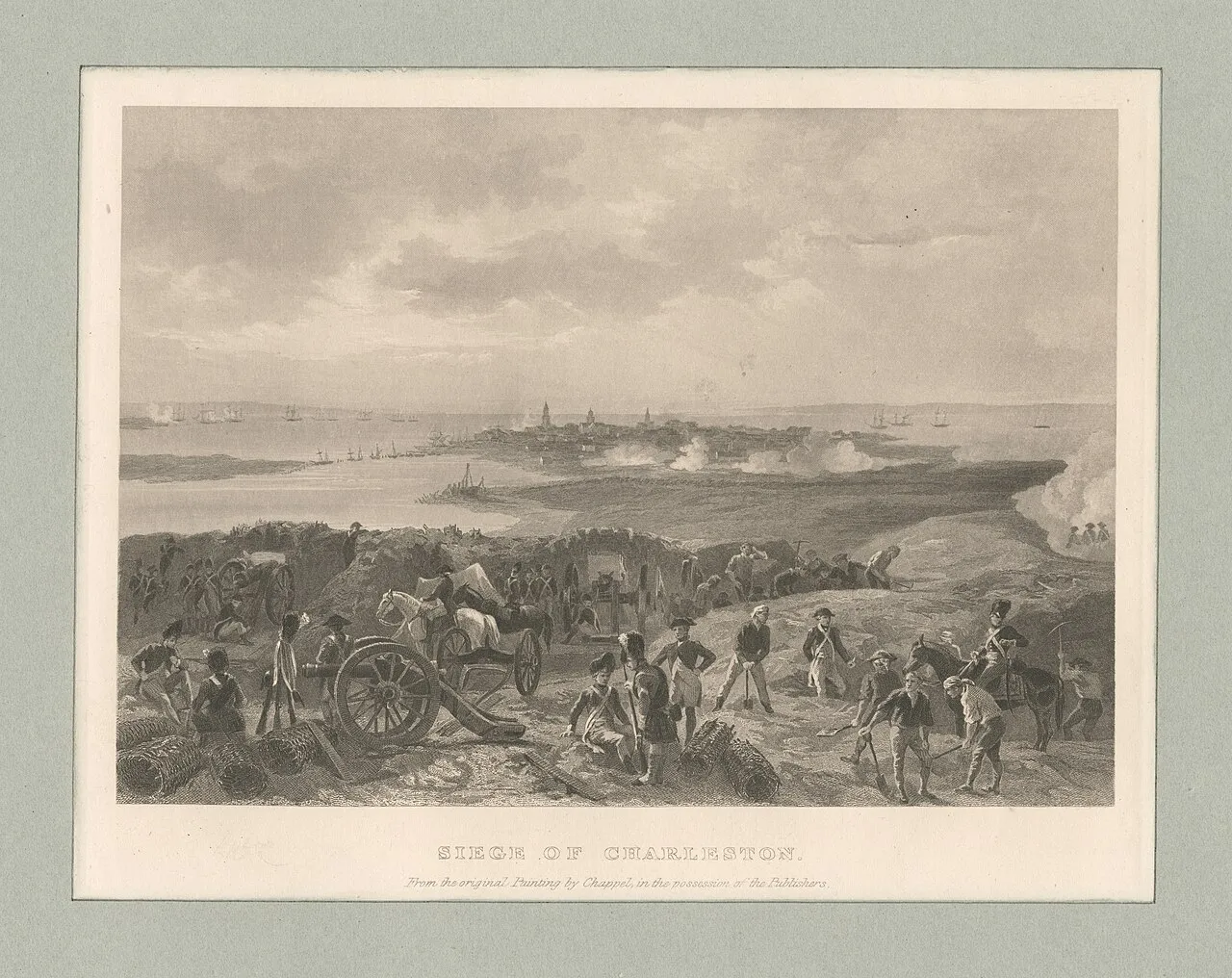 The siege of Charleston, 1780, engraving after a painting by Alonzo ChappelWikimedia Commons, Scan by NYPL, Public domain (Siege of Charleston (NYPL NYPG96-F27-421356).jpg)
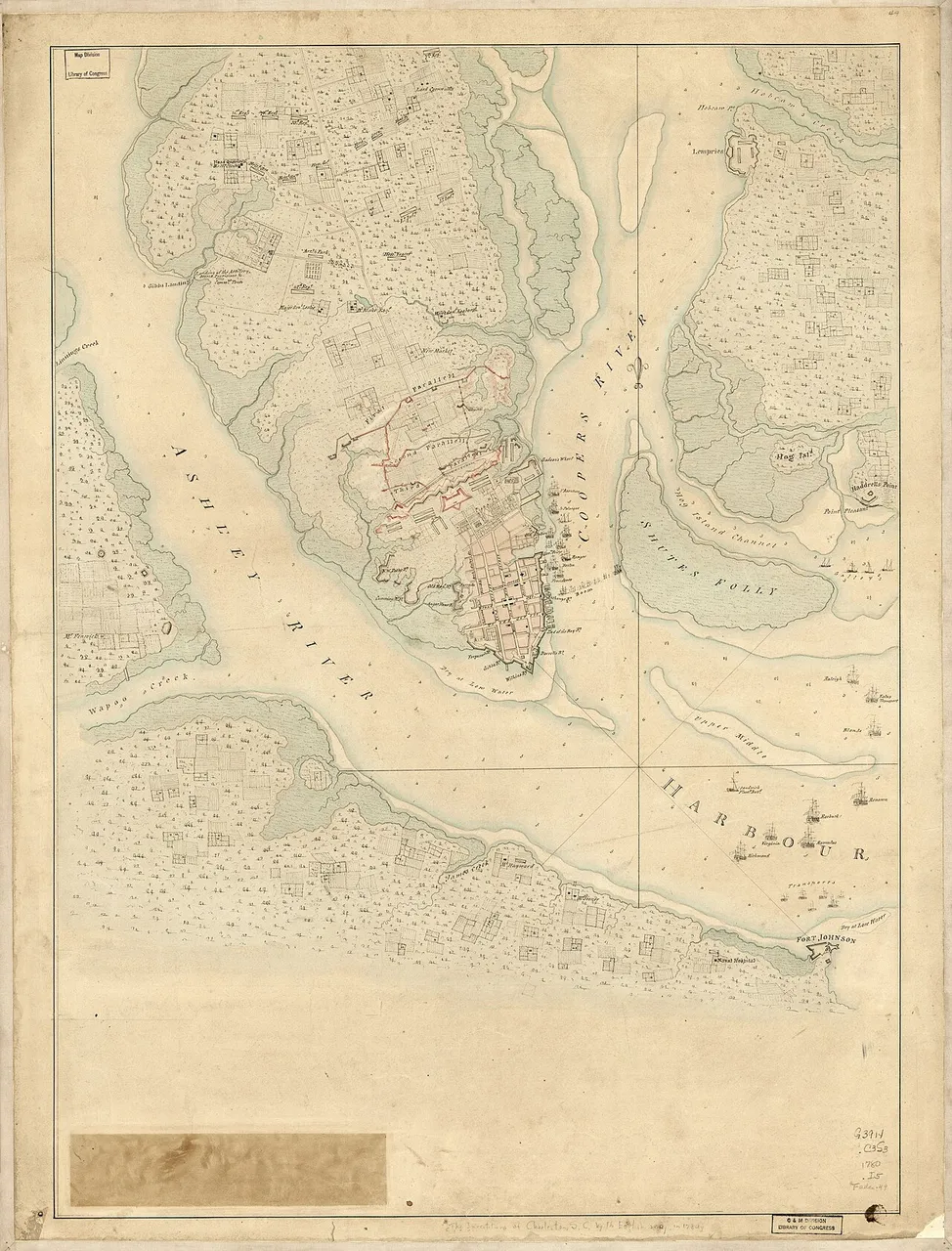 Plan of the British investment of Charleston in 1780Wikimedia Commons, Unknown author, Public domain ((The Investiture of Charleston, S.C. by the English army, in 1780. With the position of each corps. LOC gm71000638.jpg)
Horatio Gates, the victor of Saratoga, takes command of the southern army in July. At Camden on 16 August the army is routed when the militia break before a British bayonet charge. Gates reaches Charlotte, sixty miles away, the same evening.
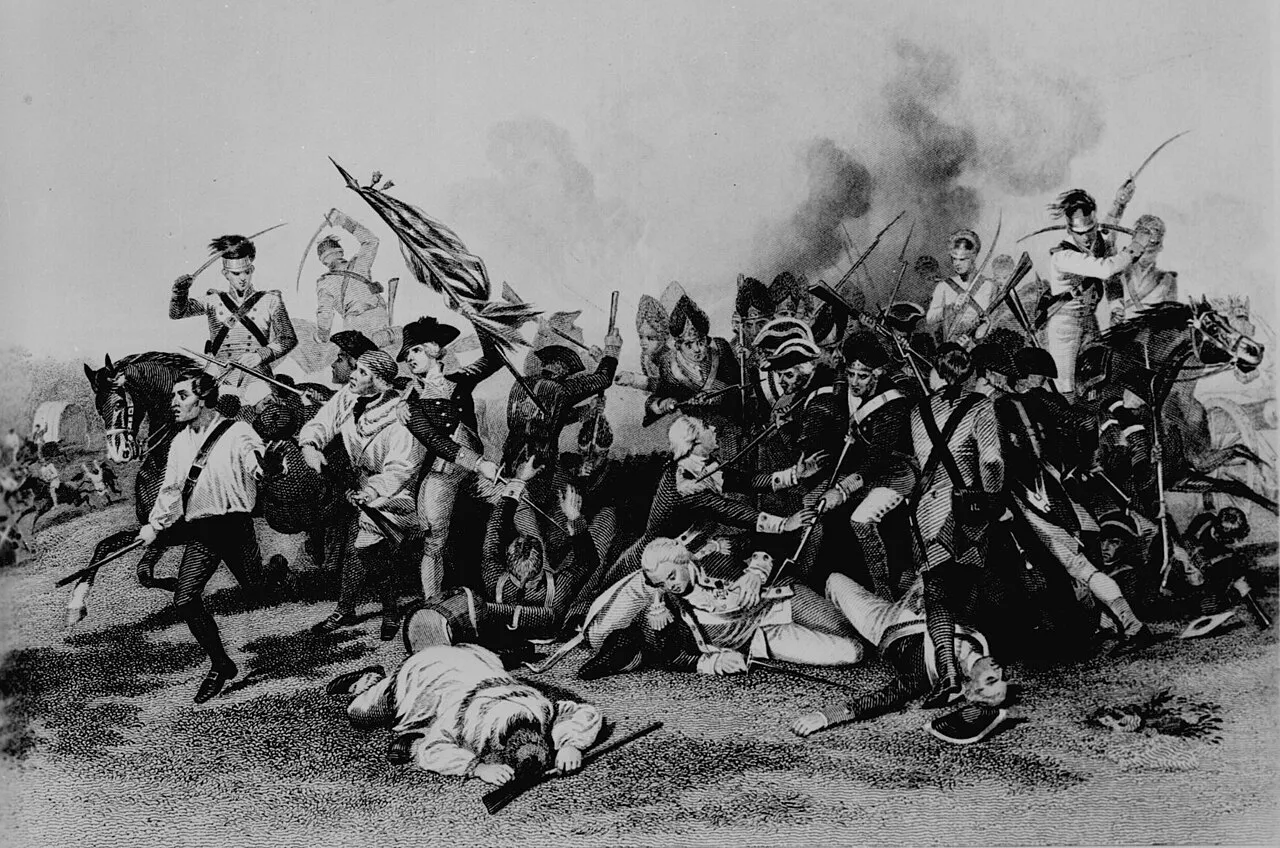 The death of de Kalb at the Battle of Camden, 16 August 1780, engraving after Alonzo ChappelWikimedia Commons, Alonzo Chappel (1828–1887), Public domain (Battle of Camden.jpg)
The Carolina back country becomes a civil war of Loyalist and Patriot militia. On 7 October frontier riflemen surround Patrick Ferguson’s Loyalist corps on Kings Mountain and destroy it. Cornwallis withdraws from Charlotte back into South Carolina. In the same weeks Benedict Arnold’s plot to hand West Point to the British is discovered, and he escapes to New York.
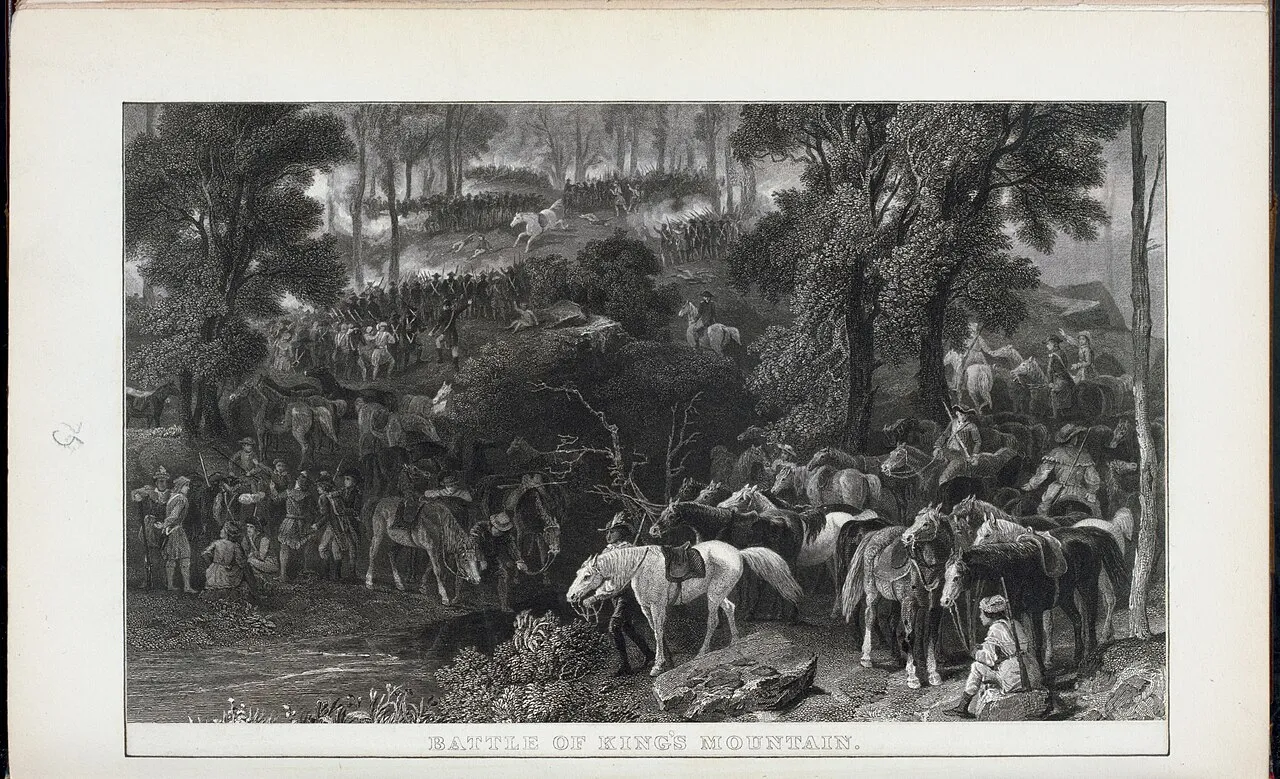 The Battle of Kings Mountain, 7 October 1780, nineteenth century engravingWikimedia Commons, Scan by NYPL, Public domain (Battle of King's Mountain (NYPL Hades-257500-EM15424).jpg)
Sources
- Robert Middlekauff, The Glorious Cause (2005).
- John Ferling, Almost a Miracle (2007).
- John Buchanan, The Road to Guilford Courthouse (1997).
Prev: Pensacola: the Crescent explodesNext: Charleston: Clinton closes in