September to December 1775
The invasion of Canada
Congress sends two forces to take the province of Quebec and bring its inhabitants into the revolt. Richard Montgomery leads one north from Ticonderoga along Lake Champlain, takes Fort St Johns after a long siege and enters Montreal on 13 November. Benedict Arnold leaves Cambridge in September with about 1,050 men, up the Kennebec and through the Maine wilderness. After eight weeks of hunger and desertion, about six hundred reach the St Lawrence.
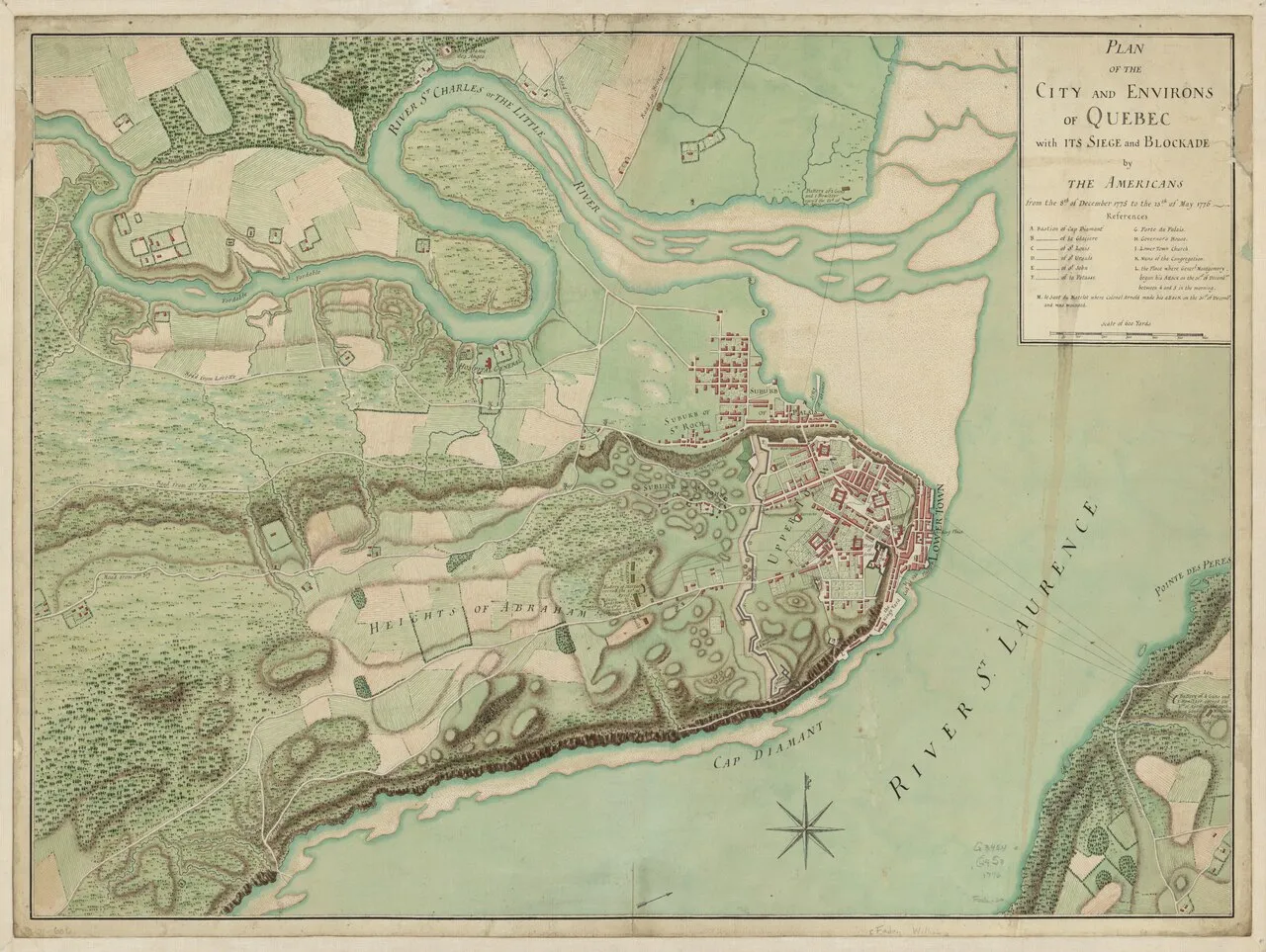 Plan of Quebec and its surroundings during the American siege and blockade, 1776Wikimedia Commons, Unknown author, Public domain (Plan of the city and environs of Quebec, with its siege and blockade by the Americans from the 8th of December, 1775 to the 13th of May, 1776. LOC gm71000606.tif)
The two join before the walls of Quebec, and in a snowstorm on the last night of the year they assault the Lower Town. Montgomery is killed at the Près-de-Ville blockhouse, Arnold is wounded and over four hundred Americans are captured. The remaining troops keep up a blockade of the city through the winter.
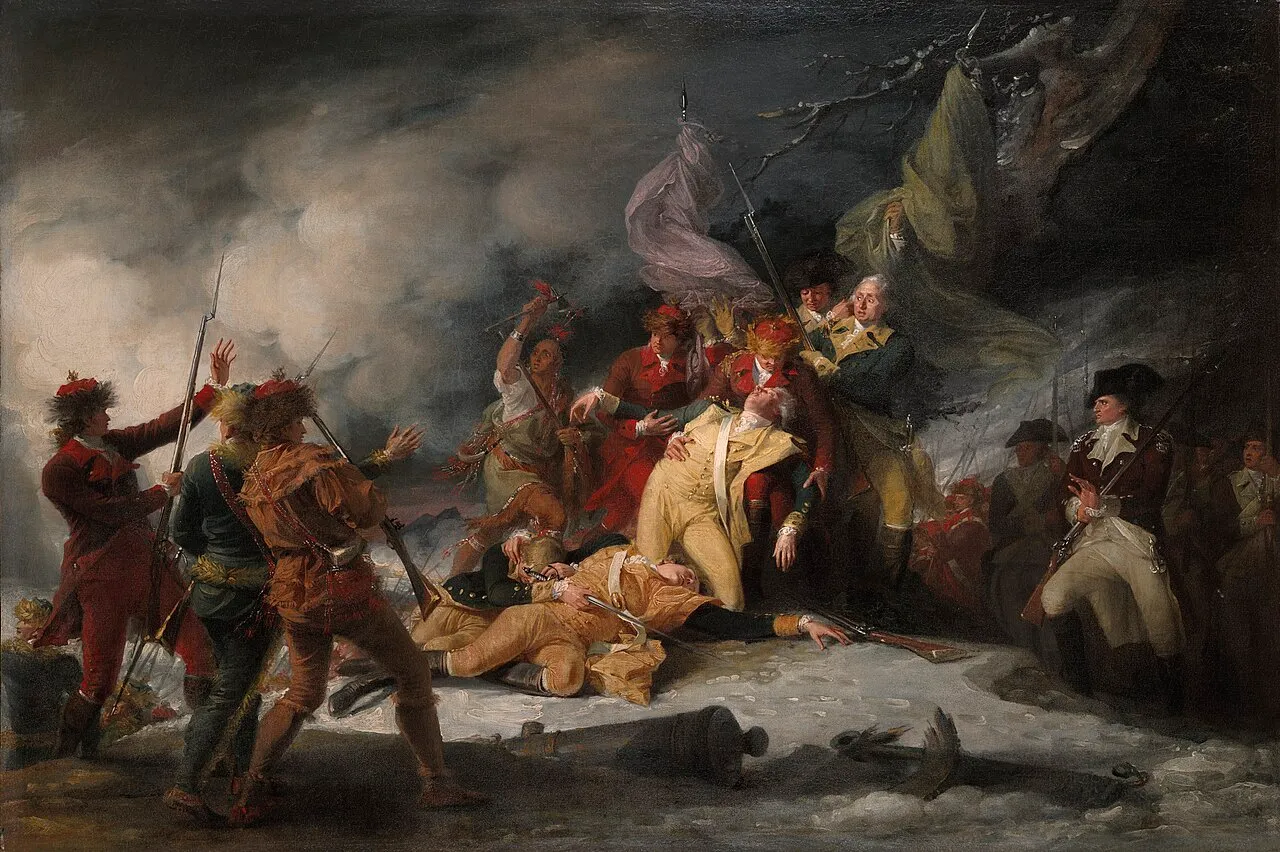 The Death of General Montgomery in the Attack on Quebec, 31 December 1775, painting by John Trumbull, 1786Wikimedia Commons, John Trumbull, Public domain (The Death of General Montgomery in the Attack on Quebec December 31 1775.jpeg)
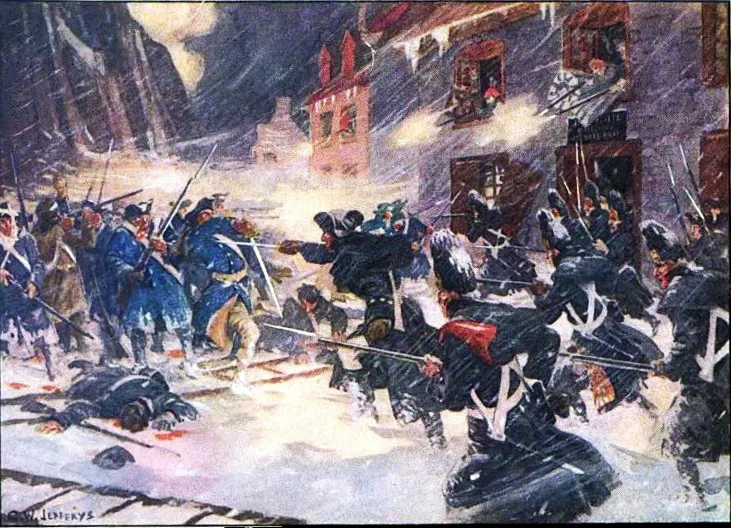 Canadian militia and British soldiers repulse the American assault at Sault-au-Matelot, painting by Charles William Jefferys, 1916Wikimedia Commons, Charles William Jefferys, Public domain (Canadian militiamen and British soldiers repulse the American assault at Sault-au-Matelot.jpg)
Sources
- Robert Middlekauff, The Glorious Cause (2005).
- David McCullough, 1776 (2005).
- Mark R. Anderson, The Battle for the Fourteenth Colony (2013).
Prev: Bunker Hill: the third attackNext: Quebec: the attack in the snowstorm