January to March 1776
Common Sense, and the British leave Boston
In January 1776 Thomas Paine’s pamphlet Common Sense argues for independence and against monarchy, and sells tens of thousands of copies. Paine puts the quarrel with the king himself and calls it absurd that a continent should be governed by an island.
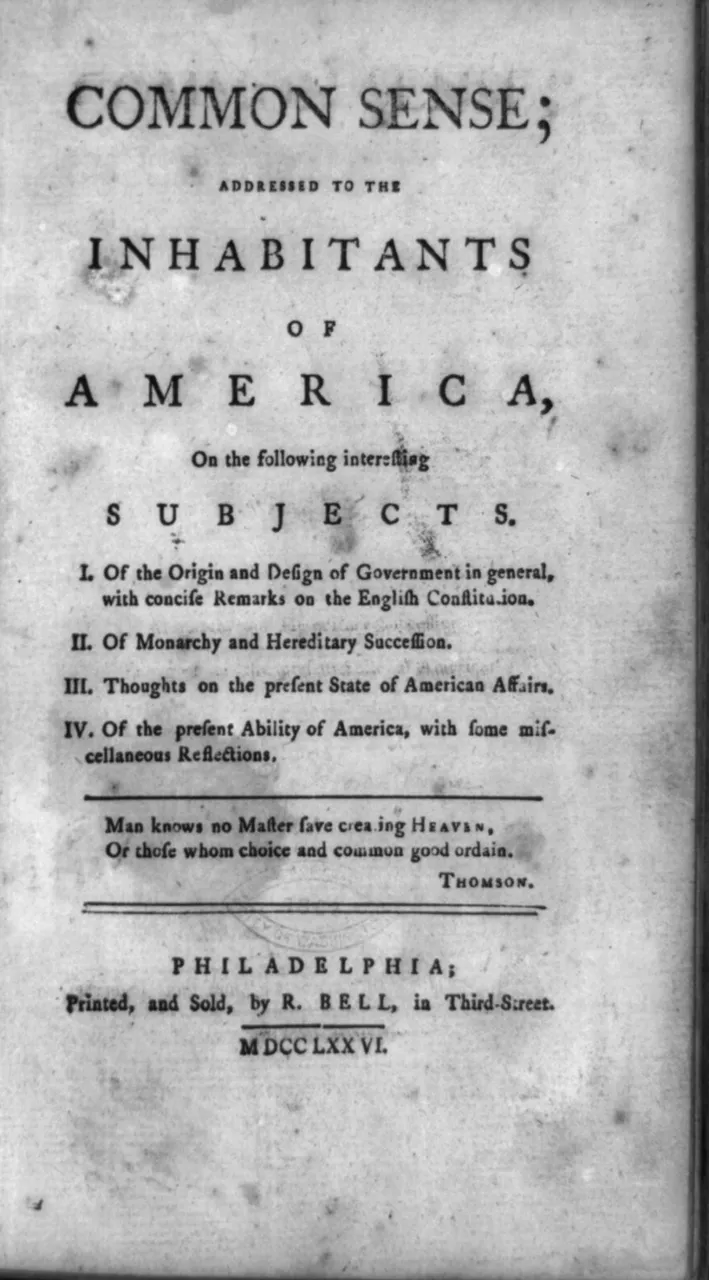 Title page of Common Sense by Thomas Paine, 1776Wikimedia Commons, Thomas Paine, Public domain (Common sense; addressed to the inhabitants of America, on the following interesting subjects LCCN2006681076.jpg)
Outside Boston, Henry Knox arrives in late January with 59 guns, mortars and howitzers hauled on sledges from Ticonderoga, three hundred miles through the winter. On the night of 4 March Washington places them on Dorchester Heights, overlooking the town and the anchorage.
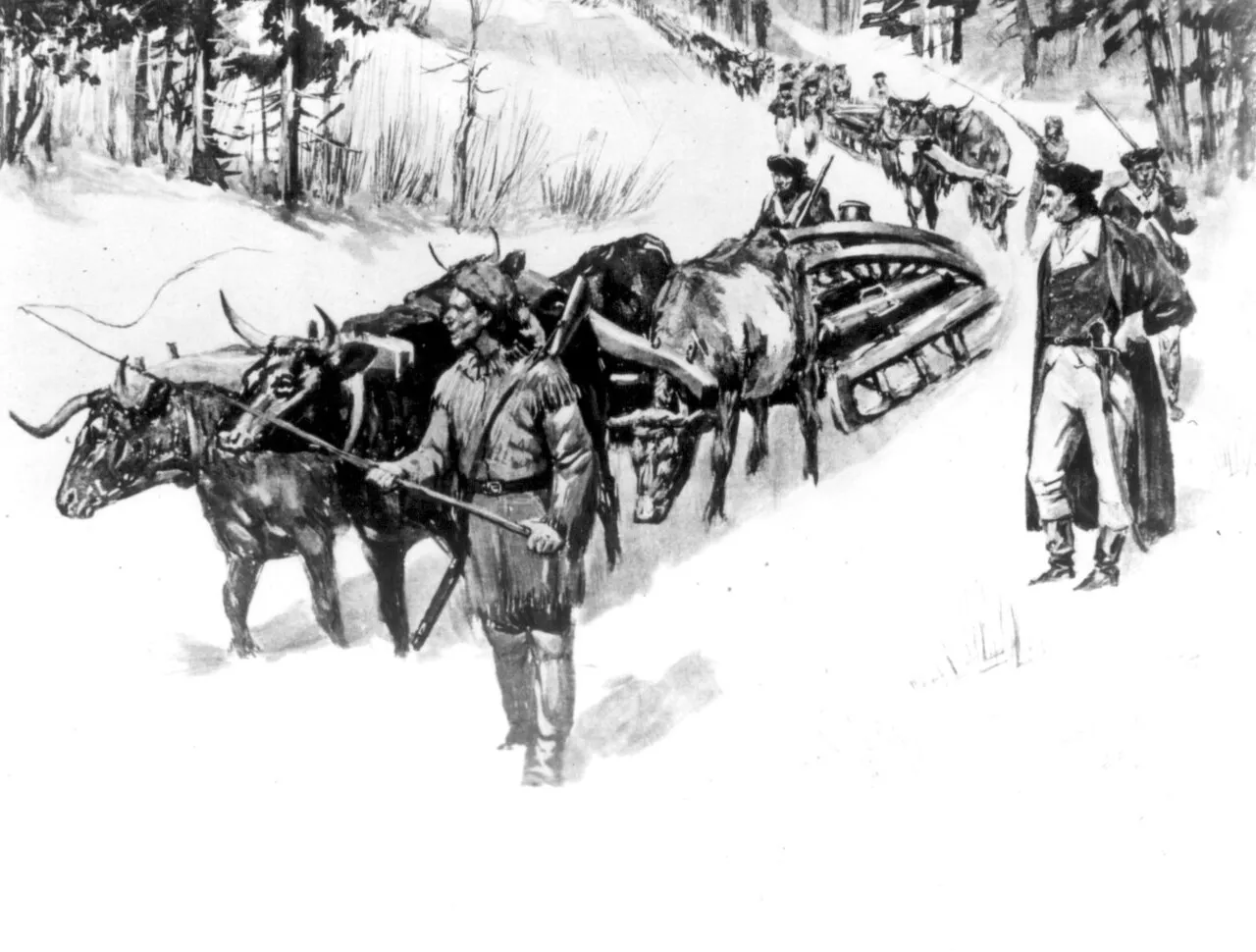 Henry Knox's teams hauling the cannon from Ticonderoga to Boston in the winter of 1775 to 1776, later illustrationWikimedia Commons, Unknown author, Public domain (Siegeofbostonartillery.jpg)
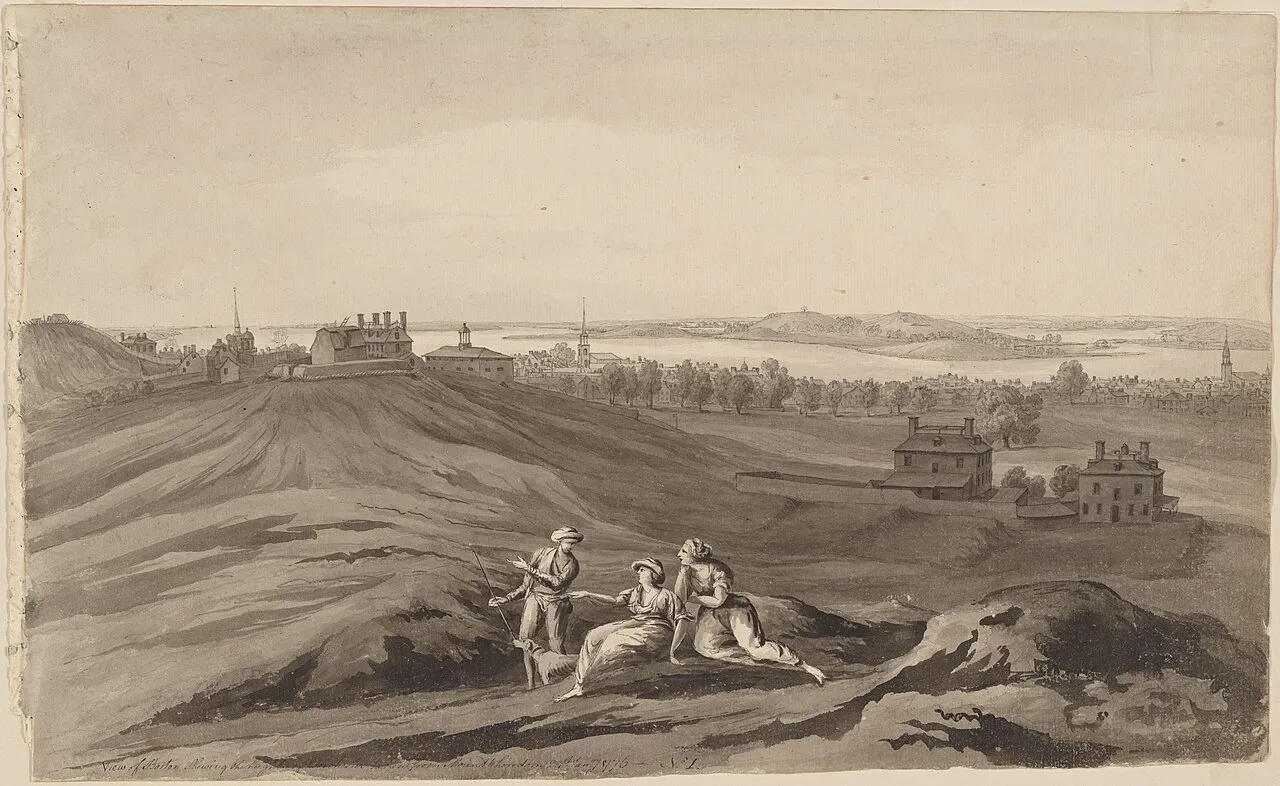 Boston and the heights of Dorchester, a British view drawn on 24 January 1776Wikimedia Commons, Scan by NYPL, Public domain (View of Boston shewing the heights of Dorchester, taken from Mount Whoredom. 24th Janry 1776. No. 1 (NYPL Hades-1847064-4024016).jpg)
General Howe, who replaced Gage in October, plans an assault on the heights, but a storm prevents it. On 17 March the garrison and more than a thousand Loyalists sail for Halifax. Massachusetts is clear of British troops.
Sources
- Robert Middlekauff, The Glorious Cause (2005).
- David McCullough, 1776 (2005).
Prev: Quebec: the barricades of the Lower TownNext: The retreat from Canada and Valcour Island