321–320 BC
Perdiccas in Egypt and the settlement of Triparadisus
The regent Perdiccas goes to war with Ptolemy in 321 BC. Ptolemy has made Egypt strong with mercenaries and the treasury he found there, and he has taken Alexander's body into Egypt.* Antipater and Craterus, who believe that Perdiccas means to invade Macedon and remove them, cross into Asia. Perdiccas takes the kings and the royal army against Egypt and sends Eumenes to hold the Hellespont against the two generals. Eumenes beats Neoptolemus, a general who had gone over to Antipater, and then Craterus himself, and both fall.
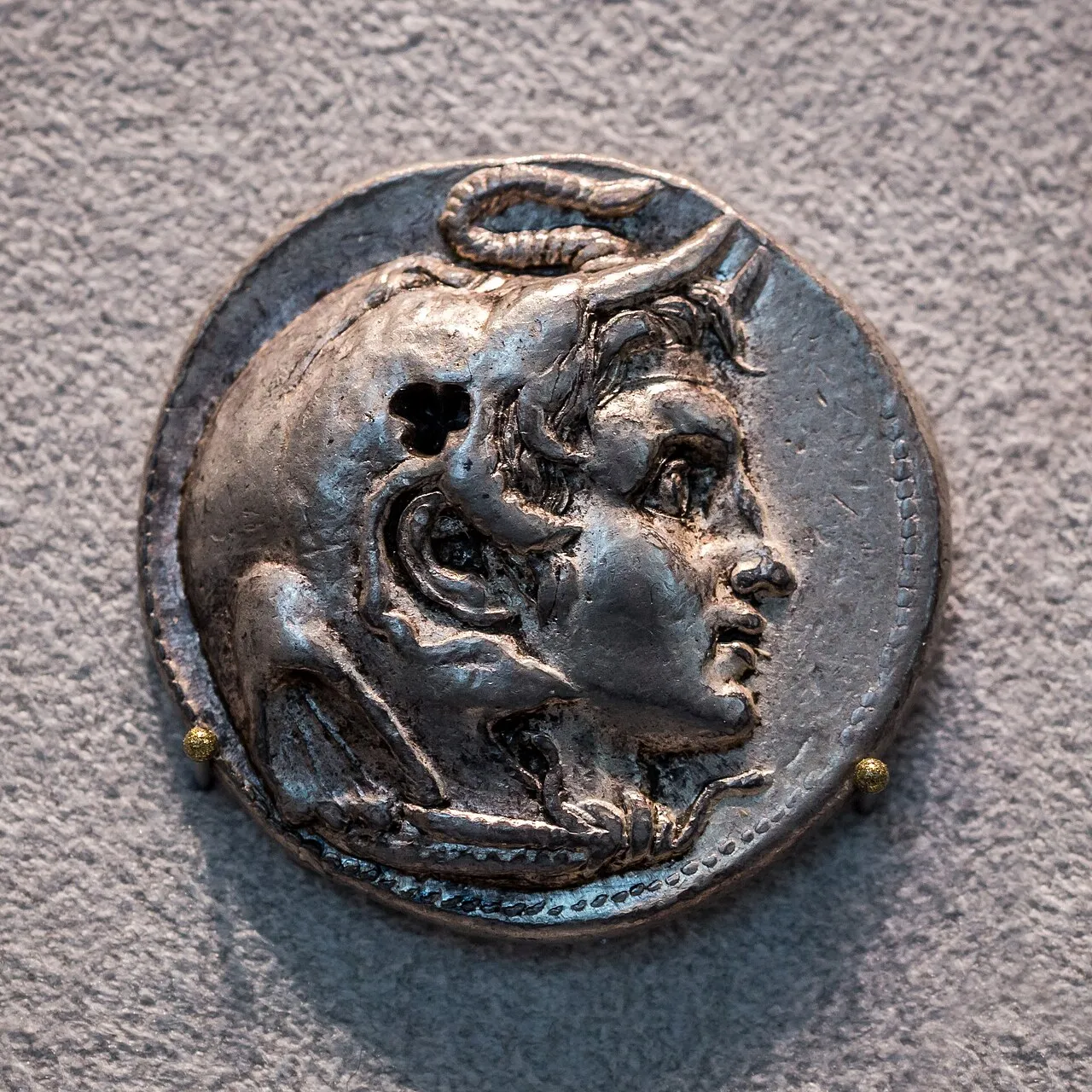 Silver tetradrachm of Ptolemy I, struck at Alexandria about 323–316 BC, with the head of Alexander. Münzkabinett BerlinArchaiOptix, CC BY-SA 4.0, via Wikimedia Commons (File:Egypt - king Ptolemaios I - 323-316 BC - silver tetradrachm - head of Alexander III - Zeus Aetophoros - Berlin MK AM 18203058.jpg)
Perdiccas reaches the Nile near Pelusium. He fails to take a fort there, then tries to cross to an island opposite Memphis, but the ford deepens under the feet of the men and animals, and the crossing fails. Diodorus says more than 2,000 men are lost, drowned or eaten by crocodiles. About a hundred officers break with Perdiccas, Peithon, satrap of Media, the most famous of them, and some of the cavalry stab him to death in his tent. News of Eumenes's victory arrives soon after, and the army condemns Eumenes to death.
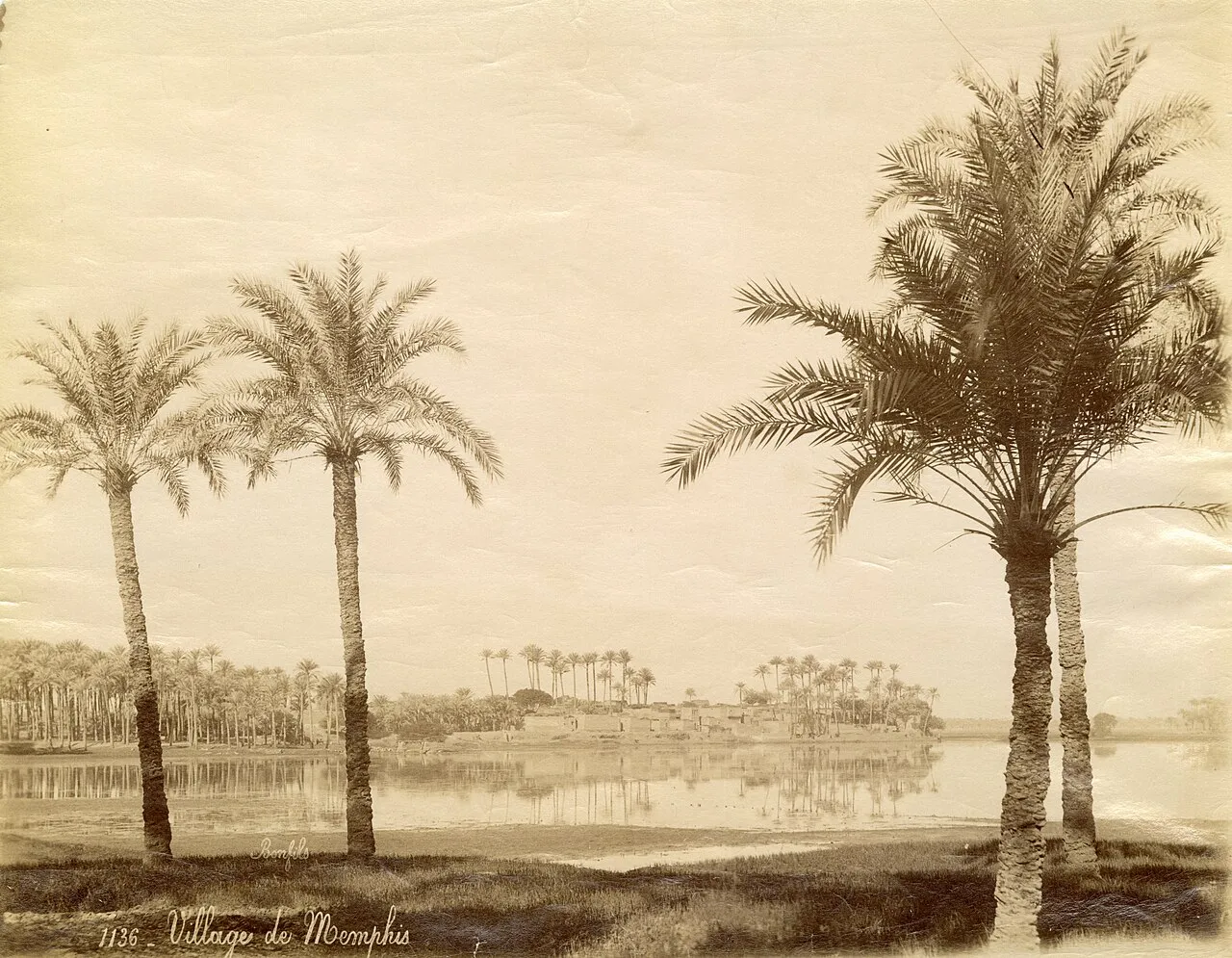 The village of Memphis and its palm groves seen from the opposite bank of the Nile, photographed by Félix Bonfils in the 19th centuryFélix Bonfils, CC0, via Wikimedia Commons (File:Miscellanea, Memphis, 19th century landscape, F. Bonfils, photo 1 of 2 - Archivio fotografico Museo Egizio, Turin INV26 001.jpg)
At Triparadisus**, a royal park in Syria whose site is not known for certain, the army makes Antipater guardian of the kings, and he shares out the satrapies again. Ptolemy keeps Egypt, which he holds, Diodorus writes, like a prize won in war, and Cyrene, which his general Ophellas took in 322 BC. Seleucus, who had commanded the Companion cavalry, receives Babylonia. Antigonus keeps Greater Phrygia and Lycia and becomes general of the royal army, with orders to finish the war against Eumenes, who still holds Cappadocia.
On the map Perdiccas's march up the Nile, which is approximate, ends opposite Memphis, and Babylonia passes to Seleucus.
Notes
* Hammond and Walbank say the funeral carriage was bound for Aegae in Macedon and was diverted at Damascus. Diodorus says the body was meant for the shrine of Ammon, and that Ptolemy met it in Syria and kept it in Egypt.
** Hammond and Walbank date the meeting at Triparadisus to the autumn of 321 BC; Bosworth dates it to the spring of 320 BC.
Sources
- Diodorus Siculus, Library of History, book 18, 21 and 25–39, tr. R. M. Geer (Loeb, 1947).
- Justin, Epitome of the Philippic History of Pompeius Trogus, book 13, 6–8, tr. J. S. Watson (1853).
- Plutarch, Life of Eumenes, 5–8, tr. B. Perrin (Loeb, 1919).
- N. G. L. Hammond and F. W. Walbank, A History of Macedonia, vol. III: 336–167 B.C. (1988), chs. V, 4 and VI.
- A. B. Bosworth, The Legacy of Alexander: Politics, Warfare and Propaganda under the Successors (2002), ch. 2 and appendix.
Prev: The Lamian WarNext: Eumenes and Antigonus: the war for Asia