342–339 BC
Thrace, and the young Alexander
In summer 342 BC Philip, already master of western Thrace, marches inland against the Odrysian kings of the Hebrus valley. In two years of fighting that the sources barely record, he deposes them, and Thrace becomes a subject land under a Macedonian general, paying a tenth of its produce in tribute. Philip plants garrisons and settlers in new towns between the Haemus mountains and the Hebrus, among them Philippopolis, today Plovdiv. No source gives a northern border; the line drawn along the Haemus, like the marches, is approximate.
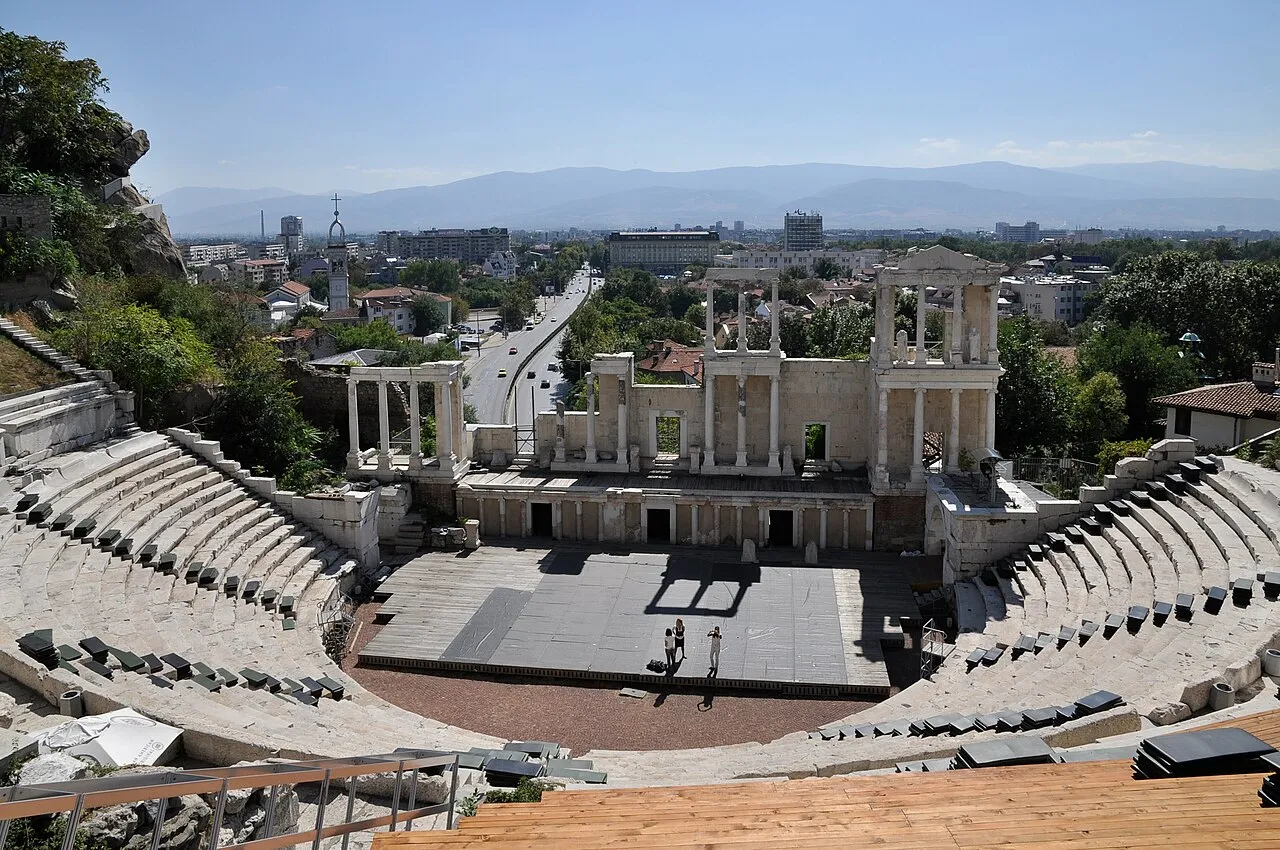 The Roman theatre of Philippopolis, today Plovdiv, on the city Philip founded; photographed in 2010Wikimedia Commons, MrPanyGoff, CC BY-SA 3.0 (File:Roman Theatre Plovdiv.jpg)
At home Alexander is fourteen, and Philip invites the philosopher Aristotle to teach him. Plutarch places their lessons in the precinct of the Nymphs near Mieza, and tells, without a date, how the boy tamed Bucephalus, a horse that Philoneicus the Thessalian offered Philip for thirteen talents: seeing that it shied at its own shadow, he turned it to face the sun and mounted it.
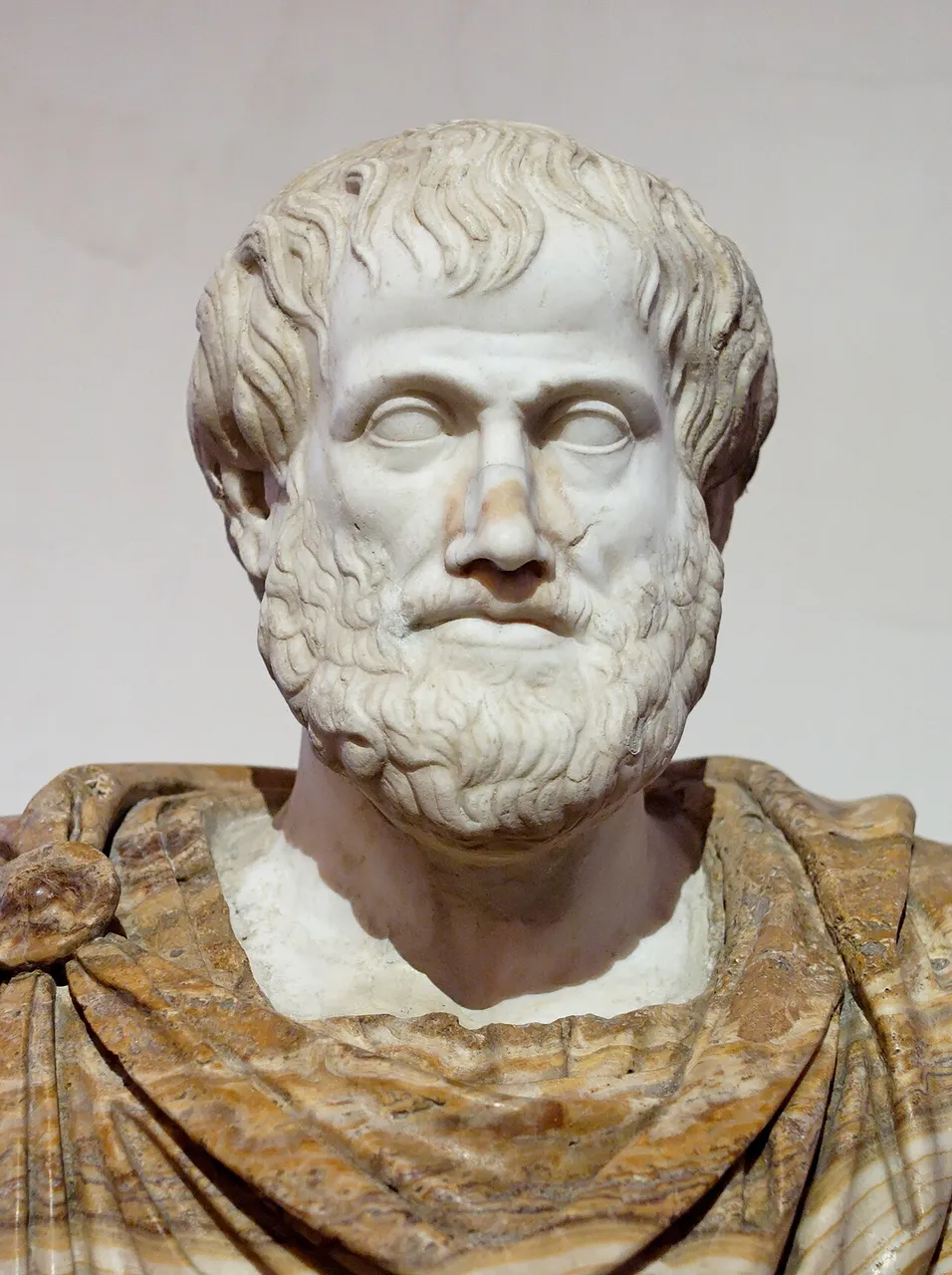 Bust of Aristotle, a Roman marble copy of a Greek bronze by Lysippos of about 330 BC, Palazzo Altemps, RomeWikimedia Commons, After Lysippos, photograph by Marie-Lan Nguyen, Public domain (File:Aristotle Altemps Inv8575.jpg)
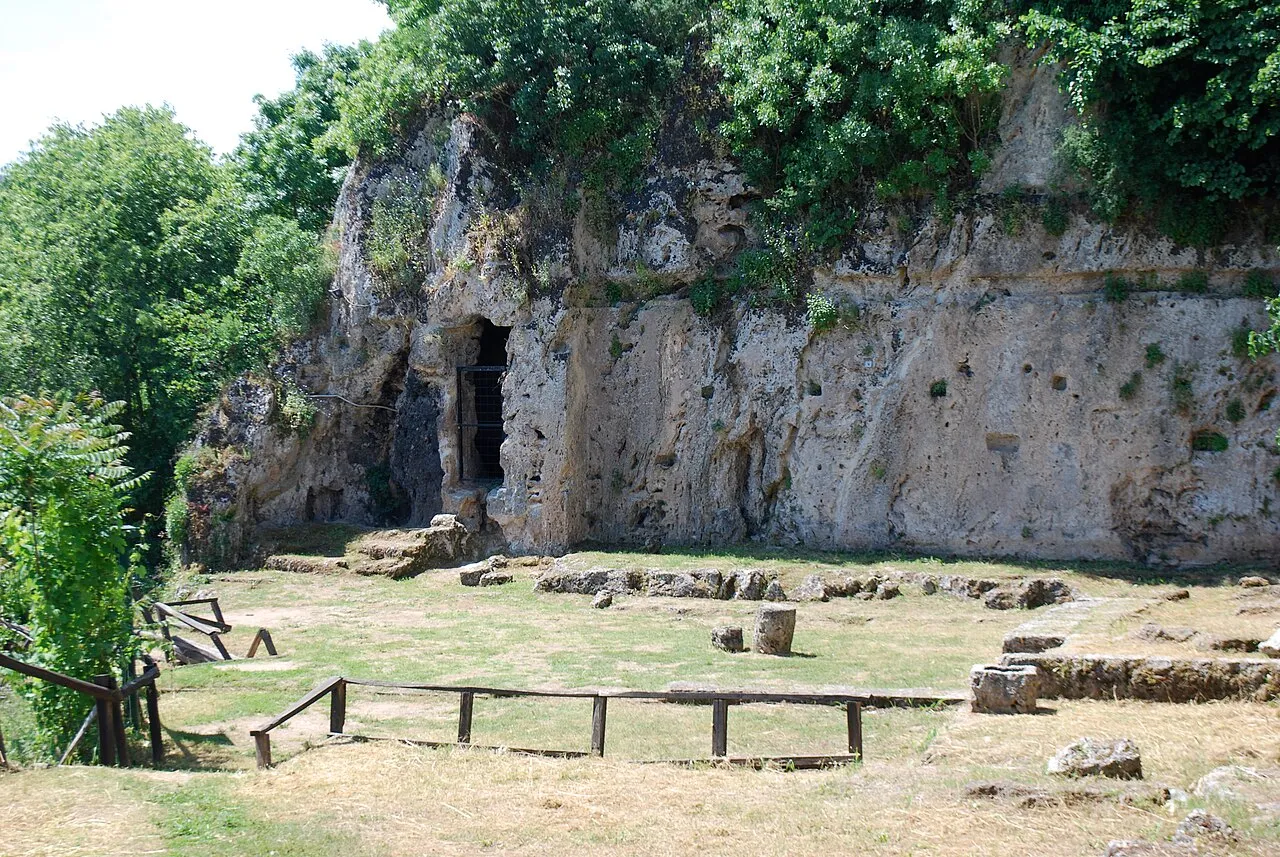 The precinct of the Nymphs at Mieza, where Aristotle taught Alexander, photographed in 2016Wikimedia Commons, Jean Housen, CC BY-SA 4.0 (File:20160518 092 mieza nympheum.jpg)
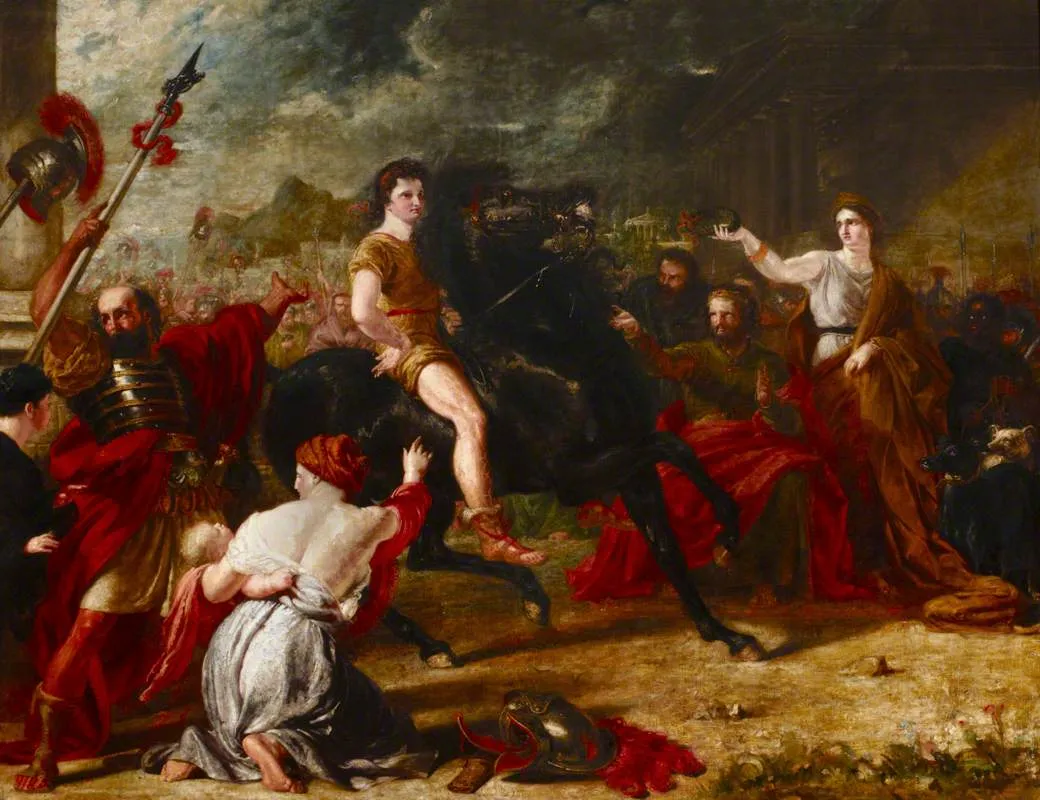 Alexander Taming Bucephalus, painting by Benjamin Robert Haydon, 1826Wikimedia Commons, Benjamin Robert Haydon, National Trust, Public domain (File:Benjamin Robert Haydon (1786-1846) - Alexander the Great (356–323 BC), Taming Bucephalus - 485149 - National Trust.jpg)
In spring 340 BC Philip lays siege to Perinthus, a Greek city on the Propontis friendly to Athens. His rams breach the wall, but the houses behind it, Diodorus writes, rise in rows up a steep hill, and each row serves as a new wall. Byzantium sends men and catapults, and the Great King of Persia, alarmed, has his satraps send mercenaries, money and food. In the autumn Philip turns on Byzantium itself and seizes an Athenian grain fleet, and Athens declares war. With Athenian, Chian and Rhodian ships defending the city, he gives up early in 339.
Meanwhile Alexander, sixteen, rules Macedon from Pella as regent, holding the royal seal, Plutarch says. When the Maedi of the upper Strymon revolt, he marches up the Axius and across to them, takes their town, resettles it and names it Alexandropolis. No source this book follows places it.
Sources
- J. R. Ellis, "Macedonian Hegemony Created", The Cambridge Ancient History VI (2nd ed., 1994), ch. 15.
- Diodorus Siculus, Library of History, 16.74–77, tr. C. Bradford Welles (1963).
- Plutarch, Life of Alexander, 6–9, tr. B. Perrin (1919).
- A. B. Bosworth, Conquest and Empire: The Reign of Alexander the Great (1988), ch. 1.
Prev: Thessaly and OlynthusNext: Chaeronea