Spring 326 BC
Taxila, an ally beyond the Indus
In spring 326 BC Alexander comes down the Indus from Aornos to the bridge that Hephaestion has built, probably near Ohind in Bosworth's view. Arrian says that his own sources never describe the bridge, and he guesses it was made of boats; Diodorus calls it a floating bridge. At the river Alexander finds gifts from Taxiles, the ruler of Taxila: in Arrian's list, 200 talents of silver, 3,000 oxen, more than 10,000 sheep, 30 elephants and 700 horsemen, with word that the city is Alexander's. Alexander sacrifices, holds games and crosses the river.
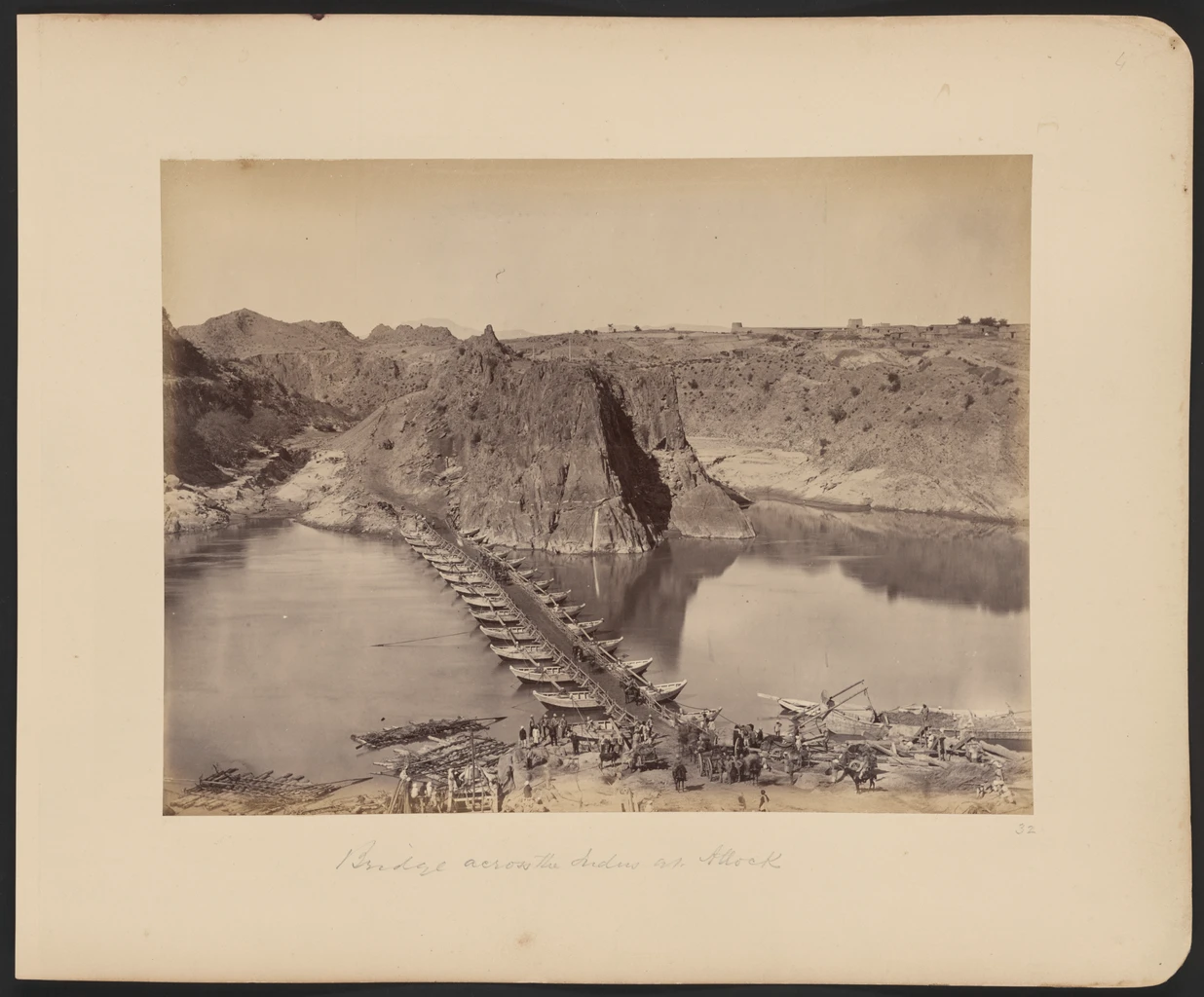 A bridge of boats across the Indus at Attock, photographed by John Burke between 1878 and 1880Wikimedia Commons, John Burke, Public domain (File:Bridge Across the Indus at Attock WDL11491.png)
Taxila, which Arrian calls the largest city between the Indus and the Hydaspes, lies some 30 km north-west of today's Islamabad. Diodorus and Curtius tell that Taxiles rode out to meet Alexander with his army drawn up and his elephants in line, and that Alexander, taking him for an enemy, made ready to fight, until Taxiles rode ahead with a few horsemen and gave himself up. Alexander confirms him as king, and Taxiles becomes his ally east of the river. A Macedonian satrap and a garrison stay in the city.
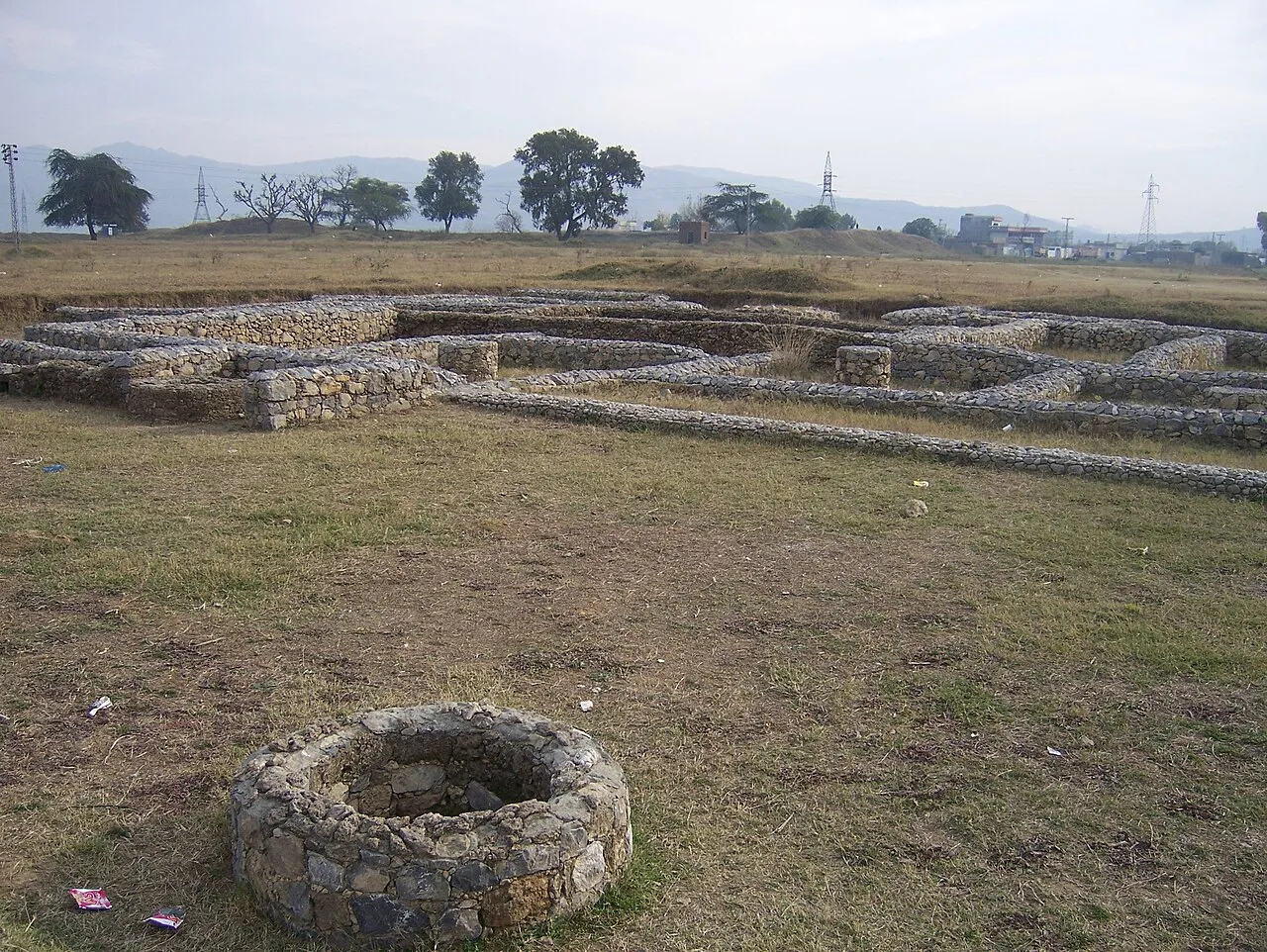 The ruins of Bhir Mound at ancient Taxila, photographed in 2008Wikimedia Commons, Dawoodmajoka, Public domain (File:BhirMound.JPG)
Not every prince is willing. Porus, king of the rich land between the Hydaspes and the Acesines, refuses to submit. He holds the far bank of the Hydaspes, today the Jhelum, with his whole army, resolved to stop any crossing. Bosworth thinks Taxiles had hoped from the start to turn Alexander's army against his neighbours, Porus above all.
Alexander has the boats from the Indus cut into pieces and carried to the Hydaspes on wagons. Then he follows them with his army and, by Arrian's count, 5,000 Indians under Taxiles.
Sources
- Arrian, Anabasis of Alexander, book 5, 3 and 8.
- Diodorus Siculus, Library of History, book 17, 86 to 87.
- Quintus Curtius Rufus, History of Alexander, book 8, 12.
- A. B. Bosworth, Conquest and Empire: The Reign of Alexander the Great (1988), ch. 2.XV.
Prev: The rock of AornosNext: Porus at the Hydaspes