Winter 325–324 to spring 324 BC
From Carmania to Susa: the purges and the Susa weddings
In midwinter 325–324 BC Alexander crosses Persis with a small body of horse and light foot, first to Pasargadae, once the Persians' capital, and then to Persepolis. Hephaestion, his closest friend, takes the main army and the elephants by a route nearer the coast, where the winter is milder. Bosworth suggests both routes but calls neither certain, so both lines on the map are approximate. The army joins up at Persepolis and takes the royal road to Susa, which it reaches in March 324 BC. Nearchus waits at a bridge on the Pasitigris near the city, having sailed up the Gulf to the mouth of the Euphrates and back.
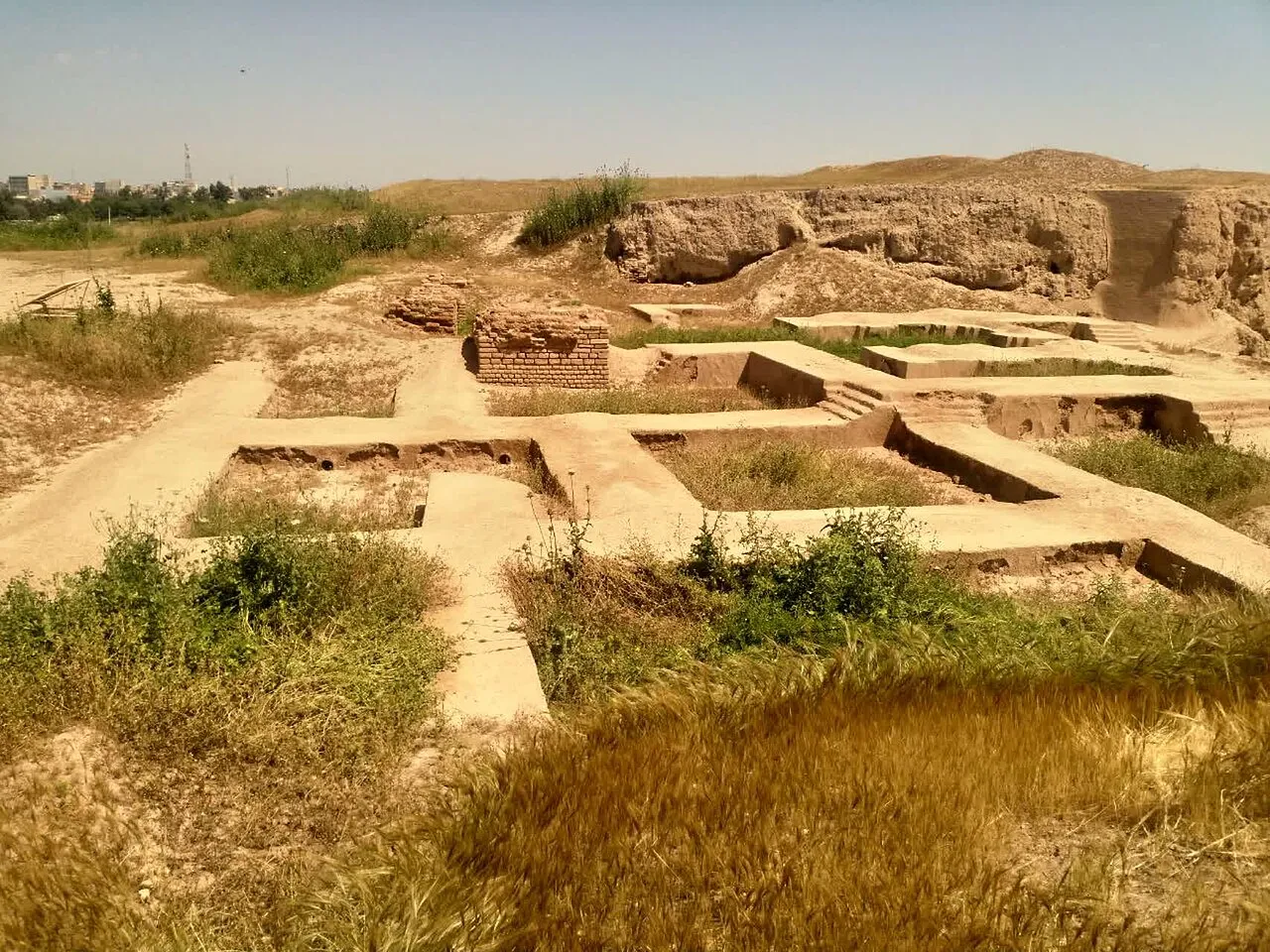 The remains of the palace of Darius at Susa, photographed in 2023Wikimedia Commons, Saeedhamedian, CC0 (File:Palace of Darius in Susa2.jpg)
The purges go on. At Persepolis Alexander has the Persian noble who had taken charge of Persis without his leave hanged for robbing temples and tombs. At Susa he punishes the satrap Abulites and his son for misrule.* Many governors, Arrian explains, had not expected the king to come back alive from India.
At Susa Alexander marries Stateira, the eldest daughter of Darius, the Persian king he defeated, and, according to Aristobulus, also Parysatis, a daughter of the earlier king Artaxerxes III. Hephaestion marries Drypetis, Stateira's younger sister. Some ninety Companions in all take daughters of Persian and Median nobles as brides,** and every wedding follows the Persian rite. More than 10,000 Macedonian soldiers who have taken Asian wives receive gifts. For Bosworth, the weddings bound the women of the Persian royal house to the conquerors and showed that power had passed to them.
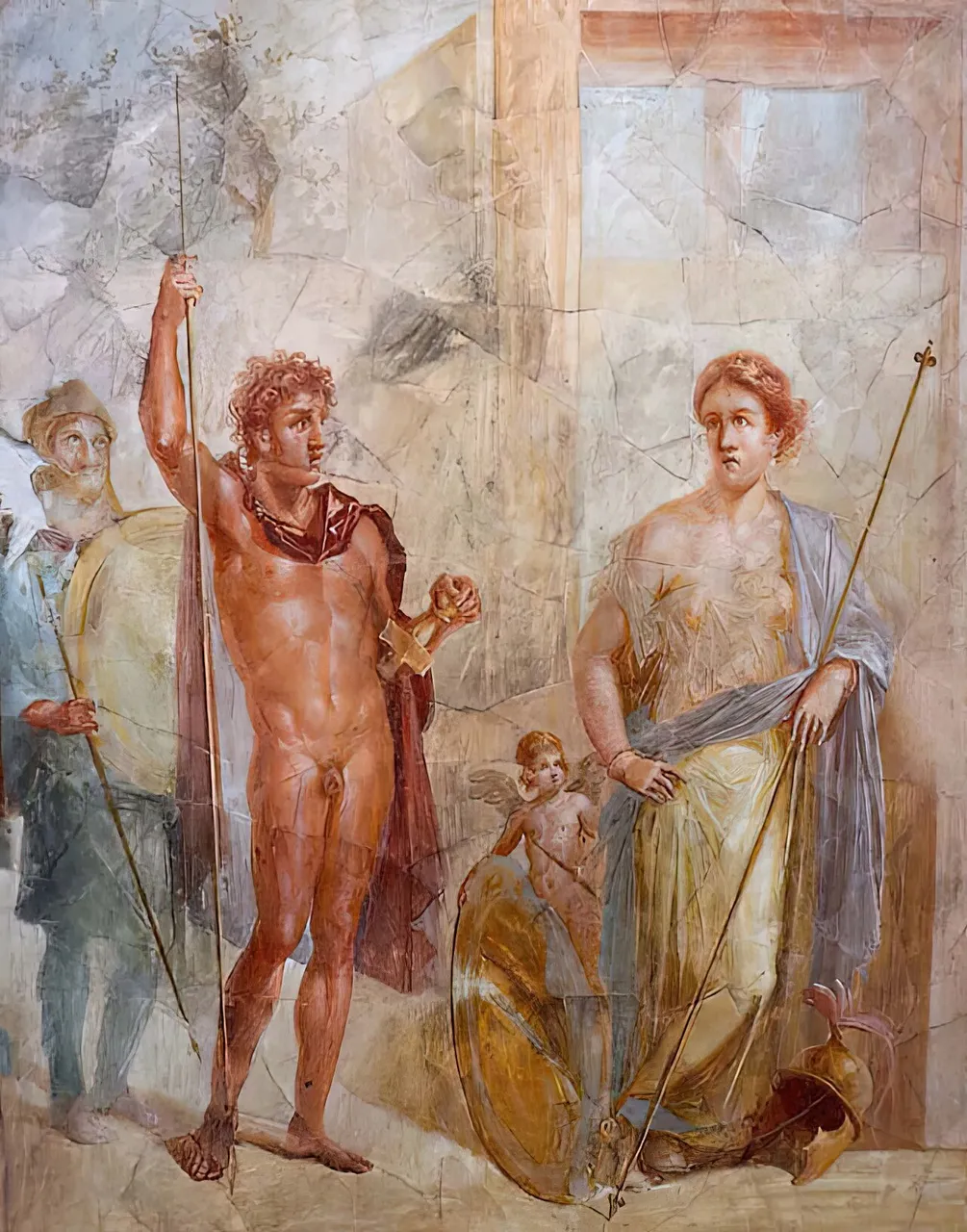 The wedding of Alexander and Stateira (or Roxana), a wall painting from the House of the Golden Bracelet at Pompeii, 1st century BC to 1st century ADWikimedia Commons, ancient artist, photographed by Fabien Bievre-Perrin and upsized by Mary Harrsch, Public domain (File:Wedding of Alexander the Great and Barzine (Stateira) from lower level triclinium of House of the Golden Bracelet Pompeii.jpg)
Then 30,000 young Iranians, armed and drilled in the Macedonian way, arrive at Susa. Alexander calls them the Epigoni, "the successors". Diodorus says he formed them as a counterweight to the Macedonian phalanx. The Macedonians resent them, as most of them resent the weddings.
Notes
* Arrian says both were put to death. Plutarch has Alexander run the son through with a spear himself and throw Abulites into prison.
** Arrian counts eighty Companions besides the grooms he names. The historian Pierre Briant counts ninety-one Companions in all, and so does Bosworth, who puts the marriages besides the named ones at over eighty.
Sources
- Arrian, Anabasis of Alexander, book 6, 28 to 30, and book 7, 4 to 6, tr. E. J. Chinnock.
- Plutarch, Life of Alexander, 68, tr. Bernadotte Perrin (Loeb, 1919).
- Diodorus of Sicily, Library of History, book 17, 107 to 108, tr. C. Bradford Welles (Loeb, 1963).
- A. B. Bosworth, Conquest and Empire: The Reign of Alexander the Great (1988), ch. 2, XVIII.
- Pierre Briant, Alexander the Great, Encyclopaedia Iranica (1985).
Prev: Nearchus's voyage and the reckoning in CarmaniaNext: The Opis mutiny