Winter to summer 332 BC
The siege of Tyre
In February 332 BC envoys from Tyre, which the Roman historian Curtius calls "noteworthy both in size and in fame" among the cities of Syria and Phoenicia, meet Alexander and offer to obey him. He answers that he wants to sacrifice in the island temple of the city's god, Melqart, the Greeks' Heracles, whom Alexander counts among his ancestors. It is the time of the god's great festival. The Tyrians will let him sacrifice at Old Tyre on the mainland, but will admit neither Persians nor Macedonians to their island. The historian A. B. Bosworth calls this in effect a declaration of neutrality, which Alexander would not allow. In a speech in Arrian, Alexander argues that he cannot march on Egypt while Tyre defies him and the Persians rule the sea.
The island city lies behind high walls, four stades, under a kilometre, off the shore. Alexander pulls down Old Tyre for stone and builds a mole across the strait. In the deep water near the city Tyrian warships harry the workers, and a fire ship burns the two towers that shield them. Alexander orders a wider mole and goes to Sidon for ships.
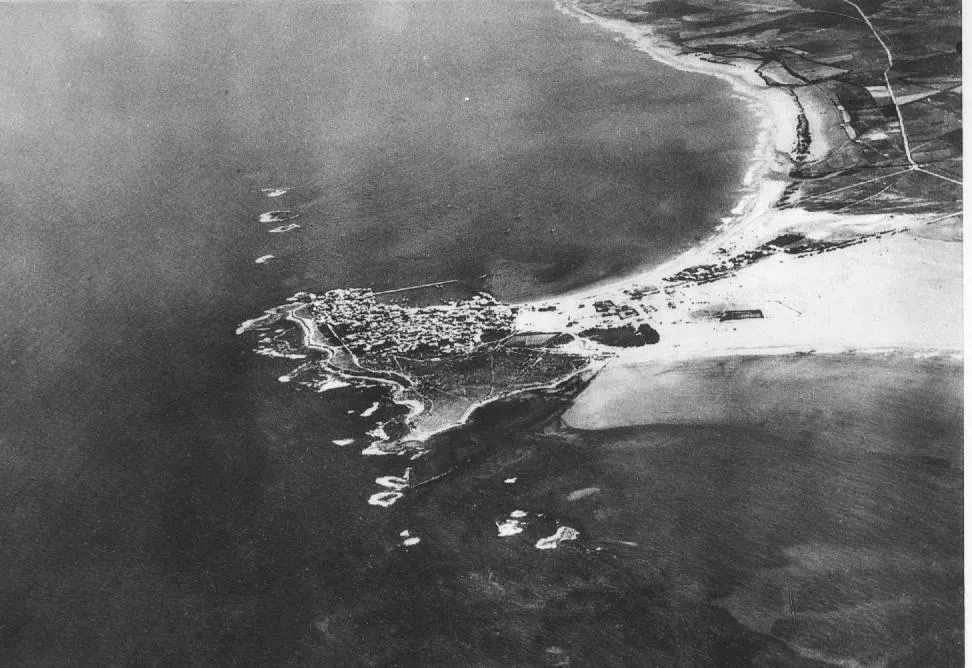 Tyre from the air, photographed by the French air force before 1934Wikimedia Commons, French government, Public domain (File:Tyre-aerial-photo-by-France-Military-1934.jpg)
In early summer, Bosworth writes, the Phoenician squadrons, whose home cities Alexander now holds, leave the Persian fleet. Arrian counts about 80 of their ships joining him at Sidon, and about 120 more with the kings of Cyprus. Now stronger at sea, he pens the Tyrian fleet in its two harbours. The fleets' courses on the map are approximate. Rams carried on ships breach the south wall. In July or August 332 BC, after seven months, the hypaspists and Coenus's battalion storm the breach while the Phoenicians and Cypriots force the harbours. Thousands of Tyrians are killed, and many of the survivors are sold as slaves.*
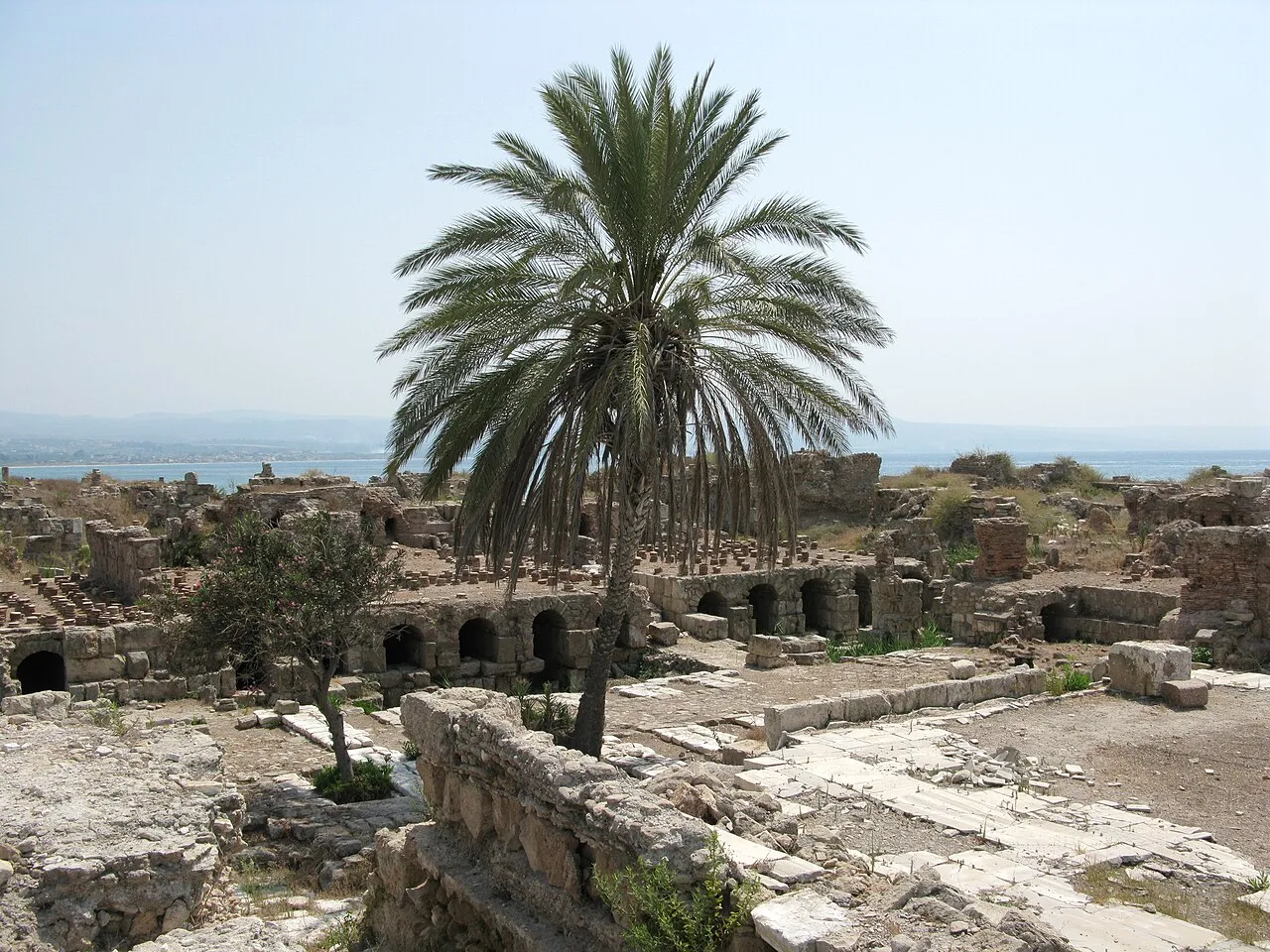 The excavated Al Mina site at Tyre, photographed in 2008Wikimedia Commons, Vyacheslav Argenberg, CC BY 4.0 (File:Al Mina site, Tyre, Lebanon.jpg)
Notes
* Arrian gives about 8,000 Tyrians killed, about 30,000 sold and about 400 Macedonians dead in the whole siege. Diodorus gives more than 7,000 killed and more than 13,000 taken captive, most non-combatants having been sent to Carthage, and says that 2,000 men of fighting age were crucified. Curtius says the Sidonians saved 15,000. Bosworth calls Arrian's figure of 400 "the merest propaganda".
Sources
- Arrian, Anabasis of Alexander, book 2, 15 to 24.
- Diodorus Siculus, Library of History, book 17, 40 to 46.
- A. B. Bosworth, Conquest and Empire: The Reign of Alexander the Great (1988).
- Quintus Curtius Rufus, History of Alexander, book 4, 2 to 4.
Prev: Damascus and Darius's letterNext: Gaza