360–358 BC
Philip takes a kingdom in danger
In 360 or 359 BC Perdiccas III, king of Macedon, marches into the north-western mountains against Bardylis, king of the Illyrians, to whom Macedon has paid tribute for some thirty years. His army is crushed, and the king falls with more than 4,000 of his men, by Diodorus's count. The Illyrians now hold the northern valleys of Upper Macedon, Paeonians raid from the north, and two pretenders, one backed by a Thracian king and one by Athens, reach for the throne.
The army acclaims the king's brother Philip, then 22 or 23, who had spent some years of his youth as a hostage in Thebes. Ruling from Pella, he buys peace with gifts, beats one pretender, and drills his men without rest.
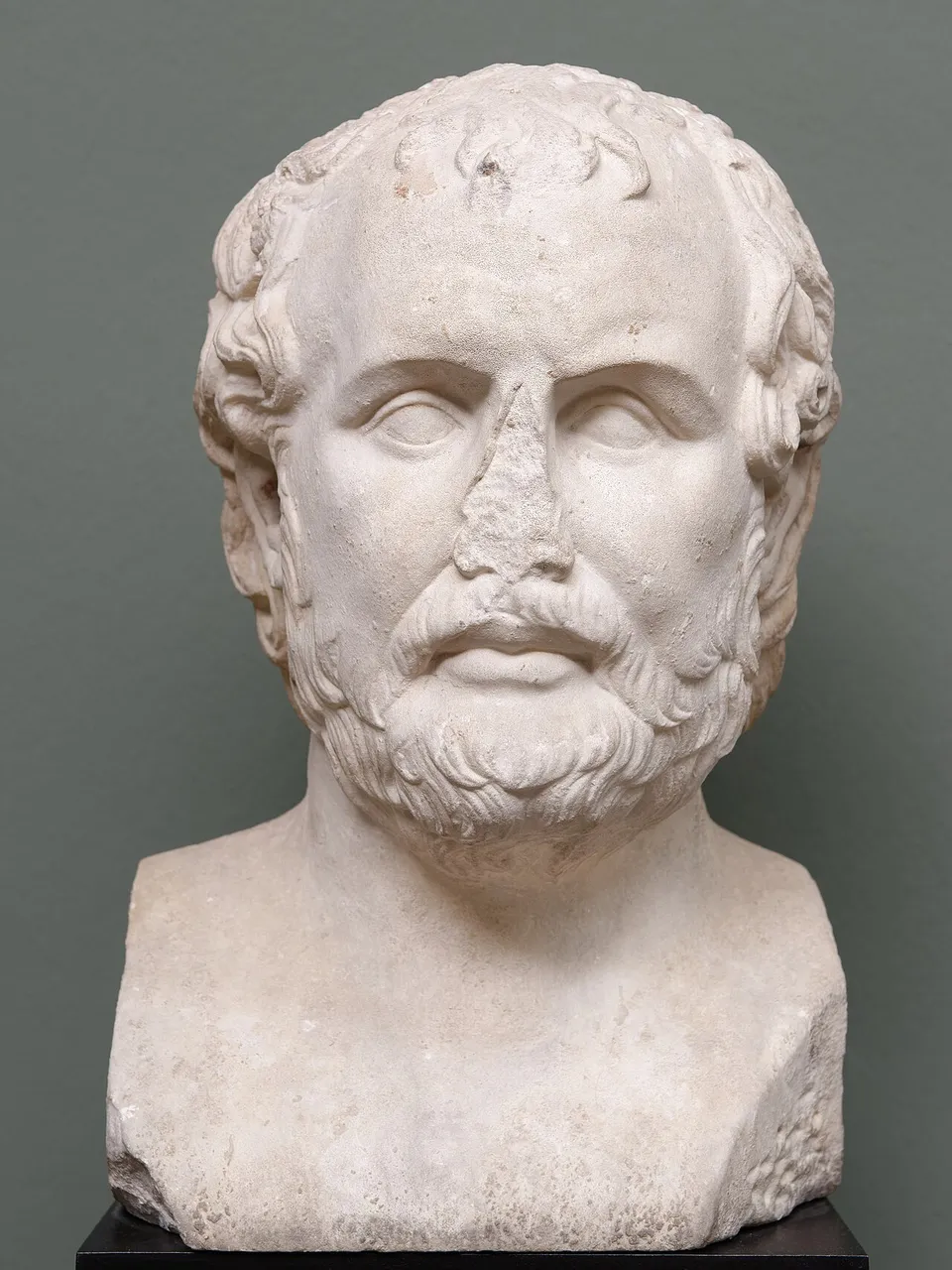 Head of Philip II of Macedon, a Roman marble copy of a Greek portrait, Ny Carlsberg Glyptotek, CopenhagenWikimedia Commons, Marie-Lan Nguyen, Public domain (File:Philip II of Macedon Ny Carlsberg Glyptotek IN2263.jpg)
Philip remakes the army, though historians weigh his changes differently.* The foot soldiers are trained to fight in a close-packed phalanx, and the cavalry learns to charge in a wedge. The Companions, the nobles who ride beside the king, take in Thessalians and other Greeks and are rewarded with land.
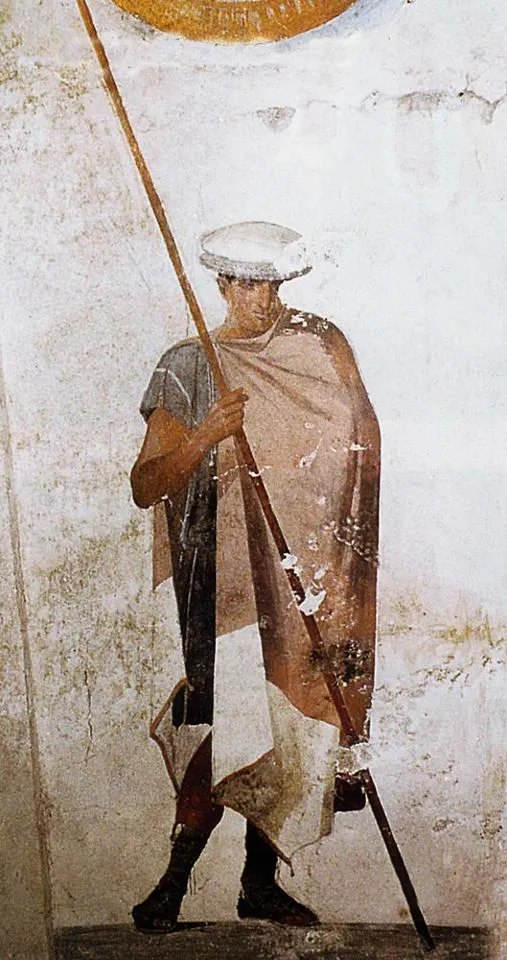 A Macedonian soldier with a spear, fresco from a tomb at Agios Athanasios, 4th century BCWikimedia Commons, Ancient painter, Public domain (File:Fresco of a Macedonian soldier, from the Tomb of Agios Athanasios, 4th century BC.jpg)
Late in 359 BC or early in 358, Philip marches against Bardylis with 10,000 foot and 600 horse, Diodorus says. Bardylis offers peace if each side keeps what it holds; Philip demands that the Illyrians leave every Macedonian town. The armies meet near Heraclea Lyncestis. Philip attacks from the front while his cavalry rides round the Illyrian flank, and the Illyrians break. Diodorus counts more than 7,000 of them dead. Philip annexes the uplands as far as Lake Lychnitis, his new western frontier. The map shows the kingdom as he held it after this victory; its borders, here and through this chapter, are approximate.
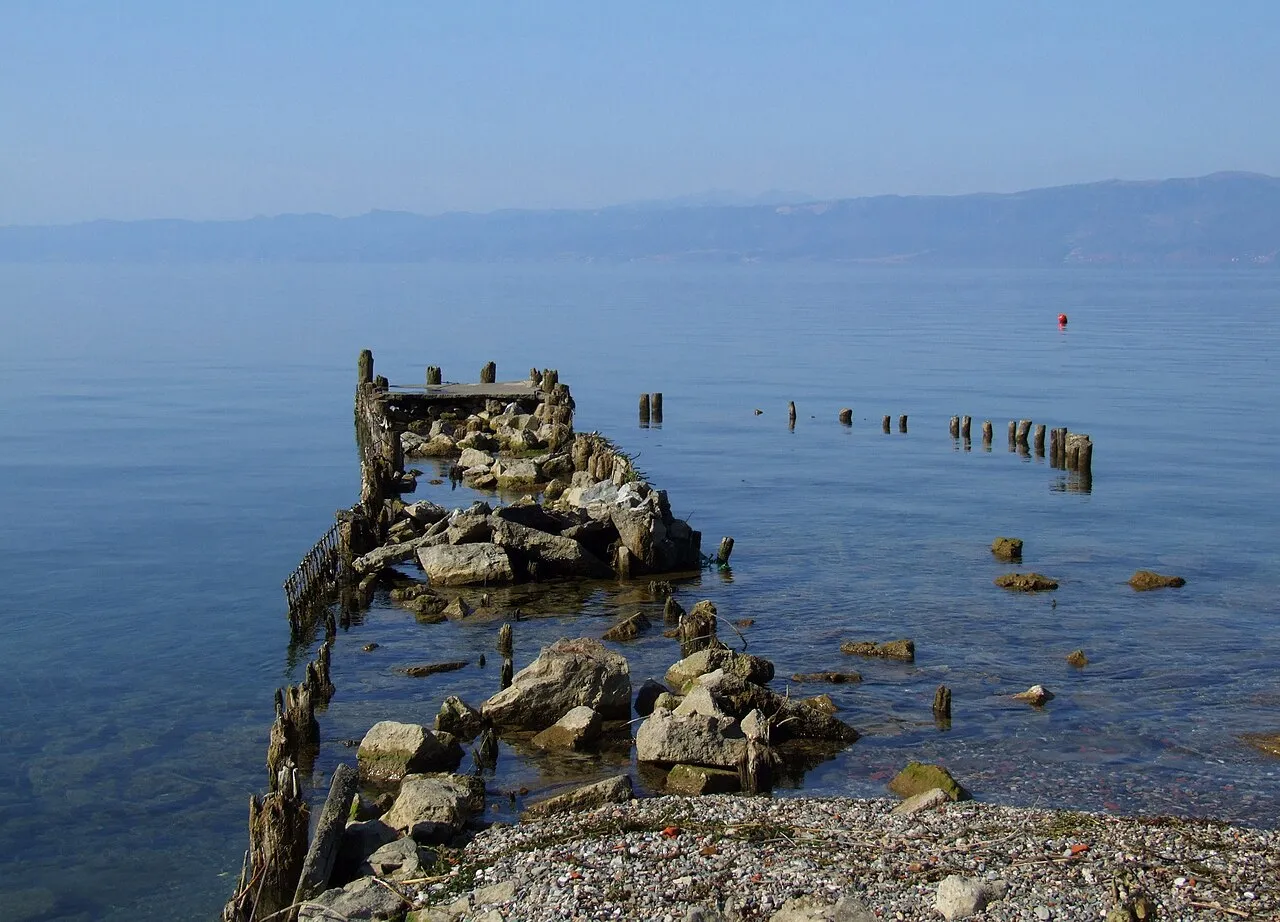 Lake Ohrid, the ancient Lake Lychnitis, near the town of Ohrid, photographed in 2012Wikimedia Commons, Pudelek (Marcin Szala), CC BY-SA 3.0 (File:Lake Ohrid near Ohrid.JPG)
Notes
* Diodorus makes Philip the inventor of the Macedonian phalanx, a close-packed formation with overlapping shields that he says Philip copied from the warriors at Troy. Bosworth thinks it "highly probable" that Philip's own innovation was the sarissa, a pike twelve cubits long, as the main weapon of a phalanx deeper and more compact than the Theban one. Ellis rates growth above any single invention: the army that marched against Bardylis with 10,000 foot and 600 horse could field more than 30,000 foot and 4,000 horse twenty-four years later.
Sources
- J. R. Ellis, "Macedon and North-West Greece", The Cambridge Ancient History VI (2nd ed., 1994), ch. 14.
- A. B. Bosworth, Conquest and Empire: The Reign of Alexander the Great (1988), ch. 1.
- Diodorus Siculus, Library of History, 16.1–8, tr. C. L. Sherman (1952).
Next: Amphipolis, Philippi and the gold of Pangaeum