Winter 334 – spring 333 BC
The winter march through Lycia and Pamphylia
In late 334 BC Alexander sends the men who married just before the campaign back from Caria to their wives in Macedon for the winter, and tells their officers to raise new troops there. Then he splits the army. Parmenion takes the allied troops and the baggage wagons by Sardis into Phrygia. Alexander marches into Lycia, where its main cities and, by Arrian's count, about thirty smaller towns surrender in turn. Why he chose this road is disputed.*
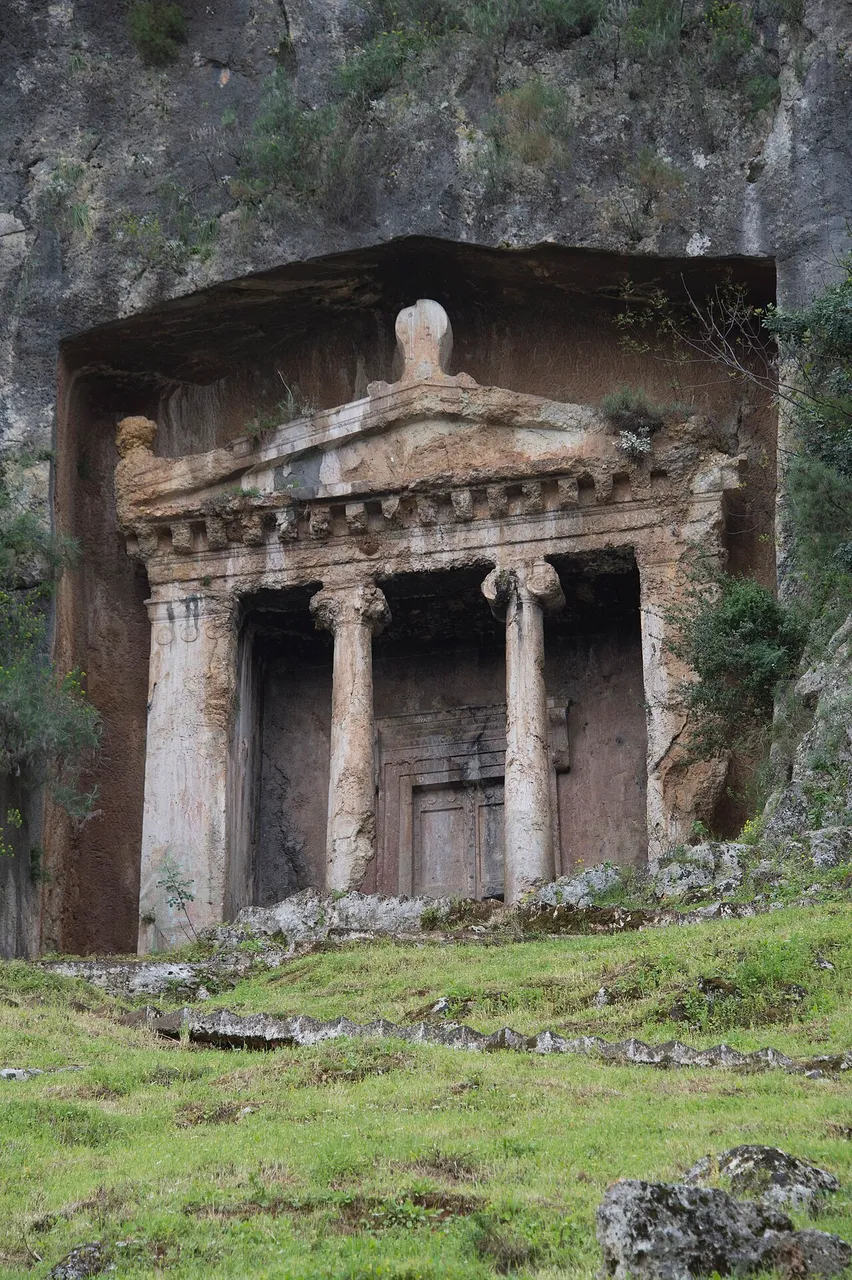 The rock-cut tomb of Amyntas at Telmessus, today Fethiye, in Lycia, 4th century BC; photographed in 2019Wikimedia Commons, Dosseman, CC BY-SA 4.0 (File:Fethiye Rock graves 6930.jpg)
By midwinter he is at the eastern end of the Lycian coast. Most of the army crosses Mount Climax by a road that Thracian troops have cut, while Alexander takes his own column along the shore below. That beach, Arrian explains, is flooded in a south wind and passable only in a north wind. After strong southerlies the wind turns north, and the king and his men read it as a sign from the gods. In Pamphylia most cities of the coastal plain submit. One that had come to terms breaks them and must then pay 100 talents instead of 50 and give hostages. A stronghold held by Greek mercenaries and local troops beats off his first assault, and he seems never to have renewed the siege.
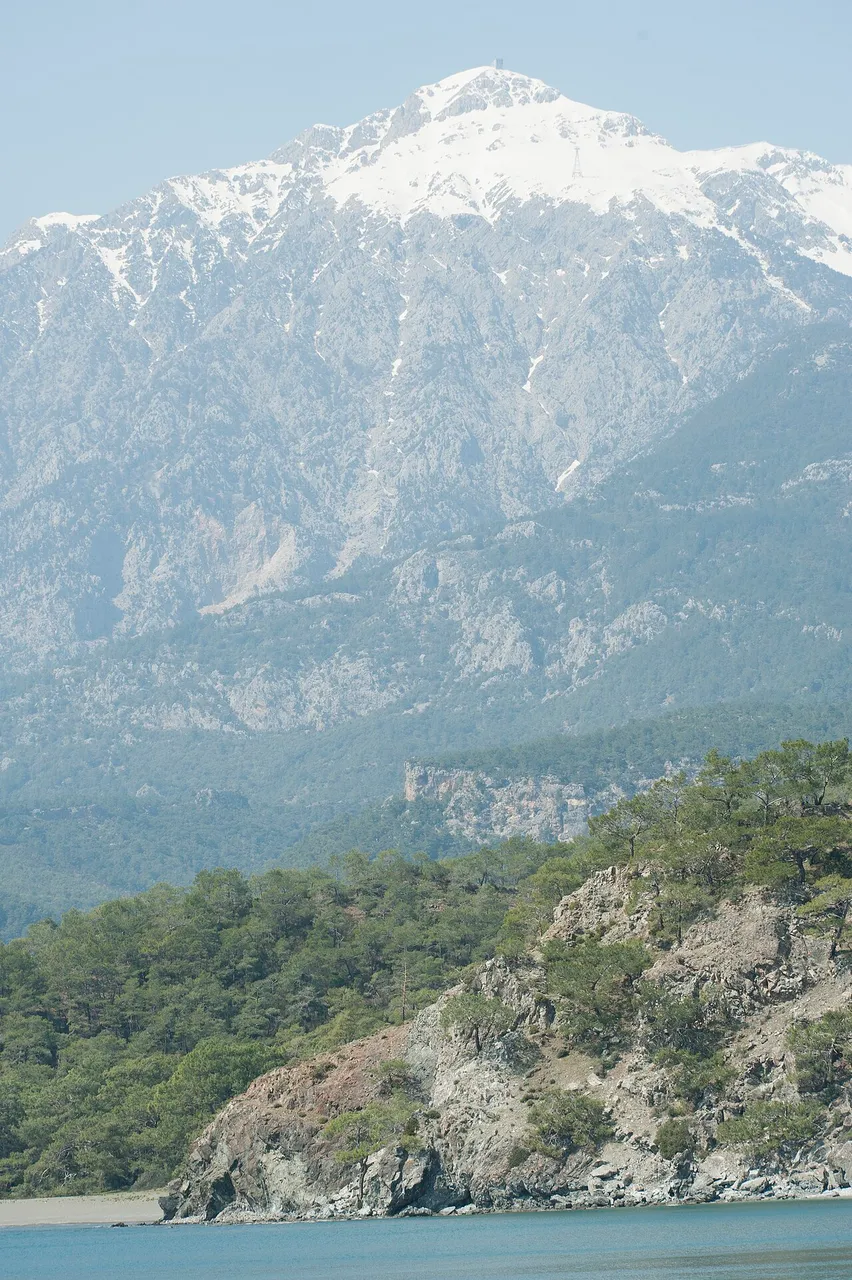 Mount Olympos, today Tahtalı Dağı, above the shore at Phaselis, where the mountains of eastern Lycia fall to the sea; photographed in 2011Wikimedia Commons, Dosseman, CC BY-SA 4.0 (File:Phaselis View from South Harbour 5321.jpg)
Early in spring 333 BC Alexander turns north across Pisidia, a land of warlike mountain peoples. He takes one town and other strongholds by storm or by agreement, but he seems, Bosworth notes, to have left no garrisons, and Pisidia was still independent when Alexander died. The map therefore leaves it outside his lands. At Celaenae, the seat of the satrap of Phrygia, the garrison of the citadel promises to surrender if no help reaches it by a set day. Alexander leaves 1,500 soldiers there and makes Antigonus, a Macedonian general, satrap of Phrygia.
Notes
* Arrian says that Alexander meant to win control of the coast and so make the Persian fleet useless. Bosworth answers that for much of the way the route ran inland and left the Lycian coast open to Persian ships, and that Alexander had probably already decided to march east against the Great King.
Sources
- Arrian, Anabasis of Alexander, book 1, 24 to 29 (tr. E. J. Chinnock).
- A. B. Bosworth, Conquest and Empire: The Reign of Alexander the Great (1988), ch. 2.V.
- A. B. Bosworth, A Historical Commentary on Arrian's History of Alexander, vol. I (1980), on 1.24 to 29.
Prev: The siege of HalicarnassusNext: Gordium, and Memnon's war at sea