323–322 BC
The Lamian War
When the news of Alexander's death reaches Athens in summer 323 BC, the Athenians, Diodorus writes, claim the leadership of the Greeks and vote for war. Their general Leosthenes has secretly hired 8,000 mercenaries, and the Aetolians add 7,000. Most of central Greece follows, with Thessaly and part of the Peloponnese. Leosthenes beats the Boeotians, who stay with Macedon, and holds Thermopylae.
Antipater, who governs Macedon and Greece, marches south with 13,000 foot and 600 horse. Beaten when the Thessalian cavalry rides over to the Greeks, he shuts himself up in Lamia. Late in 323 BC a stone kills Leosthenes during a sortie, and his successor Antiphilus keeps up the siege through the winter. In spring 322 BC Leonnatus, satrap of Hellespontine Phrygia, comes to relieve Antipater. The Greeks leave the siege and beat Leonnatus, who falls, but Antipater gets out of Lamia, joins the survivors and withdraws through the hills.
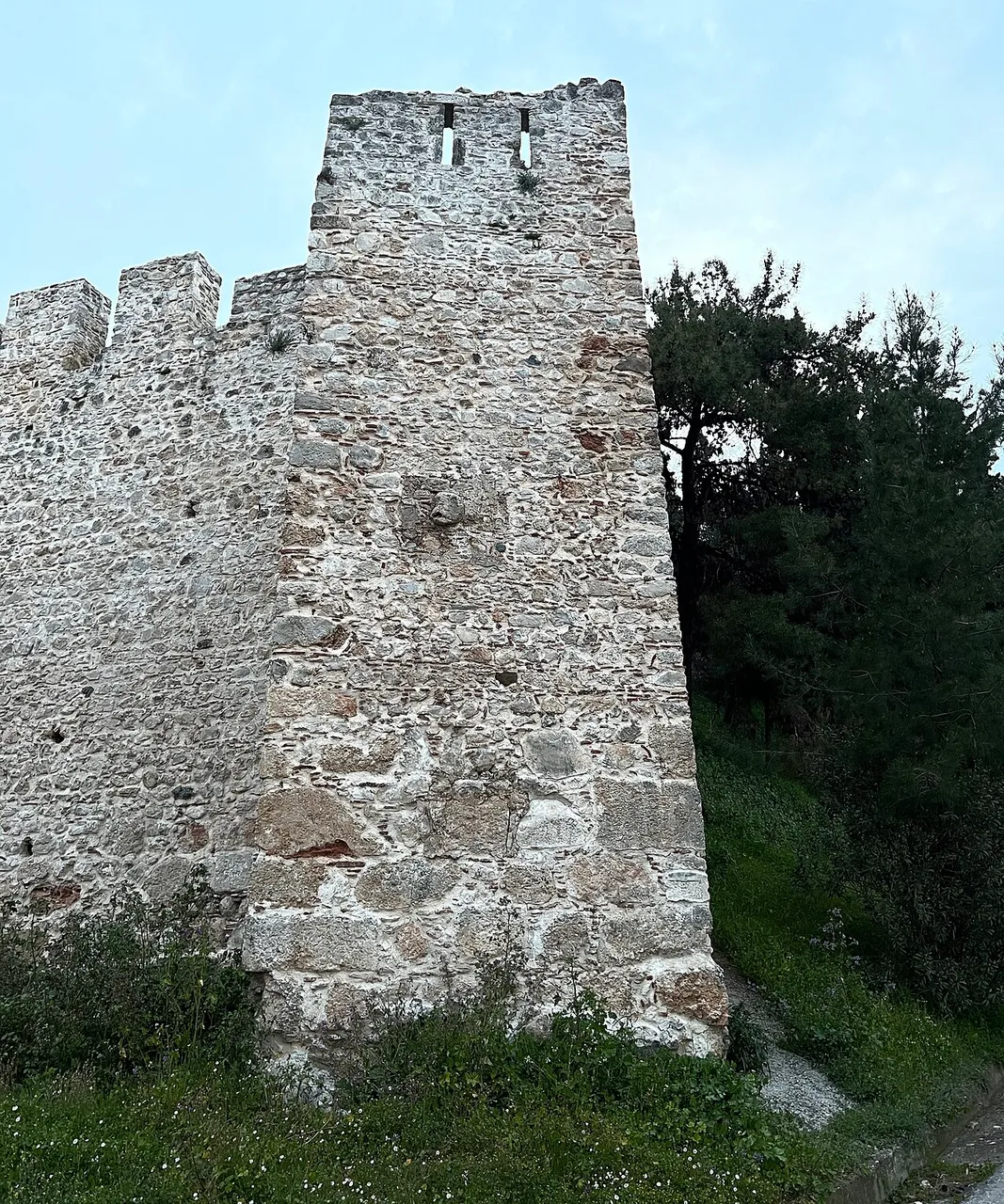 The castle of Lamia, photographed in 2022Chabe01, CC BY-SA 4.0, via Wikimedia Commons (File:Château Lamía - Lamía (GR06) - 2022-03-21 - 6.jpg)
Craterus arrives from Cilicia with Alexander's veterans and joins him by the Peneius. The two sides meet at Crannon in Thessaly in summer 322 BC.* The Greek horse under Menon the Thessalian wins its fight, but the Greek infantry is driven back onto high ground, and the battle is broken off in the Macedonians' favour. Antipater then makes peace with each city on its own.
Athens surrenders. By the terms Plutarch reports, a Macedonian garrison moves onto Munychia, the hill above the harbour, and only men of property keep the vote. Demosthenes and Hypereides are to be handed over, and the city pays for the war and a fine besides. Found by Antipater's agents, Demosthenes kills himself in a sanctuary, and Hypereides is executed. Thousands of poorer citizens lose their rights.**
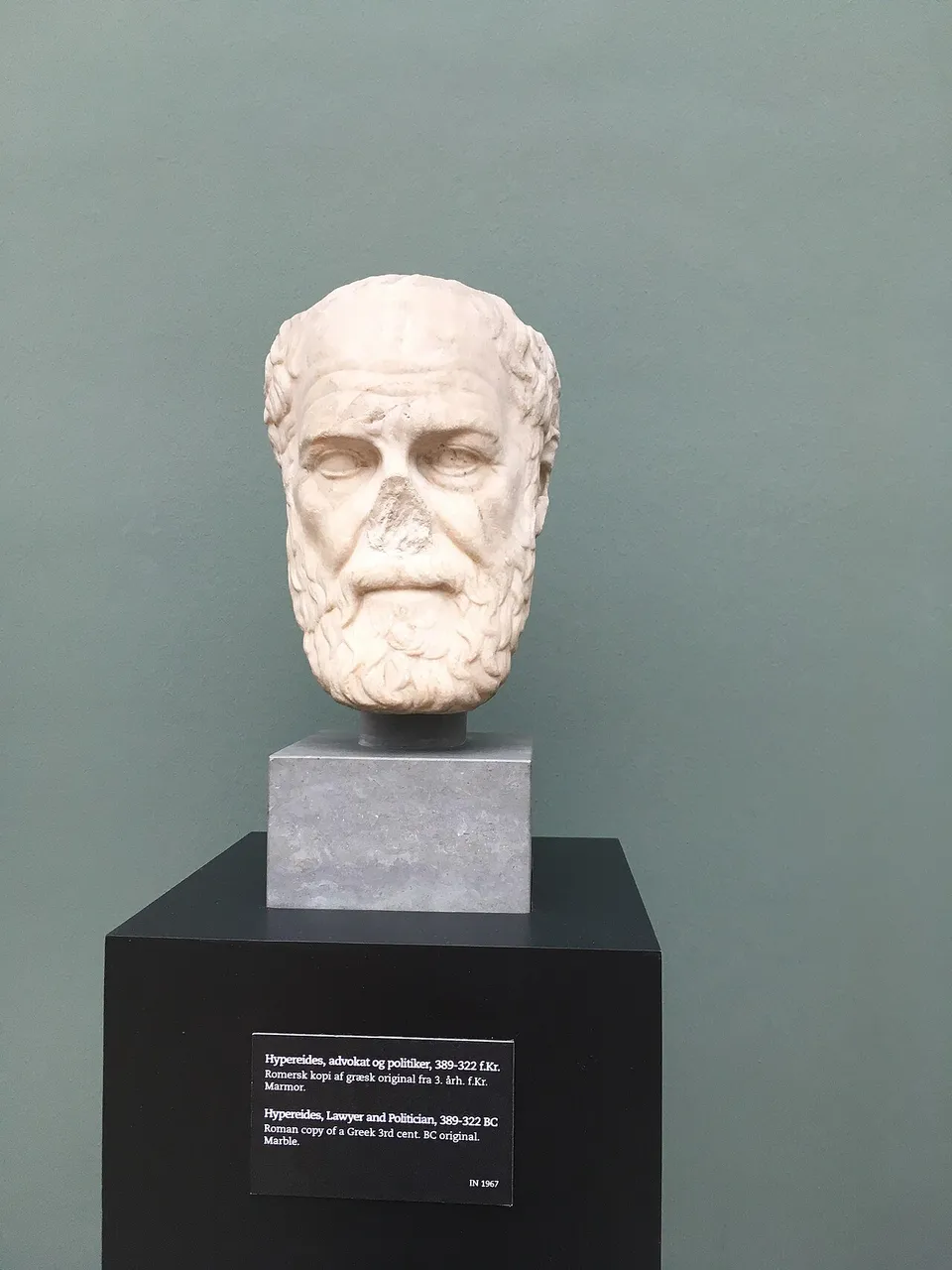 Marble head of the Athenian orator Hypereides, a Roman copy of a Greek original of the 3rd century BCMumblerJamie, CC BY-SA 2.0, via Wikimedia Commons (File:Head of Hypereides, Lawyer and Politician.jpg)
On the map Greece is in arms against Macedon, and approximate routes follow Antipater to Lamia and Crannon.
Notes
* Bosworth dates Crannon to late July 322 BC, Hammond and Walbank to late August, and Geer, after Dinsmoor, to 5 September.
** Plutarch, and Diodorus in Geer's translation, count more than 12,000. Hammond and Walbank read Diodorus's figure as 22,000, judge Plutarch's 12,000 not acceptable as it stands, and leave the number uncertain.
Sources
- Diodorus Siculus, Library of History, book 18, 8–18, tr. R. M. Geer (Loeb, 1947).
- Plutarch, Life of Phocion, 23–28, tr. B. Perrin (Loeb, 1919).
- N. G. L. Hammond and F. W. Walbank, A History of Macedonia, vol. III: 336–167 B.C. (1988), ch. V, 3.
- A. B. Bosworth, The Legacy of Alexander: Politics, Warfare and Propaganda under the Successors (2002), ch. 2 and appendix.
Prev: Two kings and a regentNext: Perdiccas in Egypt and the settlement of Triparadisus