Autumn 334 BC
The siege of Halicarnassus
In autumn 334 BC Alexander marches south from Miletus into Caria. The Persian troops and Greek mercenaries driven out of the coastal towns have gathered at Halicarnassus, the largest city of Caria and the main Persian arsenal on this coast, strongly walled and supplied by the Persian fleet. Memnon of Rhodes leads the defence with Orontobates, the Persian satrap of Caria. Darius has just made Memnon, a Greek, commander of the whole fleet and the coast.
On the march Ada, a princess of Caria's old ruling family, asks Alexander for help to win back her family's rule.
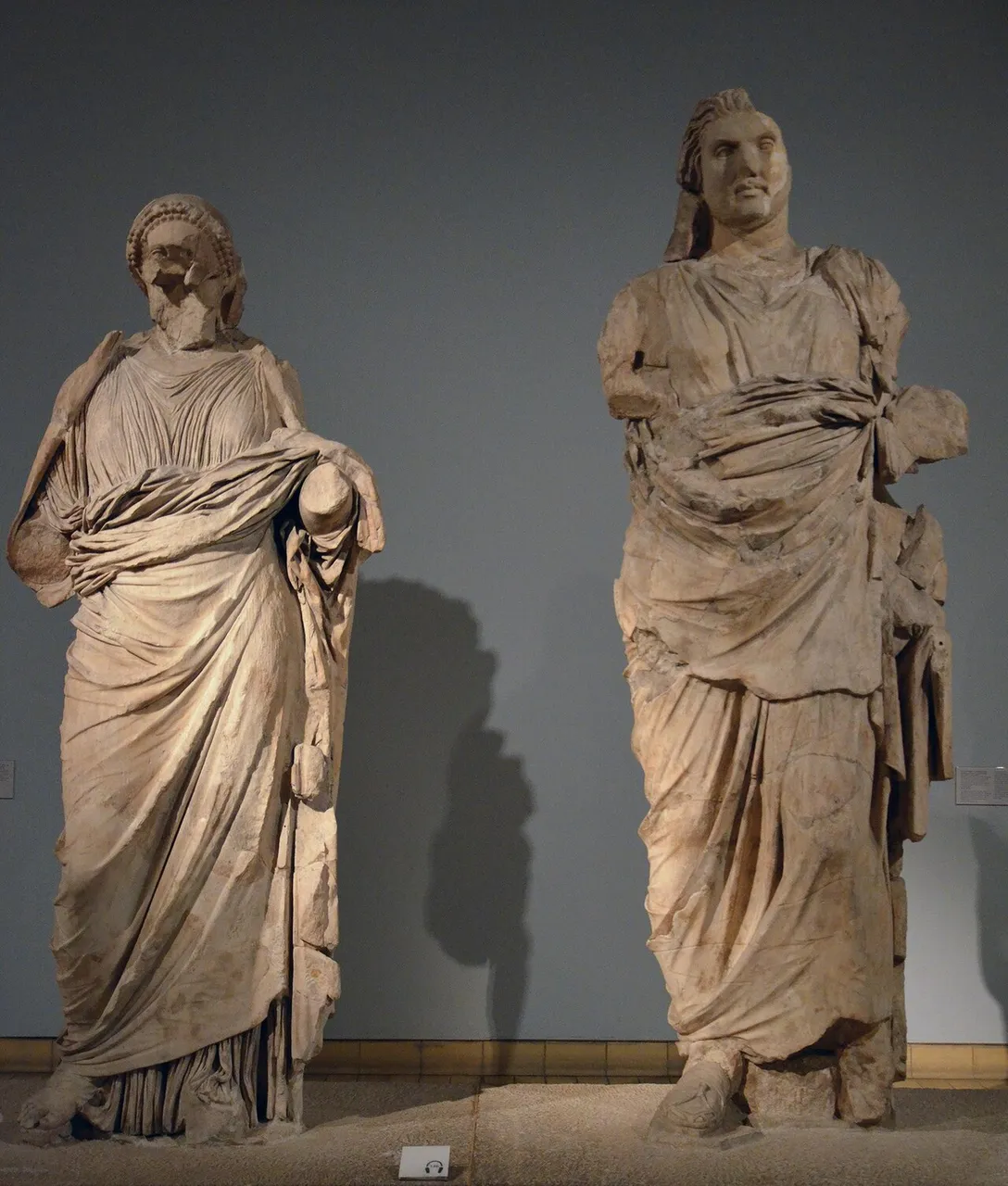 Colossal statues from the Mausoleum at Halicarnassus, about 350 BC, traditionally identified as Mausolus and Artemisia, Ada's brother and sister; British MuseumWikimedia Commons, Carole Raddato, CC BY-SA 2.0 (File:Mausoleum at Halicarnassus, British Museum (8244599061).jpg)
Arrian makes light of the siege, but Bosworth, drawing on Diodorus, finds it long and costly. When the rams bring down two towers and the wall between them, a new brick wall stands behind the gap, and sortie after sortie sets fire to the siege engines. After one night battle Alexander must ask for a truce to recover his dead, "a humiliation unique in his reign", in Bosworth's words. A last great sortie, led by Athenian mercenary officers, nearly breaks the Macedonian infantry, until older soldiers who had fought under Philip close ranks and drive the attackers back.
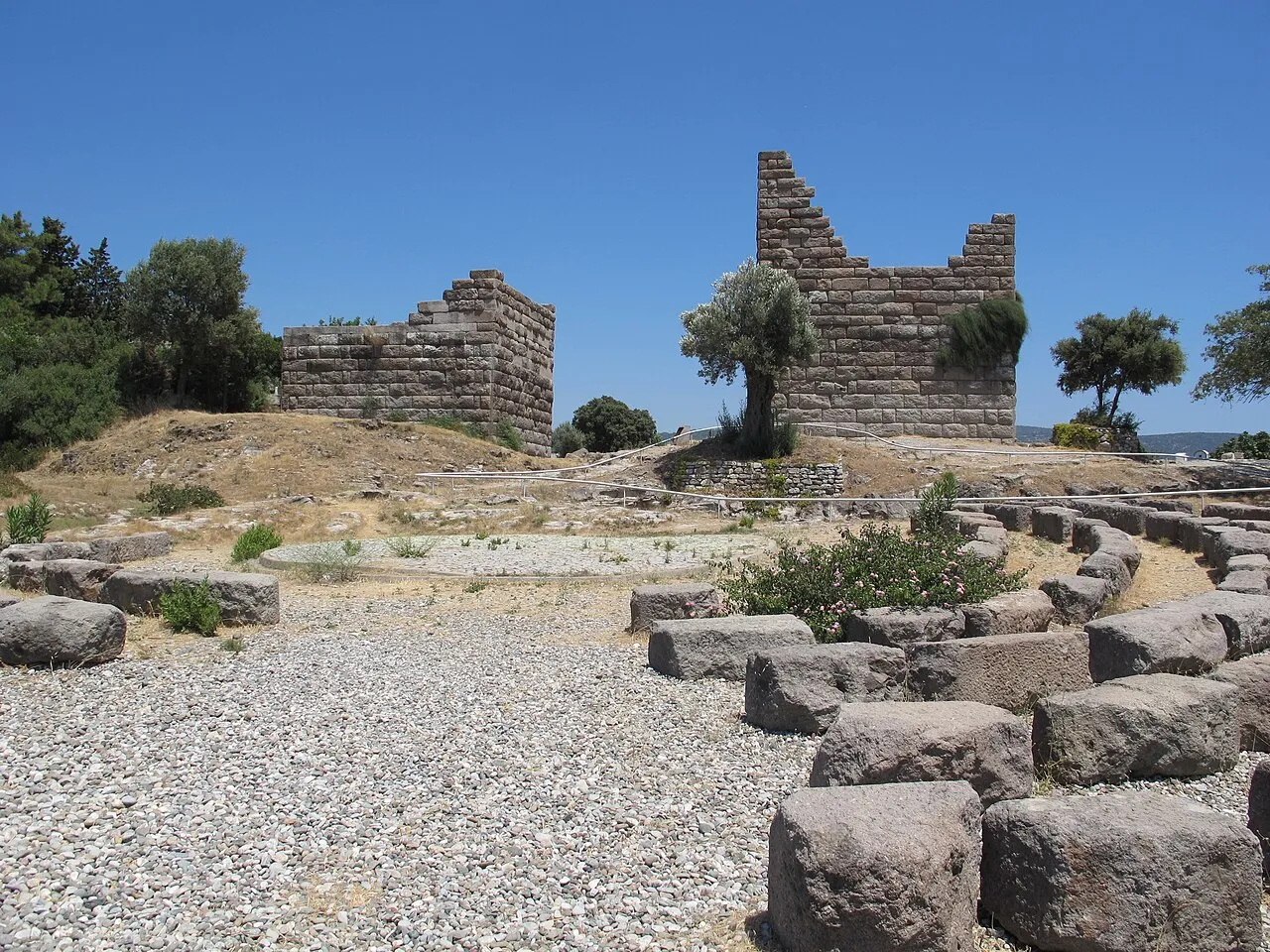 The Myndos Gate in the 4th-century BC walls of Halicarnassus at Bodrum, photographed in 2013Wikimedia Commons, sailko, CC BY-SA 3.0 (File:Bodrum, porta di myndos 02.JPG)
At last Memnon and Orontobates give up. In the night they set fire to their wooden tower and their stores, and the flames reach the houses. Some of their men withdraw to the citadel of Salmacis and to a fortress on an island,* and Diodorus has the rest of the army shipped to Cos. At dawn Alexander razes the city. He does not storm the citadels but, Diodorus says, shuts them in with a wall and a trench. He leaves 3,000 foot soldiers and 200 horsemen to guard the city and the rest of Caria, and gives Ada the rule of the whole province.
Notes
* Arrian's text, as Chinnock translates it, calls the island fortress Arconnesus. The traditional identification is the offshore island of Arconnesus (Kara Ada). Bean and Cook place the fortress on the island of Zephyria inside the harbour, and Bosworth follows them, naming it Zephyrium in Conquest and Empire.
Sources
- Arrian, Anabasis of Alexander, book 1, 20 to 23 (tr. E. J. Chinnock).
- Diodorus Siculus, Library of History, book 17, 23 to 27 (tr. C. B. Welles).
- A. B. Bosworth, Conquest and Empire: The Reign of Alexander the Great (1988), ch. 2.IV.
Prev: Sardis, Ephesus and the siege of MiletusNext: The winter march through Lycia and Pamphylia