Spring – 1 October 331 BC
Darius's last offer and the road to Gaugamela
In spring 331 BC Alexander leaves Memphis and marches back to Tyre. Darius III, the Great King of Persia, still rules every land east of the Euphrates. At Babylon he has gathered a new army from the eastern satrapies, and its best troops are the horsemen of Bactria under their satrap, Bessus.
In summer 331 BC Darius makes his greatest offer: all the land west of the Euphrates, one of his daughters in marriage, and a ransom for his family, captured at Issus.* Parmenion, Alexander’s senior general, is said to have told him that he would accept if he were Alexander. “So should I, if I were Parmenion,” Alexander answers in Diodorus’s account. He wants the whole empire, and tells Darius to come and submit.
Arrian writes that Darius had been talked into blaming his defeat at Issus on the narrow field. He marches north from Babylon, crosses the Tigris, passes Arbela and halts at Gaugamela by the river Bumelus. There he has the plain levelled for his cavalry and his 200 scythed chariots and waits.
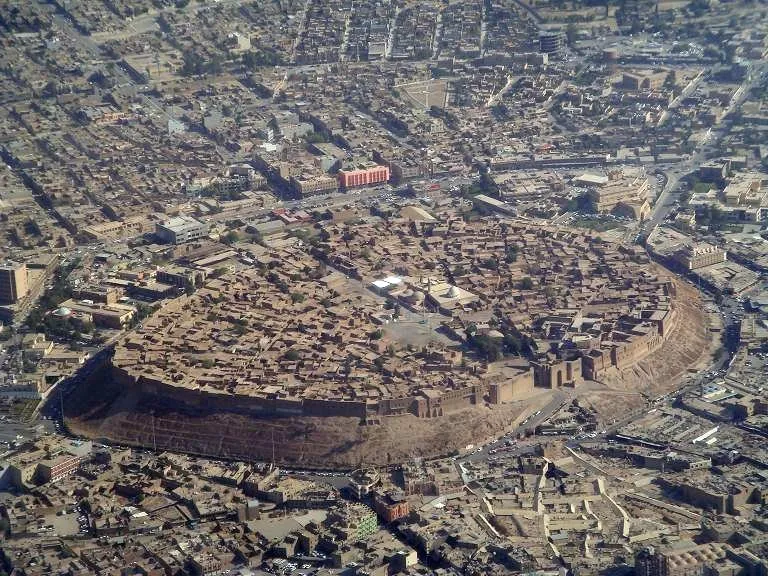 The citadel of Erbil, ancient Arbela, from the air, photographed in 2007Wikimedia Commons, Jim Gordon, CC BY 2.0 (File:Citadel (old city) of Hewlêr (Erbil).jpg)
In July or August Alexander reaches Thapsacus on the Euphrates, whose site is lost. Mazaeus, guarding the river for Darius, falls back as the army comes near, and the Macedonians cross on two bridges. They march east across northern Mesopotamia and in September ford the Tigris unopposed. On the evening of 20 September, a Babylonian astronomical diary records, the moon is eclipsed.
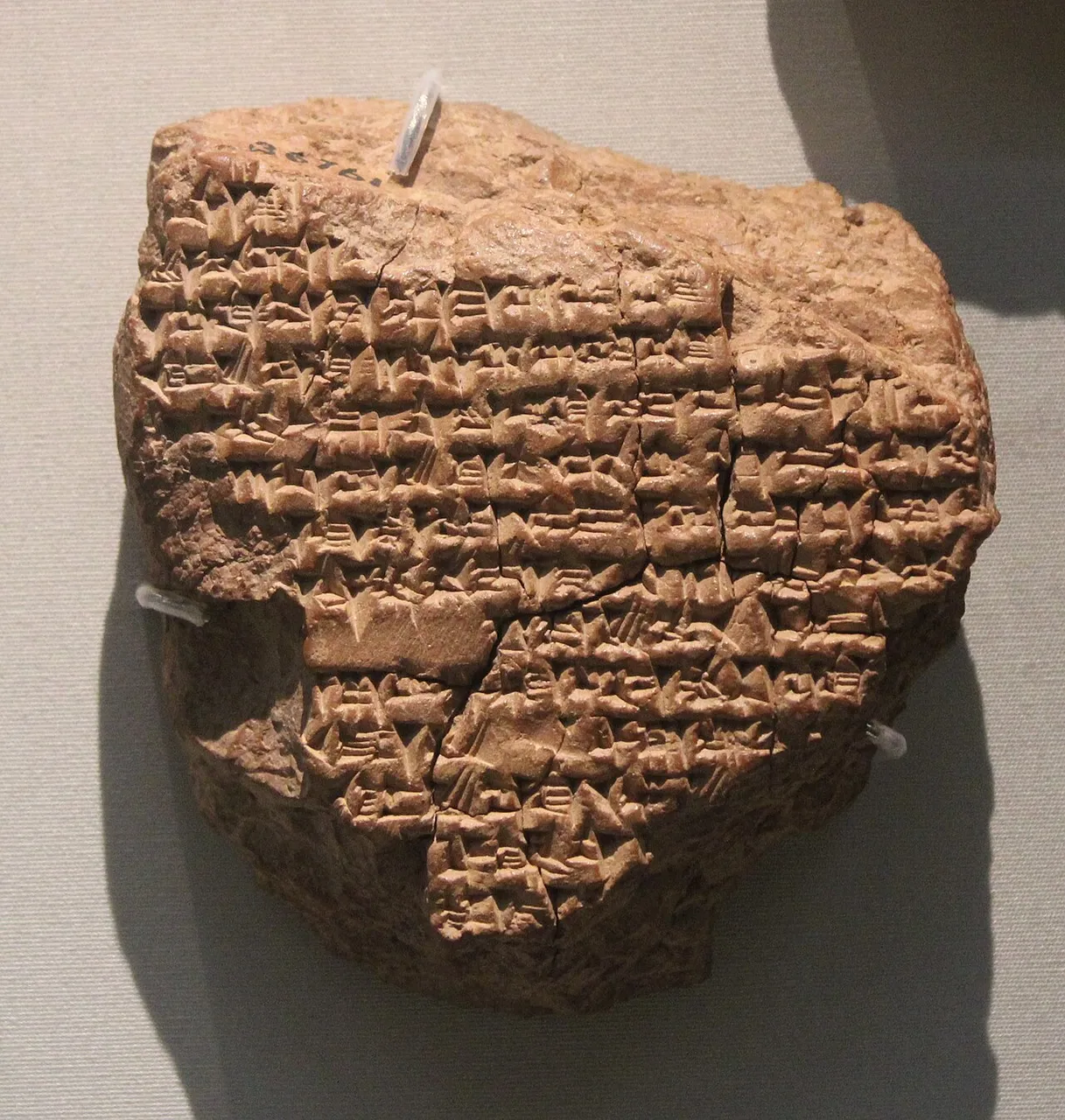 A Babylonian astronomical diary, a clay tablet from Babylon of 331–330 BC that mentions Alexander's defeat of Darius III at Gaugamela and his entry into Babylon; British Museum, photographed in 2020Wikimedia Commons, Zunkir, CC BY-SA 4.0 (File:Astronomical Diary 331 330 BC BM 36761.jpg)
Arrian gives Alexander 7,000 cavalry and about 40,000 infantry, and the Persian army is far larger.** On 1 October 331 BC the two armies meet on the levelled plain. The historian Ernst Badian judges it the last full battle that Alexander fights against the empire’s grand army. The borders and the lines of march on the maps of this chapter are approximate.
Notes
* Diodorus and Bosworth put the ransom at 30,000 talents, Arrian and Plutarch at 10,000. Diodorus, Plutarch and Bosworth date this offer to summer 331 BC; Arrian alone sets it earlier, during the siege of Tyre in 332 BC.
** The ancient figures for Darius’s army run from 245,000 men in Curtius, 45,000 horse and 200,000 foot, to more than a million in Arrian. Bosworth holds that the Persian advantage cannot be counted.
Sources
- Arrian, Anabasis of Alexander, book 2, 25, and book 3, 6 to 9.
- Diodorus, Library of History, book 17, 53 to 55.
- A. B. Bosworth, Conquest and Empire: The Reign of Alexander the Great (1988).
- Plutarch, Life of Alexander, 29 (tr. B. Perrin).
- Quintus Curtius Rufus, History of Alexander, book 4, 12 (tr. J. C. Rolfe).
- Ernst Badian, Darius III, Encyclopaedia Iranica.
- Astronomical diary for 331 BC, after Sachs and Hunger, in the translation of Jona Lendering (Livius.org).
Prev: Alexandria and SiwaNext: The armies deploy