317–315 BC
Eumenes and Antigonus: the war for Asia
Since 320 or 319 BC Ptolemy has held Syria and Phoenicia, where, Diodorus says, Nicanor, Ptolemy's general, captured the satrap Laomedon and garrisoned the cities.
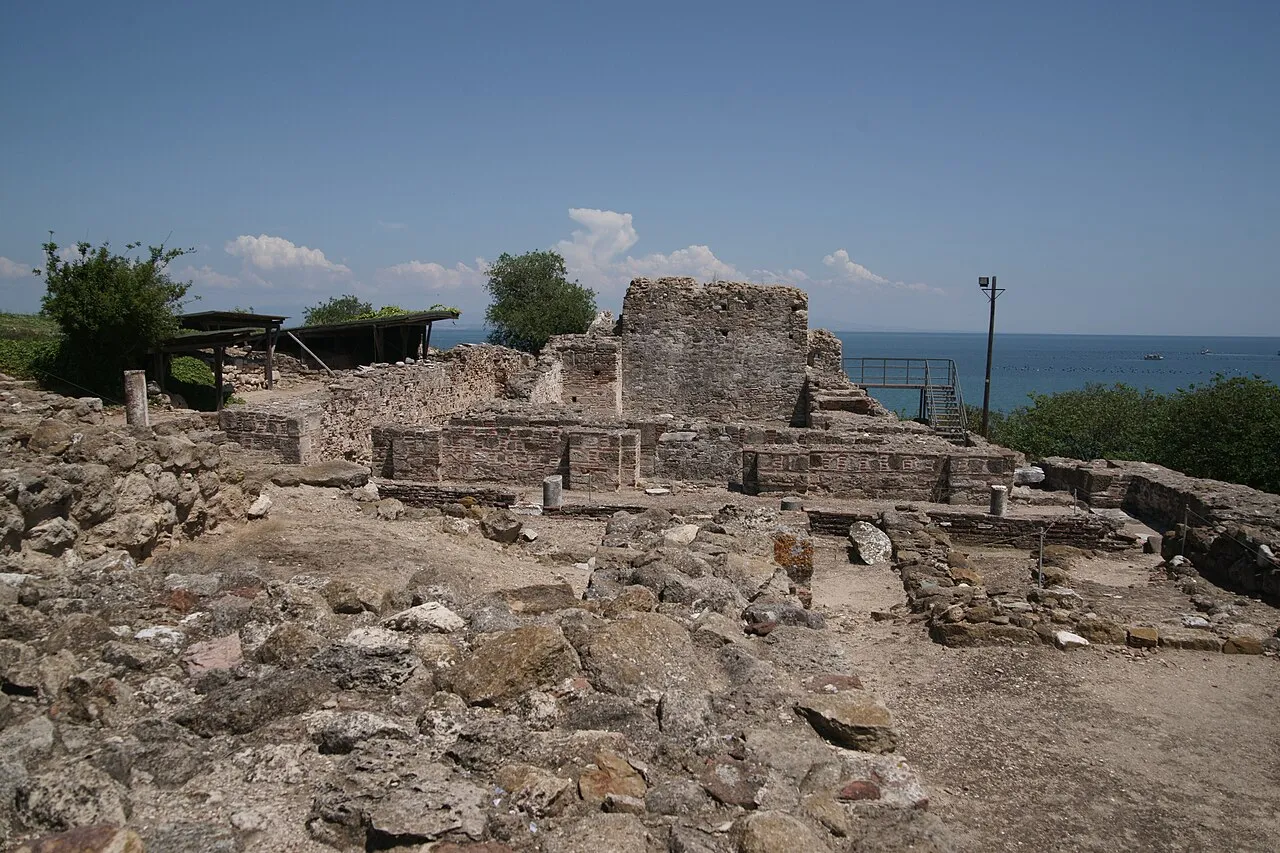 The archaeological site of Pydna, photographed in 2019Mboesch, CC BY-SA 4.0, via Wikimedia Commons (File:Pydna-archeological-site-overview.jpg)
In Macedon Olympias, Alexander's mother, returns from Epirus with the boy Alexander IV, captures Philip III and his wife Eurydice, and in September 317 BC has Philip stabbed to death. Cassander, Antipater's son, returns from the Peloponnese and shuts Olympias, Roxana and Alexander IV in Pydna on the coast through the winter. In spring 316 BC Olympias surrenders, and by Hammond and Walbank's account an assembly of Macedonians condemns her to death. Cassander now holds Macedon.
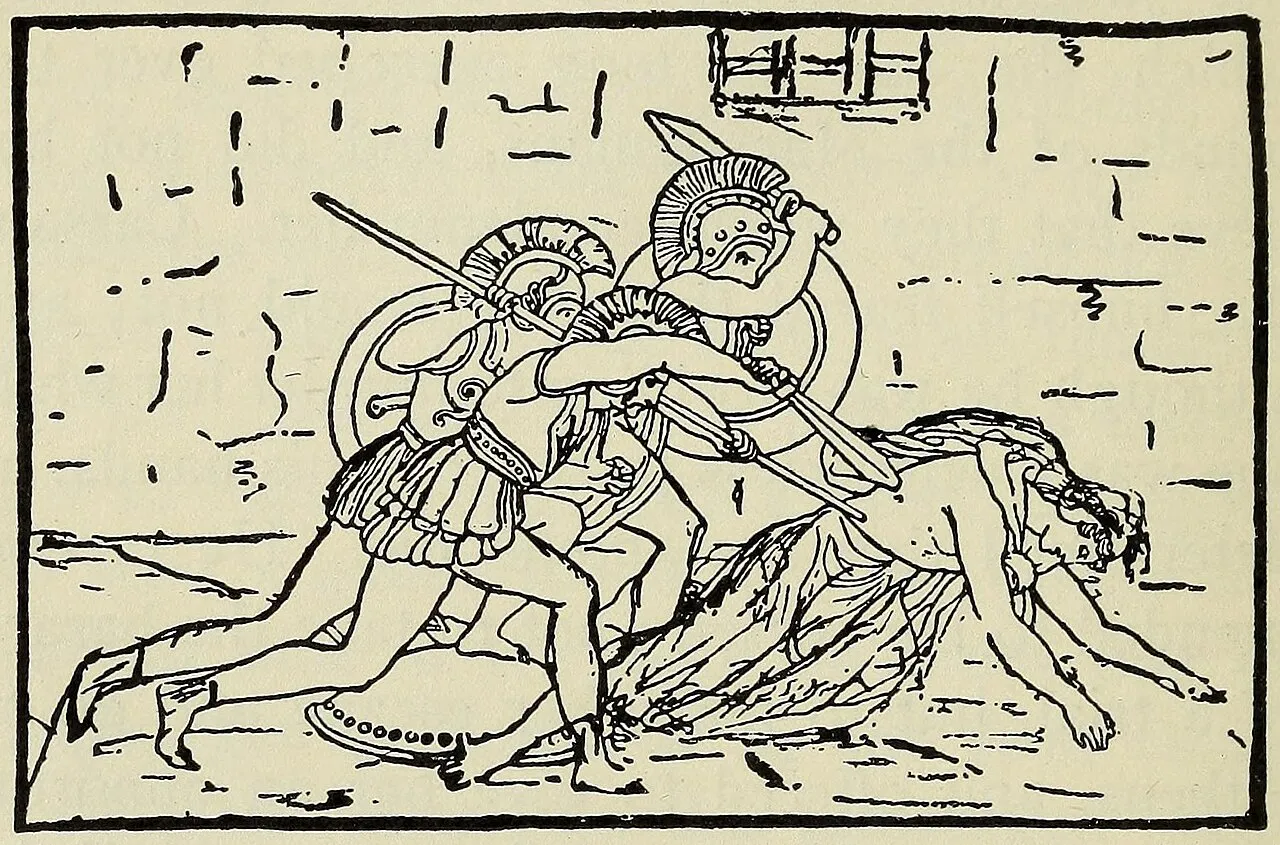 The killing of Olympias, an engraving of 1854Unknown author, public domain, via Wikimedia Commons (File:Assassination of Olympias (1854 engraving).jpg)
In Asia Antigonus, sent against Eumenes, follows him east. Eumenes has the satraps of the east with him and the Silver Shields, Alexander's veteran infantry. He marches from Babylonia by Susa to Persepolis, and Antigonus follows by Susa and Media. After a first battle in Paraetacene, the armies meet again in winter 317–316 BC in Gabiene, a district whose site is not known. On the salty plain the cavalry raises so much dust that Antigonus sends horsemen round unseen to take Eumenes's baggage. The Silver Shields kill more than 5,000 of Antigonus's infantry, Diodorus says without losing a man, but their wives and children are in the baggage. To get them back they seize Eumenes and hand him over, and Antigonus has him put to death.
Antigonus is now master of Asia. At Persepolis the Persians treat him as their king, and he settles the eastern satrapies, though, Diodorus says, he must leave several satraps in place because they cannot easily be removed. Seleucus flees Babylon to Ptolemy in Egypt.
On the map the two marches into Iran are approximate. Antigonus's Asia runs from the Aegean to the Hindu Kush, Ptolemy holds Syria and Phoenicia, and Cassander holds Macedon.
Sources
- Diodorus Siculus, Library of History, book 19, 12–48, tr. R. M. Geer (Loeb, 1947).
- Plutarch, Life of Eumenes, 13–19, tr. B. Perrin (Loeb, 1919).
- A. B. Bosworth, The Legacy of Alexander: Politics, Warfare and Propaganda under the Successors (2002), ch. 4.
- N. G. L. Hammond and F. W. Walbank, A History of Macedonia, vol. III: 336–167 B.C. (1988), ch. VI.
Prev: Perdiccas in Egypt and the settlement of TriparadisusNext: The Successors take the title of king