September 335 BC
The fall of Thebes
In the late summer of 335 BC, while Alexander is fighting in Illyria, Theban exiles slip back into Thebes by night. They kill two officers of the Macedonian garrison and call on the people to win back their freedom. Alexander has sent no news for a long time, and the exiles’ claim that he has been killed in Illyria is believed. The Thebans revolt and shut the garrison inside their citadel, the Cadmeia, behind a double stockade.
Alexander marches from Pelium through Eordaea and Elimiotis, reaches Pelinna in Thessaly on the seventh day, and enters Boeotia on the sixth day after that. The Thebans, Arrian says, learn he is past Thermopylae only when his army is near their city.
Diodorus gives Alexander more than 30,000 foot and at least 3,000 horse. The Thebans refuse his terms, and late in September the city is stormed.* The garrison comes out of the Cadmeia to join the attackers, and in Arrian’s account Phocians, Plataeans and other Boeotians, Alexander’s allies, do much of the killing. Diodorus and Plutarch put the Theban dead at more than 6,000 and the captives at more than 30,000. Diodorus gives more than 500 Macedonian dead.
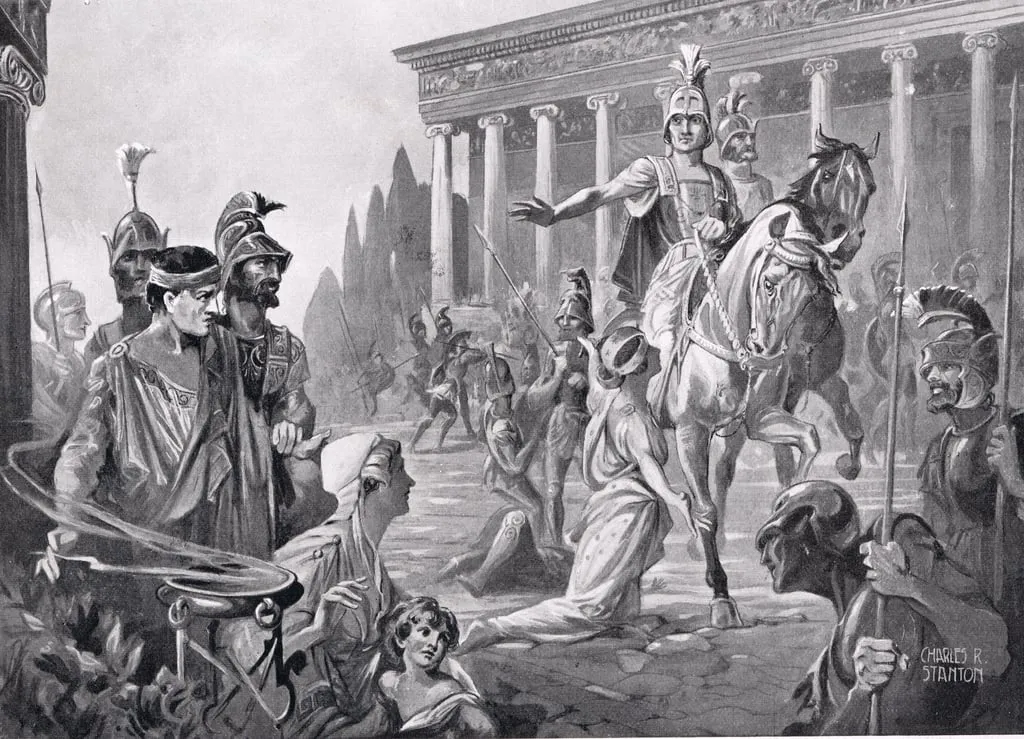 Alexander at the sack of Thebes in 335 BC, illustration by Charles R. Stanton, 1915Wikimedia Commons, Charles Rebel Stanton, Public domain (File:Charles R. Stantonː Alexander at the Sack of Thebes in 335 BC (illustration from Hutchinsons History of the Nations, 1915).jpg)
Alexander leaves the city’s fate to the allies who fought with him. They vote to raze Thebes and sell its people as slaves, sparing the priests and the guest-friends of the Macedonians, and to rebuild Orchomenus and Plataea. By one report in Arrian, Alexander himself spares the house and descendants of the Theban poet Pindar. Diodorus and Plutarch say that Alexander meant the razing as a warning to the other Greeks. In Bosworth’s judgement it ends the unrest in southern Greece, and Alexander returns to Macedon to prepare the invasion of Asia. The line of the march is approximate.
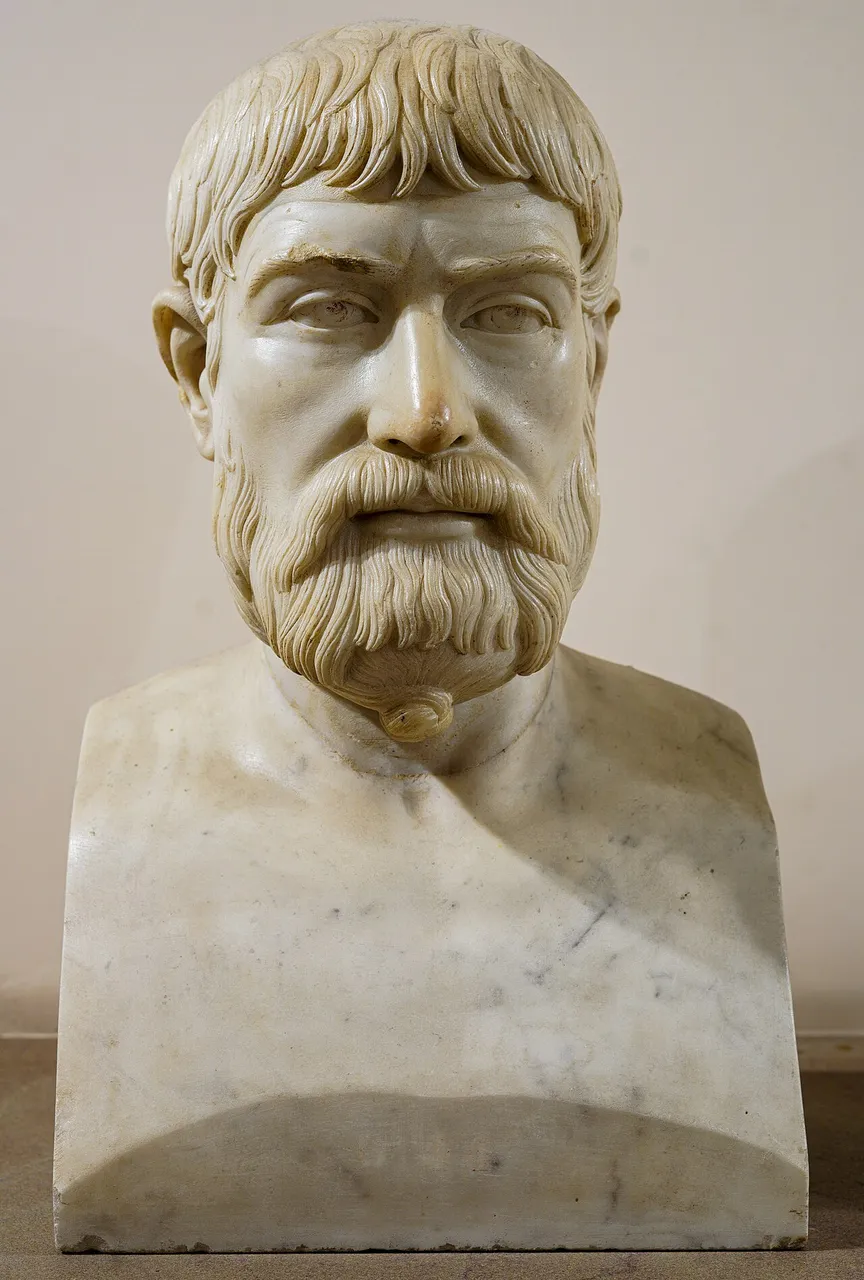 Bust of the poet Pindar, a Roman copy of a Greek original from the Farnese Collection, Naples, photographed in 2022Wikimedia Commons, NikonZ7II, CC BY-SA 4.0 (File:Bust of Pindar.jpg)
Notes
* The sources tell the storming in two ways, and Bosworth calls the battle difficult to reconstruct. In Arrian, the battalion of Perdiccas, one of Alexander’s commanders, attacks the stockade without waiting for orders. The Thebans drive it back, Alexander’s phalanx routs them, and the Macedonians reach the gates on the heels of the fleeing Thebans, before these can be shut. In Diodorus, the Thebans hold firm until Alexander sees a postern gate its guards have left and sends Perdiccas through it.
Sources
- Arrian, Anabasis of Alexander, book 1, 7 to 10.
- Diodorus Siculus, Library of History, book 17, 8 to 16.
- Plutarch, Life of Alexander, 11 to 13.
- A. B. Bosworth, Conquest and Empire: The Reign of Alexander the Great (1988), ch. 2.
Prev: PeliumNext: The crossing of the Hellespont