Winter 332–331 BC
Egypt opens its gates
Late in 332 BC Alexander leaves Gaza for Egypt. The road crosses about 200 km of inhospitable desert, and on the seventh day the army reaches Pelusium, the fortress at the eastern edge of the Nile Delta. His fleet, sailing from Phoenicia, is already in its harbour. Pelusium had held off Persian invasions for much of the 4th century BC, but now no one resists. Egyptians gather there in crowds to greet Alexander as a liberator. Diodorus explains that the Persians had wronged their temples and ruled them harshly.
The last Persian satrap of Egypt, Mazaces, cannot fight. His predecessor died at Issus, and Arrian says that after Darius's defeat Mazaces has no Persian force left, so he lets Alexander into the country as a friend. Alexander puts a garrison into Pelusium and sends the fleet up the Nile. He himself leads the army through the desert to Heliopolis, keeping the river on his right, and then crosses to Memphis, the capital. There Mazaces hands over the city and its treasury. The routes on the map are approximate.
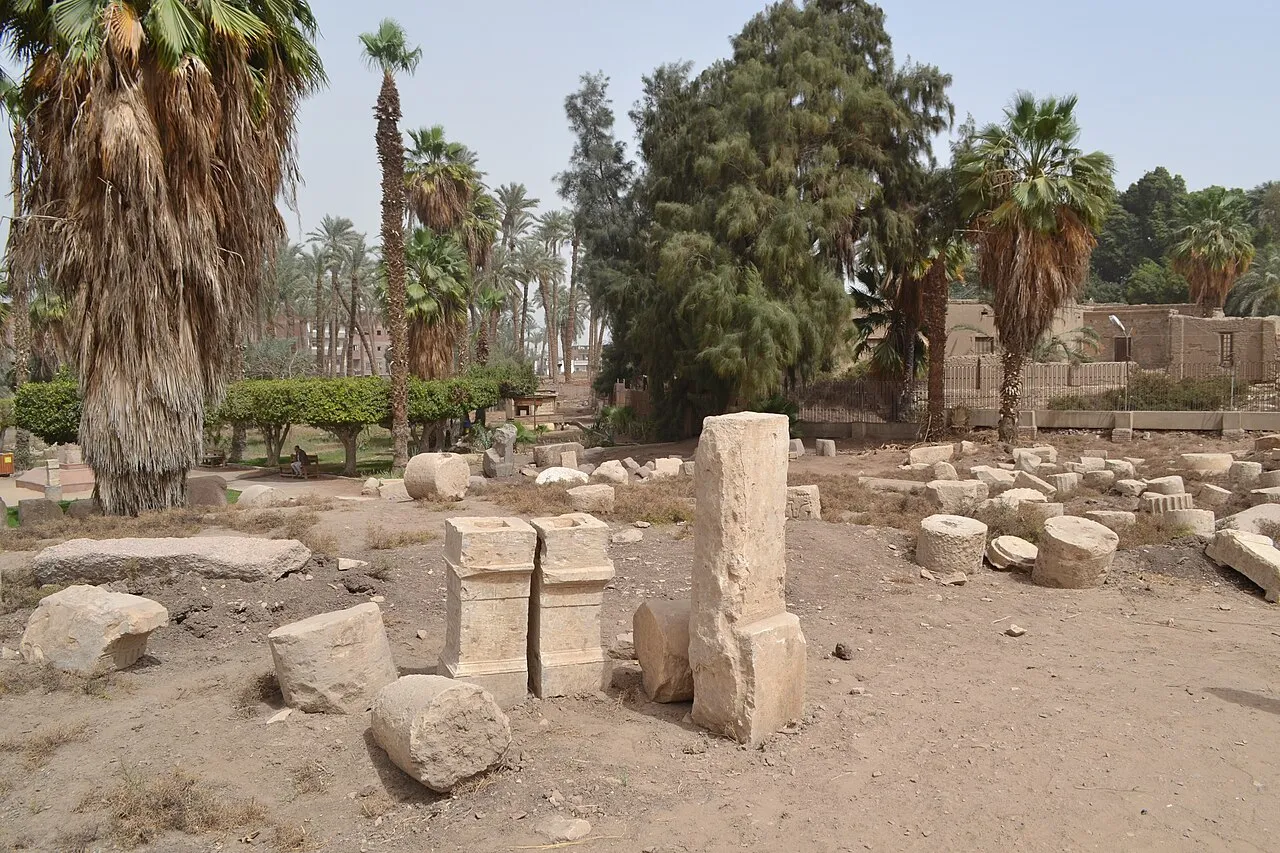 Ruins of Memphis at Mit Rahina, photographed in March 2023Wikimedia Commons, Darer101, CC BY-SA 4.0 (File:Ruins at Mit Rahina.jpg)
At Memphis Alexander sacrifices to the gods, among them Apis, the sacred bull of the city, and holds athletic and music contests in the Greek manner, with the most famous performers of Greece. The historian A. B. Bosworth sees the sacrifice to Apis as a pointed contrast: Persian kings, Artaxerxes III among them, were said to have killed Apis bulls. In the winter of 332–331 BC Egypt passes to Alexander without a battle.
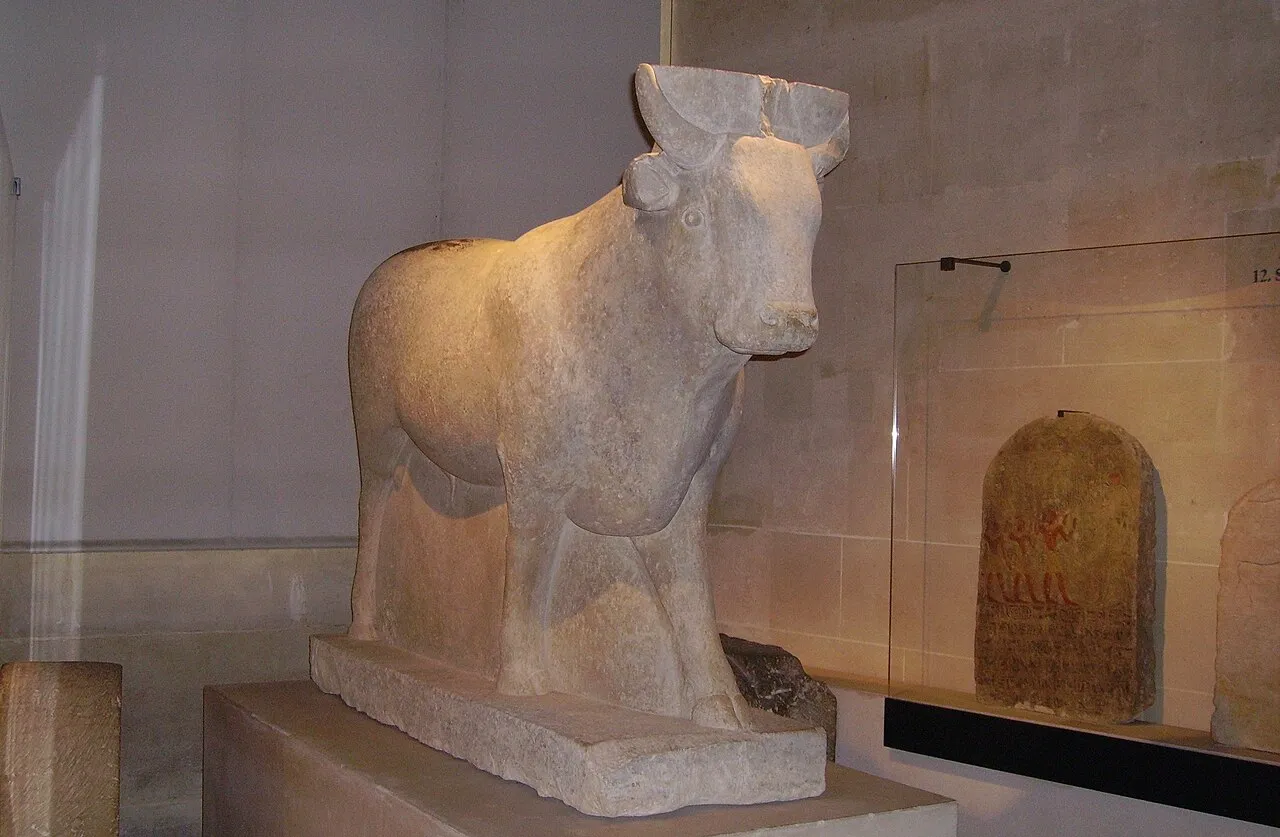 Statue of the sacred bull Apis from the Serapeum of Saqqara, of the 30th Dynasty, in the Louvre, photographed in 2007Wikimedia Commons, Yair Haklai, CC BY-SA 4.0 (File:Sacred bull Apis at in Louvre Museum.jpg)
Sources
- Arrian, Anabasis of Alexander, book 3, 1.
- Diodorus Siculus, Library of History, book 17, 48 to 49.
- A. B. Bosworth, Conquest and Empire: The Reign of Alexander the Great (1988).
- Quintus Curtius Rufus, History of Alexander, book 4, 7.
Prev: GazaNext: Alexandria and Siwa