Summer to autumn 324 BC
Hephaestion dies at Ecbatana
In summer 324 BC Alexander leaves Opis and takes his court up from the hot plain of Mesopotamia into the Zagros mountains. He travels by easy stages, and Bosworth notes a halt at Bagistane (today Bisutun), with its rich gardens. After a month's rest in the plain where the Persian kings kept their horses, he reaches Ecbatana (today Hamadan) in seven days. Ecbatana had been the summer capital of the Persian kings. The line of this march on the map is approximate.
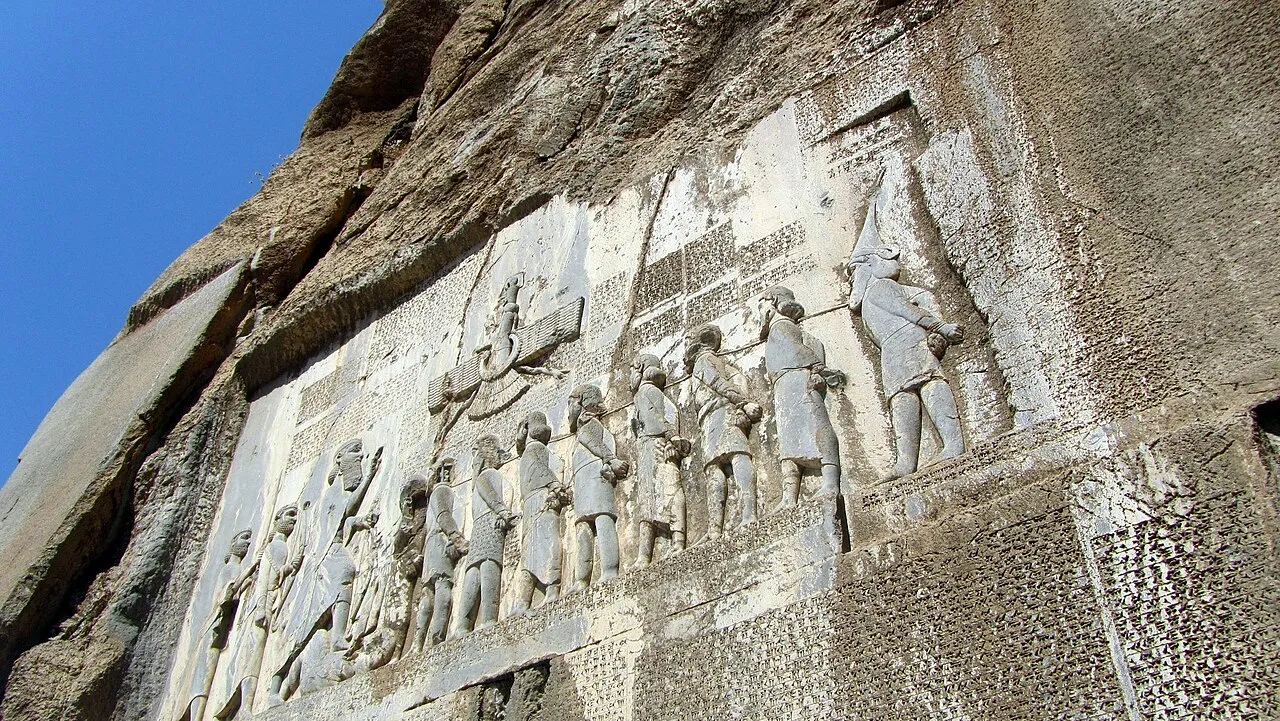 The rock relief and inscription of Darius at Behistun (Bisutun), carved about 520 BC, photographed in 2015Wikimedia Commons, Hamidreza Sorouri / PersianDutchNetwork, CC BY-SA 4.0 (File:Behistun Inscription in Persia ca. 520 BC- UNESCO World Heritage Site.jpg)
At Ecbatana the king sacrifices and holds athletic and musical games, and the Companions drink heavily. During the celebrations Hephaestion, Alexander's closest friend and the first man at court after the king, falls ill with a fever. On the seventh day, while the stadium is full for a boys' contest, Alexander hears that he is in danger and hurries to him, but finds him dead. Diodorus and Plutarch both tie the illness to drink. Plutarch says that as soon as his doctor left for the theatre, Hephaestion sat down to a boiled fowl and a great jar of wine.
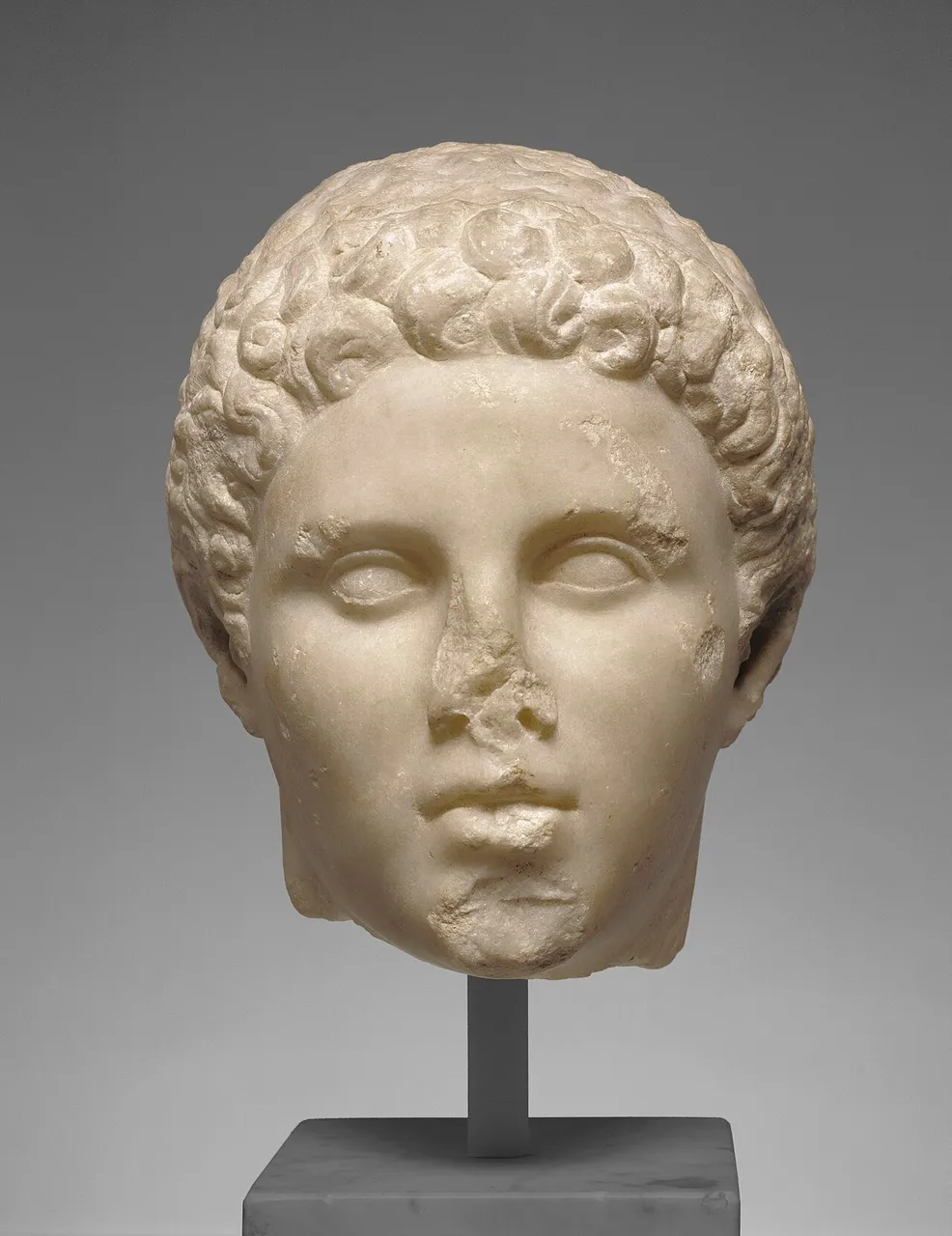 Marble head of Hephaestion, about 320 BC, in the Getty MuseumWikimedia Commons, unknown sculptor, Public domain (File:Head of Hephaistion.jpeg)
Every source agrees that Alexander's grief was great, although, as Arrian notes, they tell its details in different ways. For three days he neither eats nor cares for his appearance. He orders mourning across the empire and, by Plutarch's account, has the doctor crucified. Perdiccas, one of Alexander's leading generals, takes the body to Babylon, where the king plans a vast funeral pyre.* No source gives Perdiccas's road, so the map draws it along the road by which the court came up.
Notes
* Arrian puts the cost of the pyre at 10,000 talents and adds that some say more; Plutarch gives the same sum for the tomb and the funeral. Diodorus says the whole came to more than 12,000 talents.
Sources
- Arrian, Anabasis of Alexander, book 7, 13 to 14, tr. E. J. Chinnock.
- Diodorus of Sicily, Library of History, book 17, 110 and 115, tr. C. Bradford Welles (Loeb, 1963).
- Plutarch, Life of Alexander, 72, tr. Bernadotte Perrin (Loeb, 1919).
- A. B. Bosworth, Conquest and Empire: The Reign of Alexander the Great (1988), ch. 2, XIX.
Prev: The Opis mutinyNext: Babylon: the last plans and the death of Alexander