Winter 324–323 to June 323 BC
Babylon: the last plans and the death of Alexander
Early in 323 BC Alexander comes down from Ecbatana to Babylon. Nearchus's fleet has come up the Euphrates from the Gulf. Forty-seven warships from Phoenicia have come overland in sections to Thapsacus, been rebuilt there and floated down the Euphrates. The first target is Arabia; the pretext, Arrian says, is that its people alone in the region have sent the king no embassy. For Bosworth this was the first step of far larger western plans. The routes on the map are approximate.
After a night of drinking with his Companion Medius of Larissa, Alexander falls ill with a fever at the end of May 323 BC, on 18 Daesius in the Royal Journals, a daily court record. For some days he still sacrifices and plans the voyage. Then the fever grows, he loses his voice, and his soldiers file past his bed. A Babylonian astronomical diary dates his death to 29 Aiaru, by modern reckoning from the evening of 10 June to that of 11 June 323 BC. He was 32 years and 8 months old, by Aristobulus's account.
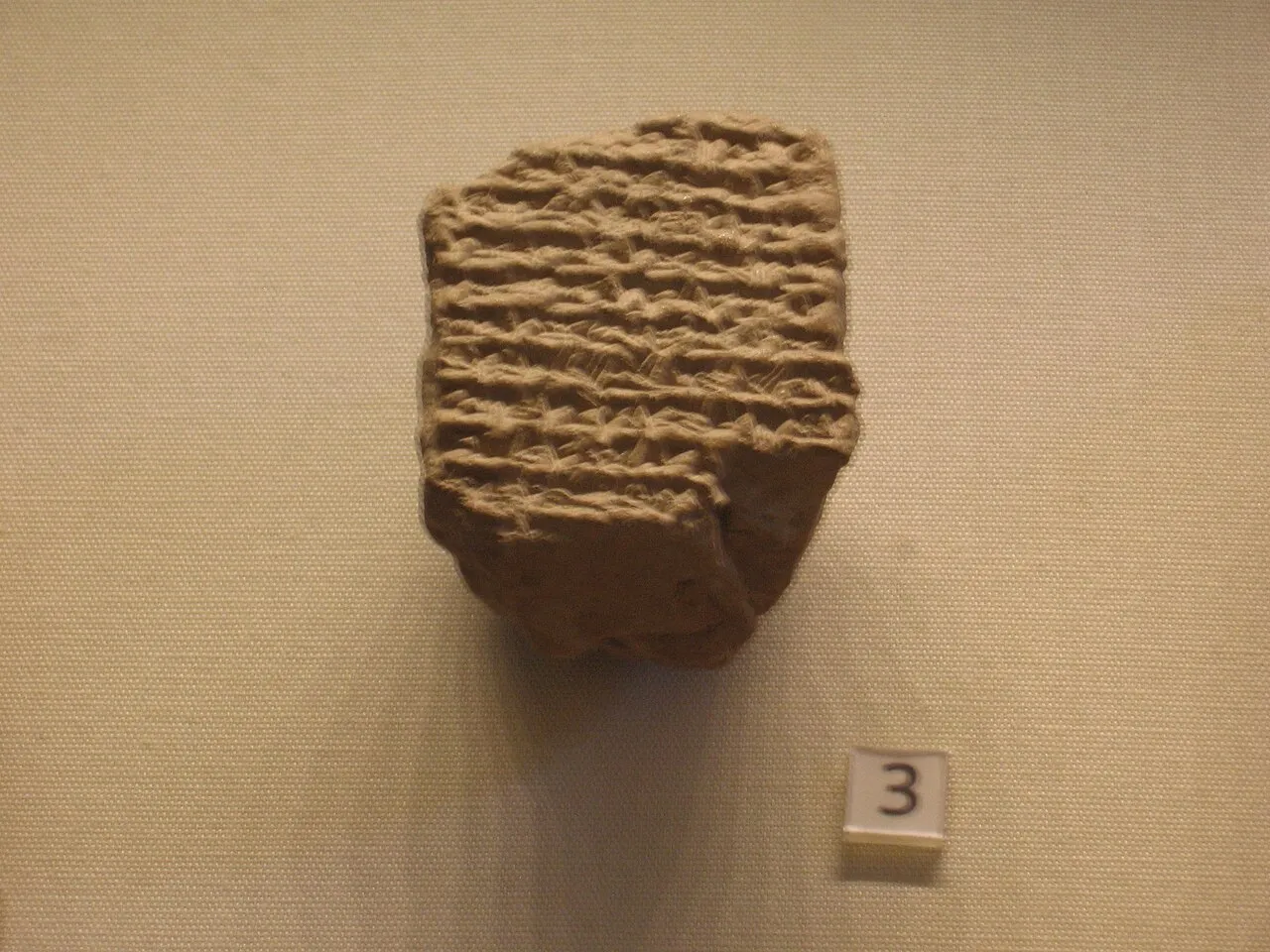 The Babylonian astronomical diary for 323–322 BC that records the death of Alexander, calling him simply "the king", in the British MuseumWikimedia Commons, Shaunnol, Public domain (File:Babylonian astronomical diary recording the death of Alexander the Great (British Museum).jpg)
What killed him is not known. The Journals describe only a fever. Arrian and Plutarch report a rumour that Antipater, the regent of Macedon, had him poisoned, and in Arrian's version Antipater's son Cassander brought the poison. Plutarch writes that no one suspected poison at first.
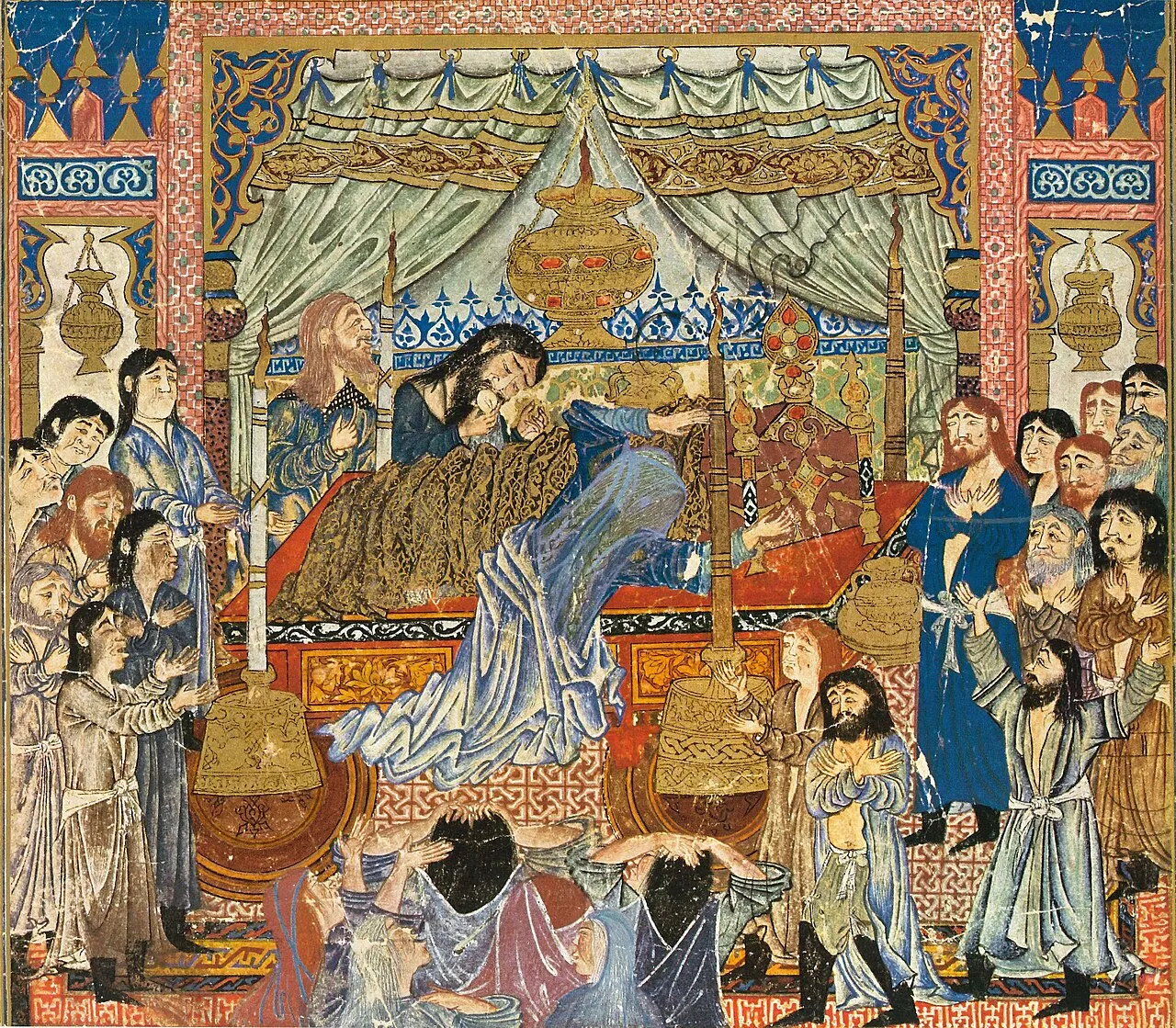 The death of Alexander, a painting in a Shahnameh made at Tabriz around 1330, Freer Gallery of ArtWikimedia Commons, anonymous painter, CC BY-SA 4.0 (File:Firdawsi - The death of Alexander the great.jpg)
After the death Perdiccas finds the king's memoranda, which Diodorus lists: a thousand warships against Carthage and the west, a road along Libya's coast to the Pillars of Heracles, six great temples, and a tomb for Philip as large as Egypt's greatest pyramid. Read to the army, they are all set aside. In Plutarch's account Roxana, Alexander's pregnant wife, lures Stateira with a forged letter and, with Perdiccas's knowledge, has her and her sister killed.
Sources
- Arrian, Anabasis of Alexander, book 7, 15 to 28, tr. E. J. Chinnock.
- Plutarch, Life of Alexander, 73 to 77, tr. Bernadotte Perrin (Loeb, 1919).
- Diodorus of Sicily, Library of History, book 17, 112 to 118, tr. C. Bradford Welles (Loeb, 1963), and book 18, 4, tr. Russel M. Geer (Loeb, 1947).
- A. B. Bosworth, Conquest and Empire: The Reign of Alexander the Great (1988), ch. 2, XVIII and XIX.
- The Babylonian astronomical diary for 323 BC, after Sachs and Hunger, with Jona Lendering's notes (Livius.org).
Prev: Hephaestion dies at EcbatanaNext: Two kings and a regent