Summer 333 BC
Through the Cilician Gates
In early summer 333 BC Alexander marches fast from Gordium across the Anatolian plateau. The historian A. B. Bosworth gives two reasons for the haste: Darius is calling up his full levy, and the march began before the harvest, when food is at its scarcest. He takes Cappadocia, in Arrian's words the land on this side of the Halys and much beyond it, but leaves no troops there: a token settlement, Bosworth calls it. The borders on the maps of this chapter are approximate.
The road south crosses the Taurus mountains by the Cilician Gates. Its guards flee on hearing that Alexander is coming in person, and at dawn his army passes through. Arsames, the Persian satrap of Cilicia, is laying waste the plain and means to abandon his capital, Tarsus. Alexander hurries ahead with his cavalry and lightest foot soldiers and reaches the city, 55 km beyond the pass, within the day. Arsames flees to Darius without setting it on fire.
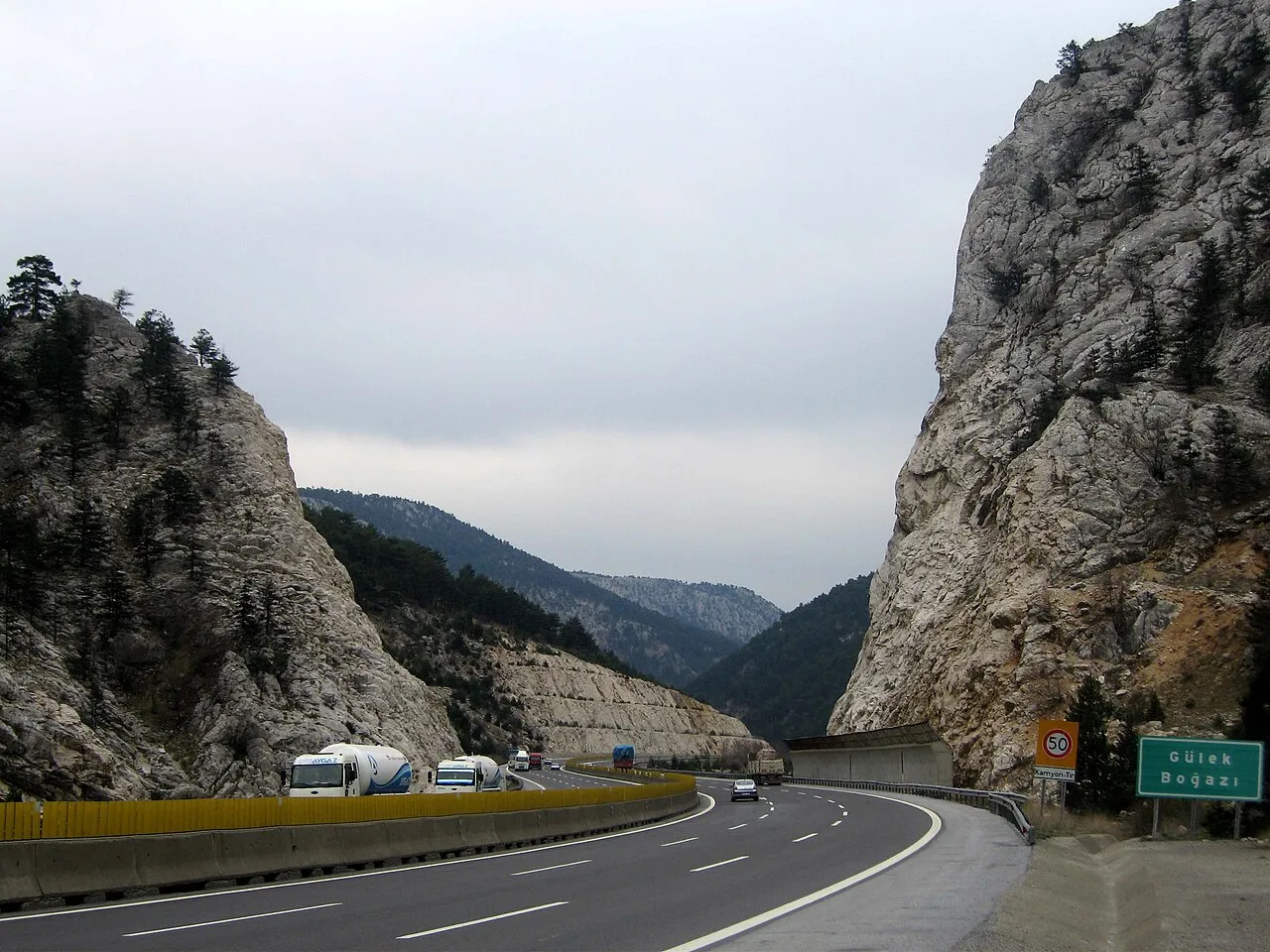 The Cilician Gates, the Gülek Pass through the Taurus mountains, with the modern motorway, photographed in April 2007Wikimedia Commons, Teogomez, Public domain (File:Puertas Cilícias.jpg)
At Tarsus Alexander falls gravely ill.* For a time his life is in danger, and he is laid up for weeks until his physician, Philip the Acarnanian, cures him with a strong purge. Meanwhile his senior general, Parmenion, seizes the passes towards Syria, and Cilicia is held as far as the Amanus mountains.
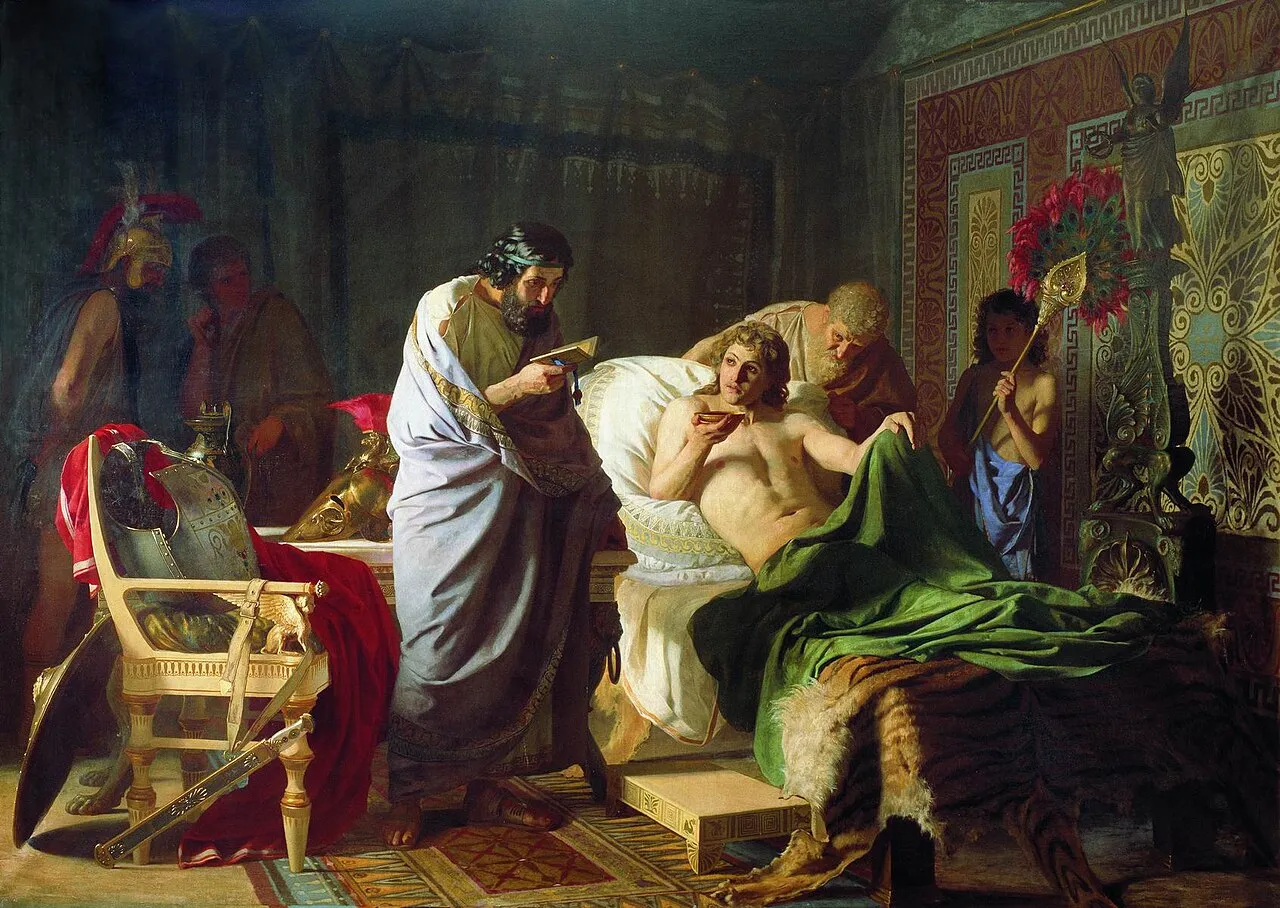 Alexander the Great's trust in doctor Philip, painted by Henryk Siemiradzki in 1870Wikimedia Commons, Henryk Siemiradzki, Public domain (File:Siemiradzki Alexander the Great's trust in doctor Philip 1870 nhmrb.jpg)
Darius III, the Great King of Persia, has decided to stake everything on one battle. Through the spring and early summer he gathers the royal army at Babylon from the central satrapies. In Bosworth's account the cavalry of the north-eastern frontier does not come in time, and Darius marches north for at least three months, crosses the Euphrates at Thapsacus, and by September camps at Sochi in the Amik plain. Where Sochi stood is not known, and both routes on the map are approximate.
Notes
* Arrian gives two accounts of the cause. Aristobulus, who served with Alexander, says the king fell ill from exhaustion. Other writers say that he plunged, hot and sweating, into the river Cydnus, which runs cold from the Taurus through the city. Bosworth follows the second account.
Sources
- Arrian, Anabasis of Alexander, book 2, 4 to 5.
- A. B. Bosworth, Conquest and Empire: The Reign of Alexander the Great (1988).
- A. B. Bosworth, A Historical Commentary on Arrian's History of Alexander, vol. I (1980).
- Quintus Curtius Rufus, History of Alexander, book 3, 1 to 7.
- Plutarch, Life of Alexander, 18 to 19.
Prev: Gordium, and Memnon's war at seaNext: Darius behind the lines