339–338 BC
Chaeronea
In the autumn of 339 BC the Amphictyonic Council, the Greek guardians of Apollo's shrine at Delphi, names Philip its general in a sacred war against Amphissa, which gives him a lawful road into central Greece. Avoiding the pass of Thermopylae, he takes the mountain road by Heraclea in Trachis to Cytinium, then turns east into Phocis and seizes Elatea, two days' march from the Attic border. The news throws Athens into terror.
The orator Demosthenes, Philip's leading opponent, goes to Thebes, Athens's old rival, and wins it as an ally. The allies guard the passes out of Phocis all winter, until Philip's general Parmenion takes Amphissa in a night attack and outflanks them. They pull back to Chaeronea, a Boeotian town near Phocis, where the armies meet in August 338 BC. The marches on the map are approximate.
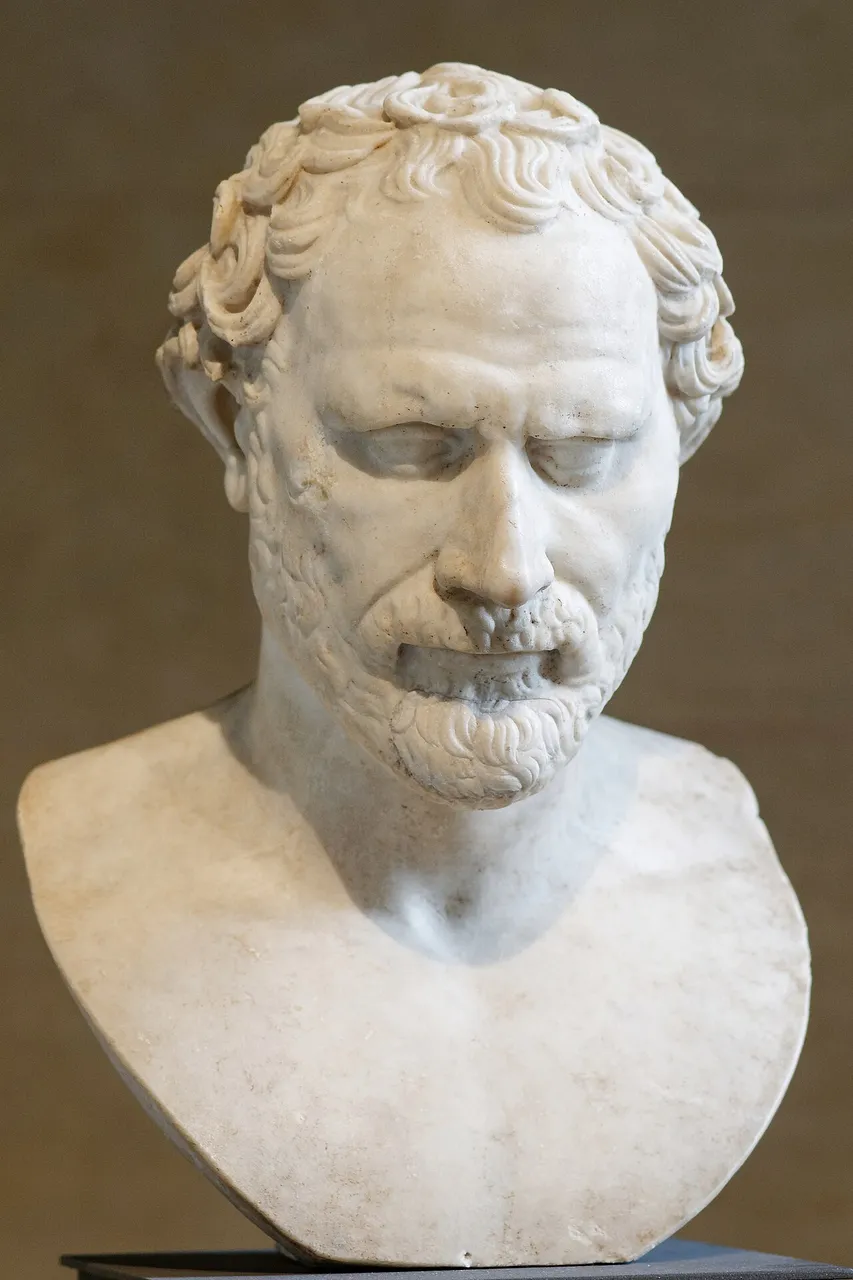 Portrait of Demosthenes, a Roman marble of the Imperial era after a Hellenistic original, LouvreWikimedia Commons, Polyeuctus (after), photograph by Marie-Lan Nguyen, CC BY 2.5 (File:Demosthenes Polyeuctos Louvre Ma237 n01.jpg)
Diodorus gives Philip more than 30,000 foot and at least 2,000 horse; the allies' strength is unknown. The Athenians, under Chares and Lysicles, hold one wing and the Boeotians the other. Ellis calls the course of the fighting "virtually impossible to recover". Diodorus tells only that Philip's son Alexander, eighteen, held one wing with the most seasoned generals and Philip the other, and that after a long struggle Alexander broke the enemy line first, before Philip drove back the troops facing him. Plutarch adds the report that Alexander was first to break the Theban Sacred Band, a unit Diodorus does not name.
More than 1,000 Athenians fall and at least 2,000 are taken, Diodorus says, and many Boeotians die. In Athens the orator Lycurgus has Lysicles sentenced to death. Philip sends the Athenian prisoners home without ransom and makes peace with Athens. Thebes must pay to recover its dead and prisoners, and take a Macedonian garrison in the Cadmeia, its citadel.
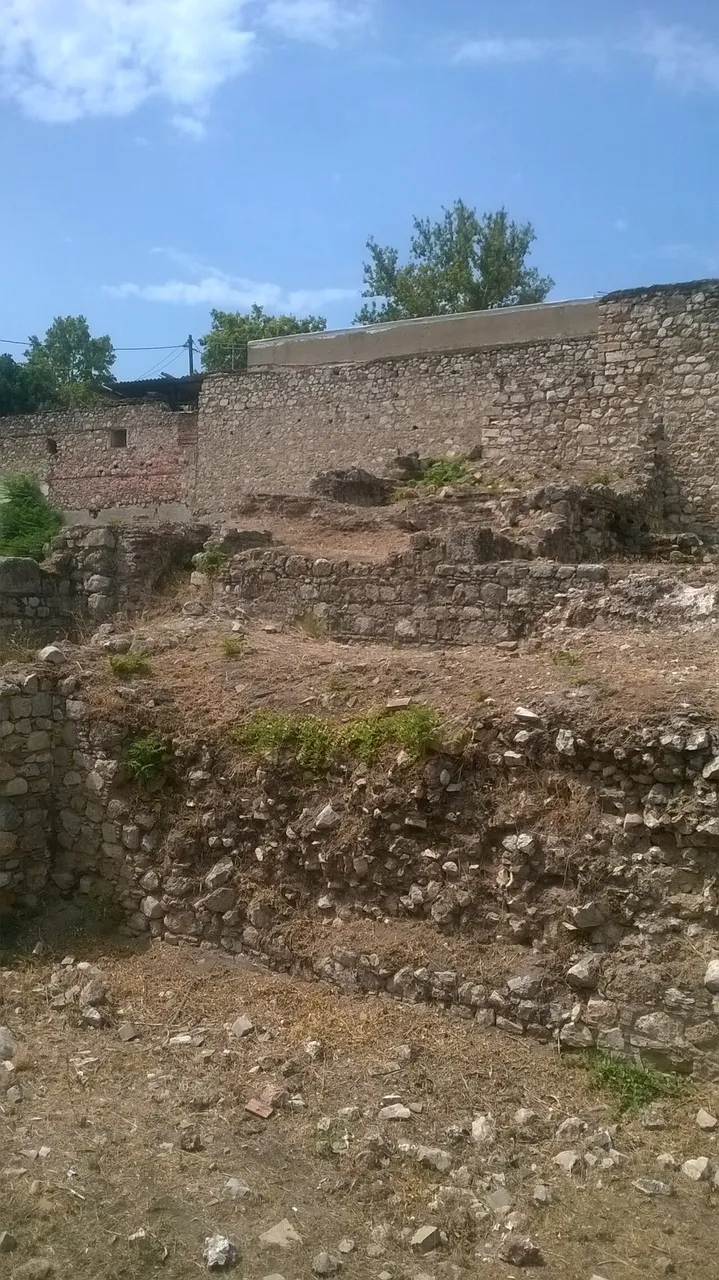 Remains on the Cadmea, the citadel of Thebes, photographed in 2016Wikimedia Commons, Mirjanamimi, CC BY-SA 4.0 (File:Cadmea, Thebes.jpg)
Sources
- Diodorus Siculus, Library of History, 16.84–88, tr. C. Bradford Welles (1963).
- J. R. Ellis, "Macedonian Hegemony Created", The Cambridge Ancient History VI (2nd ed., 1994), ch. 15.
- Plutarch, Life of Alexander, 9 and 12, tr. B. Perrin (1919).
- A. B. Bosworth, Conquest and Empire: The Reign of Alexander the Great (1988), ch. 1.
Prev: Thrace, and the young AlexanderNext: Hegemon of Greece, and death at Aegae