October – December 331 BC
Babylon and Susa open their gates
After his defeat at Gaugamela on 1 October 331 BC, Darius III does not try to rally his army. He rides to Arbela and on over the Zagros mountains into Media, to Ecbatana (today Hamadan).* Arrian explains the choice: Darius expected Alexander to take the easy roads to Babylon and Susa, and the mountain road to Media was hard going for a large army. Diodorus adds that he hoped to win time to raise a new army in the east.
Riding through the night, Alexander reaches Arbela the next day. Darius has gone, but his treasure, his chariot and his bow are taken. Mazaeus, who commanded the Persian right at Gaugamela, leads the largest group of survivors round behind the Macedonians and across the Tigris to Babylon. No Persian army now stands west of the Zagros.
Alexander marches south. On 18 October, a Babylonian astronomical diary records, he sends word to the Babylonians that his men will not enter their houses. As he nears Babylon in late October, its people come out with their priests and leaders and surrender the city, its citadel and its treasury. Alexander orders the temples that the Great King Xerxes destroyed to be rebuilt. He makes Mazaeus satrap of Babylonia, his first Persian satrap, with Macedonian commanders beside him, and his army rests there for over a month.
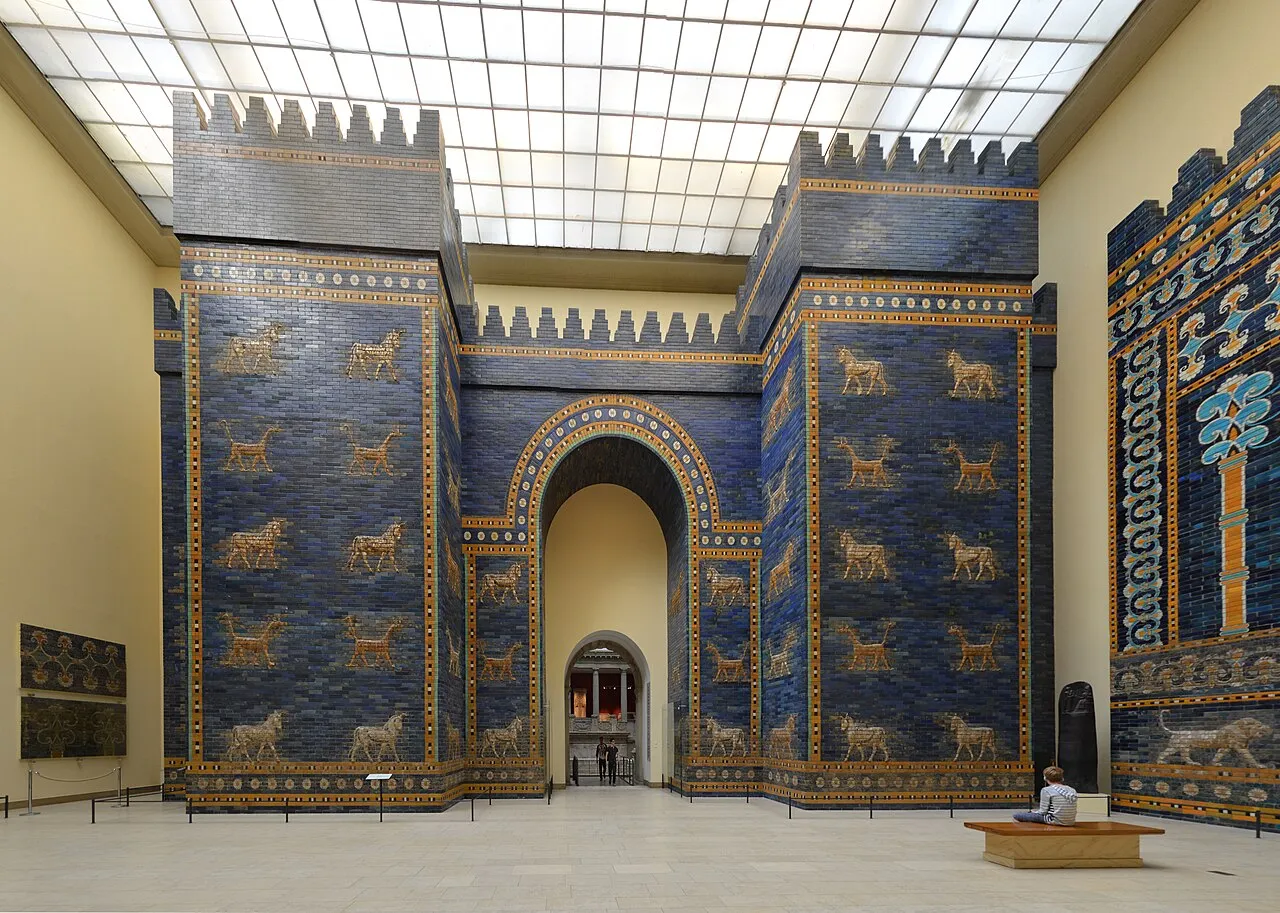 The Ishtar Gate of Babylon as rebuilt in the Pergamon Museum, Berlin, photographed in 2014Wikimedia Commons, Radomir Vrbovsky, CC BY-SA 4.0 (File:Ishtar gate in Pergamon museum in Berlin..jpg)
Susa has already surrendered. Straight after the battle Alexander sent an officer ahead, and the satrap Abulites opened the city to him with its treasure intact. Alexander arrives in December, twenty days’ march from Babylon, and takes over a treasure of more than 40,000 talents.** He keeps Abulites as satrap of Susiana and sends 3,000 talents to the coast, to pay for Antipater’s war against Sparta. Mesopotamia, Babylonia and Susiana are now his.
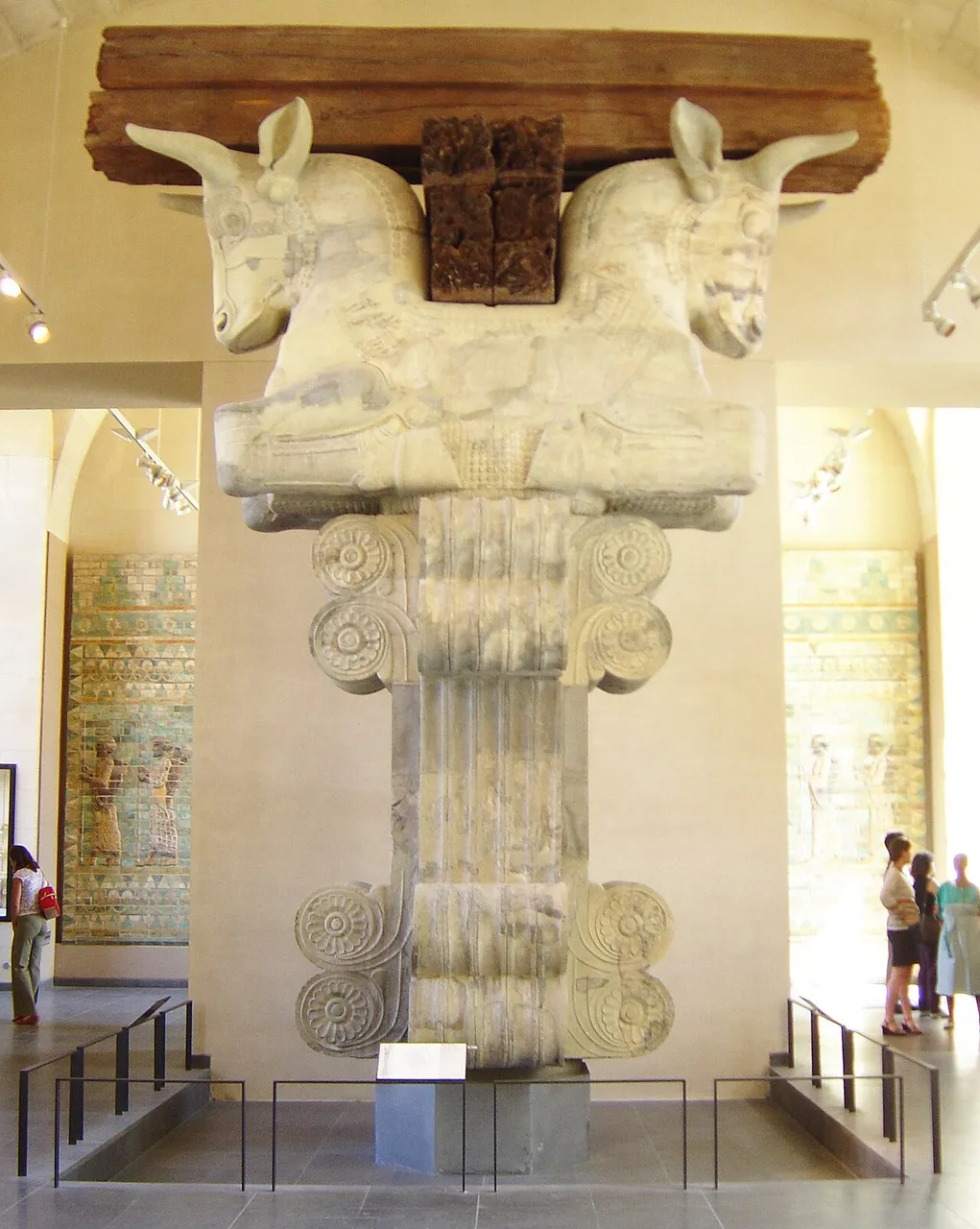 Double bull capital from the apadana, the audience hall, of Darius I's palace at Susa, in the Louvre, photographed in 2003Wikimedia Commons, David Monniaux, CC BY-SA 3.0 (File:Bull capital Apadana Louvre AOD1 (1).jpg)
Notes
* The map draws Darius’s road by Arbela, after Arrian and Bosworth. The Babylonian diary tells the end of the battle differently: in Lendering’s reading, the king’s troops deserted him and fled to “the land of the Guti”, which Lendering takes for the valley of the Diyala.
** Arrian puts the treasure of Susa at 50,000 talents, Diodorus at more than 40,000 talents of gold and silver bullion.
Sources
- Arrian, Anabasis of Alexander, book 3, 15 to 16.
- Diodorus, Library of History, book 17, 64 to 66.
- A. B. Bosworth, Conquest and Empire: The Reign of Alexander the Great (1988).
- Astronomical diary for 331 BC, after Sachs and Hunger, in the translation of Jona Lendering (Livius.org).
Prev: Parmenion's wing and the pursuitNext: The Uxian defile and the Persian Gate