After 301 BC
The Alexandrias, the koine and the legend
Alexander's empire has broken into kingdoms, but some of his cities outlive it. The first and greatest is Alexandria in Egypt, which he laid out himself as a Greek city and which now belongs to Ptolemy.
In the east many of his cities were garrisons. Alexandria in Areia (today Herat) was founded in 330 BC after a revolt there, and Alexandria in Arachosia, which may be today's Kandahar, perhaps early in 329 BC. Only for Alexandria in the Caucasus (near Begram), where the routes across the Hindu Kush meet, do figures survive: Alexander settled 3,000 Greeks and Macedonians there, veterans unfit to fight among them, and 7,000 local people to farm for them. Alexandria Eschate (today Khujand) guarded the Jaxartes against the nomads beyond it. The sites of Bucephala and Nicaea, on the Hydaspes, are lost. Many settlers stayed only out of fear: when Alexander died, more than 20,000 of them, Diodorus says, set out for home and were massacred.
How many cities Alexander founded is disputed.* In Bosworth's judgement several of the Alexandrias of Asia Minor and the Near East are the work of the Successors, and Alexandria Troas at least was refounded by Lysimachus.
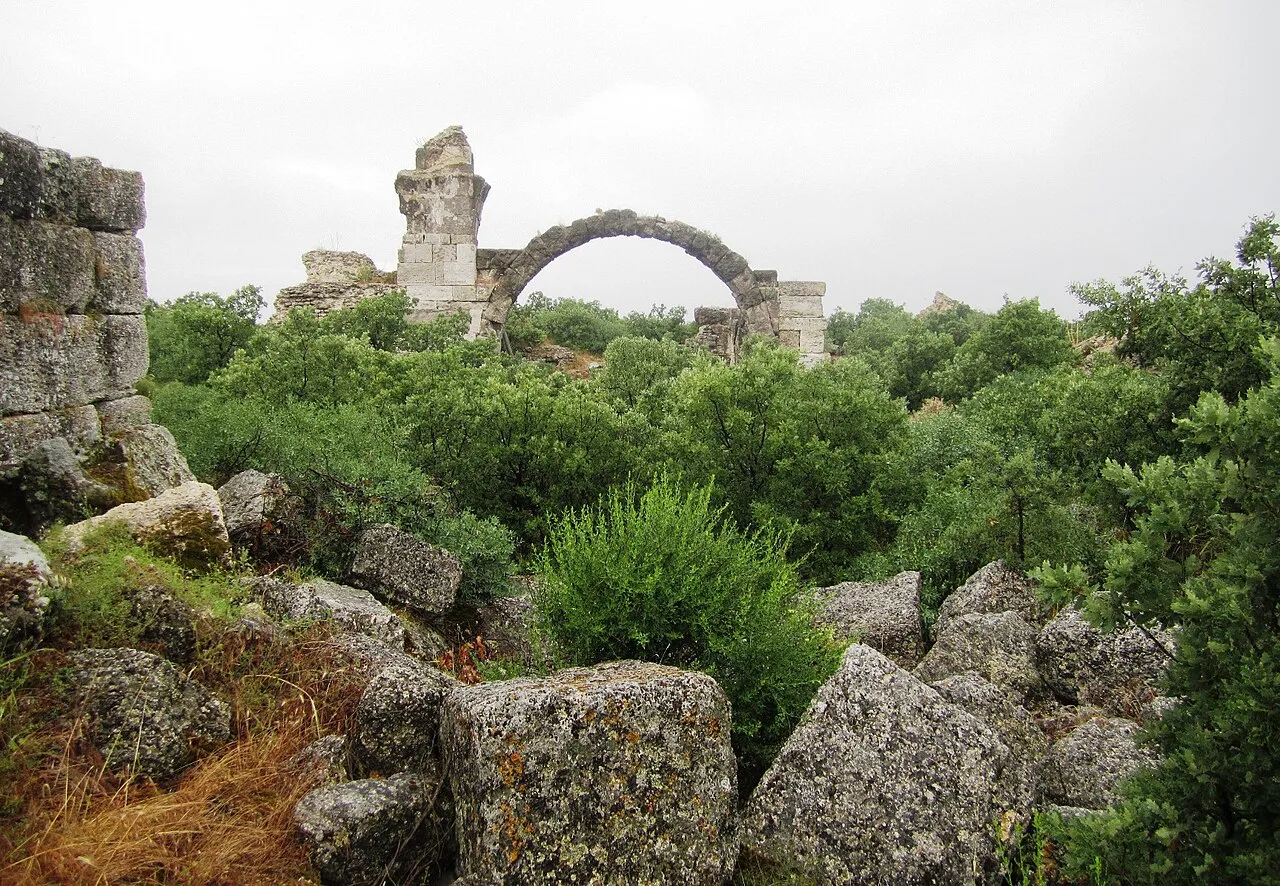 Ruins of Alexandria Troas, photographed in 2012Elelicht, CC BY-SA 3.0, via Wikimedia Commons (File:Alexandria Troas Thermen.JPG)
The Successors' kingdoms carried Greek far beyond the old Greek world. The editors of the Cambridge Ancient History call the common Greek of the age, the koine, "almost a universal language", although no political or economic union came with it.
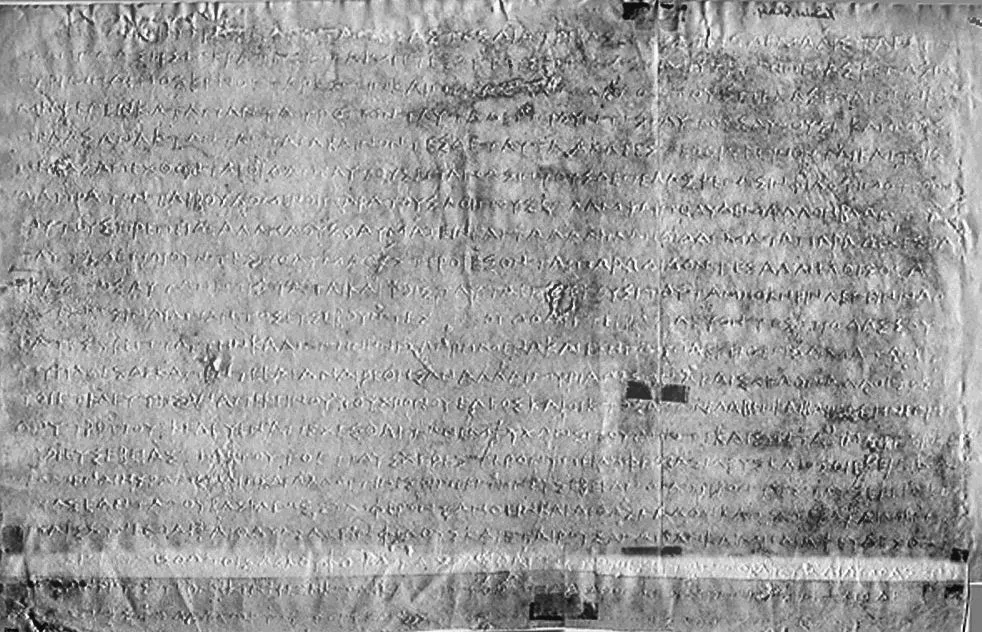 Greek inscription of the 3rd century BC from Kandahar, photographed in 1963Schumberger, public domain, via Wikimedia Commons (File:Kandahar Greek inscription.jpg)
Alexander lives on in legend too. In the Alexander Romance, a life of him built on a few facts and filled out with marvels, a son of Antipater poisons him. Bosworth traces such tales of his death back to the propaganda of the Successors' wars over his empire.
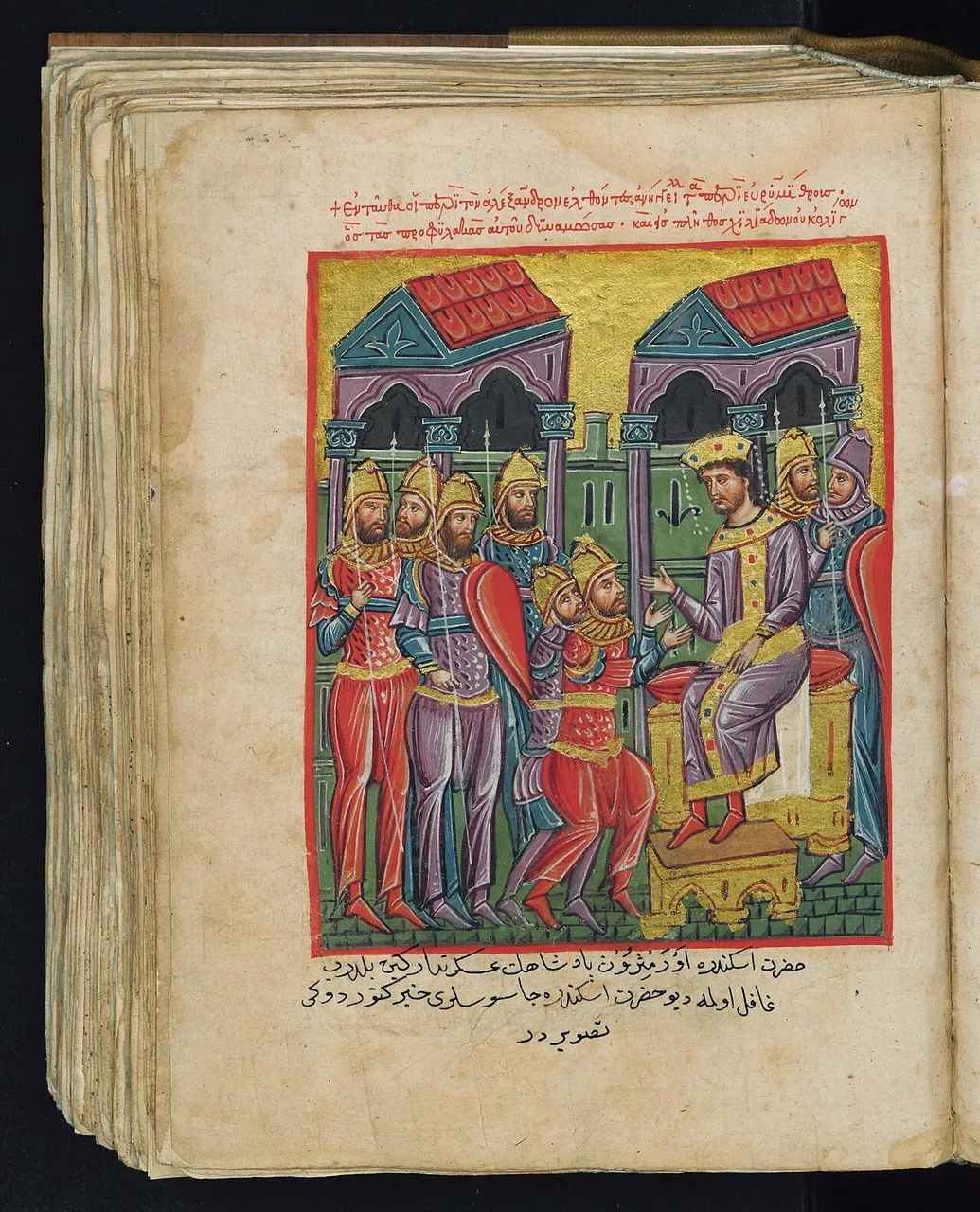 A miniature from a Byzantine Greek manuscript of the Alexander Romance, made between 1204 and 1453. San Giorgio dei Greci, VeniceUnknown author, public domain, via Wikimedia Commons (File:Byzantine Alexander Romance Vraka.JPG)
The map shows the kingdoms of 301 BC and Alexander's cities.
Notes
* Plutarch says Alexander founded seventy cities among the barbarians and civilised them. Bosworth calls this "totally divorced from reality": for him the cities were garrisons, planted to hold down conquered land.
Sources
- A. B. Bosworth, Conquest and Empire: The Reign of Alexander the Great (1988), part II, B, III.
- W. S. Ferguson, "The Leading Ideas of the New Period", in The Cambridge Ancient History, vol. VII (1928), ch. I, 5.
- The Cambridge Ancient History, vol. VII (1928), editors' preface.
- Wikipedia, "Alexander Romance".
Prev: Ipsus and the partition